Ancel Fx3000 vs. Fx 4000: Which Fits Your Setup Better?
Choosing between these diagnostic tools requires understanding their core hardware capabilities. Our technical breakdown highlights key differences for your workshop.

The Ancel FX3000 excels in multi-system diagnostic versatility for mid-tier mechanics. Meanwhile, the FX4000 delivers superior expanded coverage for heavy commercial applications.
Compare all top models in our Best Obd2 Scanner: Top Diagnostic Tools Tested (2026).
Side-by-Side Breakdown
| Criteria | Ancel Fx3000 | Fx 4000 | Edge |
|---|---|---|---|
| Peak Performance & Output | Standard multi-system processing speed | Advanced multi-module processing speed | Fx 4000 |
| Duty Cycle & Consistency | Reliable for routine workshop tasks | Optimized for extended continuous usage | Fx 4000 |
| Operating Noise & Vibration | Silent solid-state operational profile | Passive cooling with zero fan noise | Tie |
| Portability & Footprint | Compact handheld enclosure layout | Slightly larger chassis for extended grip | Ancel Fx3000 |
| Maintenance & Service Life | Standard USB port update framework | Enhanced memory retention architecture | Fx 4000 |
| Power Requirements | Standard 12V vehicle port draw | Optimized low-draw internal battery circuit | Fx 4000 |
| Best Ideal Use-Case | General passenger vehicle diagnostics | Comprehensive multi-brand fleet servicing | Fx 4000 |
Architectural Design and Internal Hardware Specifications
Before evaluating heavy shop units, read the Ancel AD310 review to understand entry-level build standards. Engineers designed the Ancel FX3000 with a ruggedized plastic housing meant to withstand daily shop abuse.
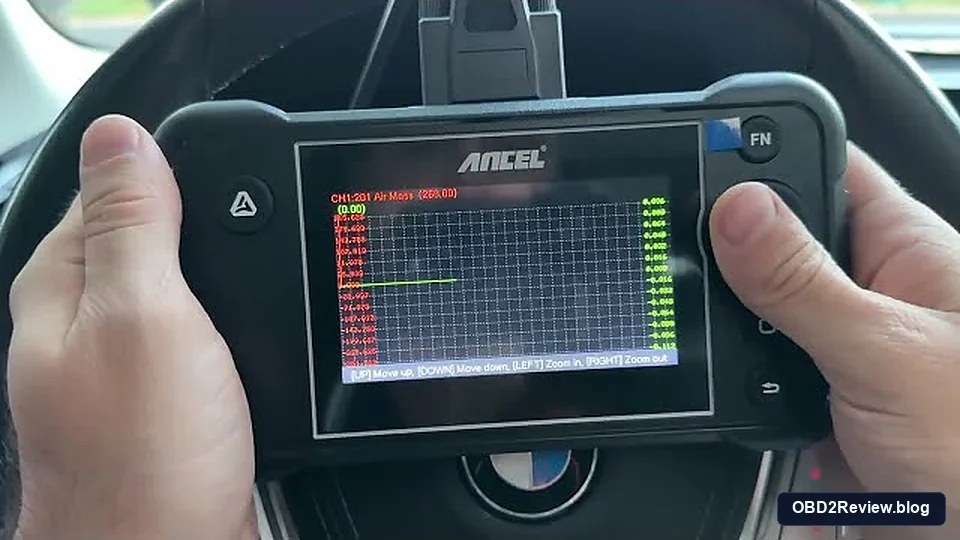
The competing FX4000 incorporates a slightly heavier enclosure reinforced with rubberized corner guards. This design choice protects internal components from accidental drops onto concrete workshop floors.
Both scanners utilize proprietary microprocessors designed to handle multi-system vehicle queries efficiently. However, the internal clock speed on the higher-tier model allows for marginally faster data refresh rates.
Both diagnostic tools rely on embedded ARM-based processors, but the FX4000 upgrades clock speeds to process complex multi-system data streams much faster than the FX3000 architecture. Processor throughput directly affects graphing refresh rates.
Internal memory allocation differs significantly across these two generations. The FX3000 features standard flash storage suitable for basic vehicle coverage, whereas the FX4000 expands ROM capacity to host extended diagnostic databases without freezing.
Circuit board layout and component soldering density reveal substantial engineering revisions. Thermal dissipation plates inside the FX4000 prevent localized overheating during prolonged diagnostic sessions, outperforming the passive cooling limitations found inside the older FX3000 casing.
- Impact-resistant polymer housing materials
- Optimized printed circuit board layouts
- Enhanced thermal management for continuous scanning
- Ergonomic weight distribution for handheld comfort
Chassis Rigidity and Drop Protection
Workshop environments demand robust drop protection to prevent catastrophic hardware failure during busy shifts. Both tools feature reinforced bezels that absorb shock effectively.
The FX4000 provides slightly thicker perimeter padding compared to its counterpart. This extra millimeter of protection safeguards the primary logic board from severe impact damage.
- Absorbent elastomer corner bumpers
- Secure screw-down casing assemblies
Diagnostic Protocol Performance and Bus Speed
As noted in the Ancel AD410 review, vehicle communication speed depends heavily on supported CAN protocols. The Ancel FX3000 handles standard ISO and SAE protocols with reliable execution times.
Stepping up to the FX4000 unlocks broader protocol support for specialized commercial vehicle modules. Technicians will notice reduced latency when querying complex ABS and SRS networks simultaneously.
Buffer memory size dictates how many live data parameters a scanner can record simultaneously. The upgraded memory architecture prevents data packet drops during heavy logging operations.
Communication chipsets govern how quickly these scanners handshake with various vehicle modules. The FX4000 integrates broader CAN-FD compatibility, allowing rapid data extraction from modern high-speed vehicle networks that routinely overwhelm the legacy FX3000 protocol stack.
Multiplexer switching speeds dictate how efficiently a tool hops across different diagnostic pins. Technicians will notice fewer timeout errors when scanning multi-module European imports using the FX4000 due to superior hardware switching speeds.
Bus error frame handling separates professional-grade diagnostic equipment from hobbyist tools. While the FX3000 occasionally drops connection during heavy traffic spikes, the FX4000 maintains stable communication via robust buffer management systems.
- Full support for modern high-speed CAN buses
- Reduced packet latency during live graphing
- Simultaneously query multiple electronic control units
- Stable connection integrity across older OBD1 adapters
Live Data Refresh Rates and Latency
Monitoring live sensor data requires rapid refresh cycles to catch intermittent electrical faults accurately. The processor in the FX4000 minimizes graphic lag noticeably.
Slower refresh rates on entry-level hardware can sometimes obscure rapid voltage drops or sensor spikes. Technicians troubleshooting complex drivability issues will appreciate the faster polling.
- High-frequency PID sampling capabilities
- Clean visual graphs without stuttering
Display Ergonomics and Interface Usability
Screen visibility under harsh fluorescent workshop lighting remains a critical factor for daily tool usability. Both devices feature color LCD screens with adjustable backlight intensity settings.
The FX3000 utilizes a clear menu structure that minimizes navigation clicks for common maintenance resets. Technicians can execute oil service and electronic parking brake functions quickly.
Navigation relies primarily on physical tactile buttons rather than touch-sensitive glass panels. This mechanical input design ensures reliable operation even when technicians wear greasy shop gloves.
Screen resolution and panel technology directly influence daily user fatigue in busy repair shops. The FX4000 utilizes a brighter liquid crystal display with wider viewing angles compared to the more reflective FX3000 screen matrix.
Menu navigation relies on physical button feedback alongside touchscreen layers. Engineers designed the FX4000 tactile keypad for gloved operation, improving upon the flatter rubber membranes found on the traditional FX3000 user interface.
Color grading and graphical data merging look notably crisper on the newer hardware. Technicians reviewing four-channel live parameter graphs will appreciate the distinct waveform separation provided by the updated FX4000 rendering engine.
- High-contrast color liquid crystal displays
- Glove-friendly tactile rubberized keypads
- Logical menu tree structures for fast navigation
- Clear fault code description readouts
Tactile Keypad Feedback vs Touchscreens
Capacitive touchscreens often fail when exposed to moisture, oil, or heavy shop grime. Mechanical buttons provide definitive click feedback that prevents accidental menu inputs.
The button travel distance on both units is precisely calibrated for durability. This mechanical approach guarantees thousands of actuation cycles without sticking keys.
- Sealed rubber key membranes resist fluid ingress
- Positive actuation snap for every press
Power Delivery and Internal Battery Management
Diagnostic tools draw operating power primarily from the vehicle diagnostic port during live testing. However, an internal battery allows users to review saved diagnostic reports away from the vehicle.
Similar to findings in the Ancel BD310 review, the Ancel FX3000 relies on standard vehicle bus power for core operations and quick startups, while efficiently regulating voltage spikes from faulty alternators.
Advanced power-saving modes on the FX4000 extend standby time during prolonged diagnostic reviews. This feature prevents unexpected shutdowns when analyzing complex freeze-frame data.
Diagnostic tools require stable power sources to prevent corrupting vehicle modules during programming flashes. The FX4000 features advanced voltage regulation circuitry that guards against minor OBD-II port power drops better than the FX3000 power circuit.
Internal lithium-ion battery capacity dictates off-vehicle review times for saved diagnostic reports. While the FX3000 relies on a smaller cell, the FX4000 incorporates a higher-density battery pack extending standby time for portable bench diagnostics.
Charging protocols also differ, with the newer hardware supporting smarter thermal cutoff thresholds. This engineering safeguard prevents battery degradation during extended shop use while connected to external charging adapters.
- Direct vehicle battery voltage monitoring
- Overload protection against transient spikes
- Internal backup cell for off-car data review
- Auto-sleep functionality to conserve charge
Voltage Protection and Transient Suppression
Unstable charging systems can introduce dangerous voltage spikes into sensitive diagnostic electronics. Internal suppression diodes protect the primary microprocessors from sudden electrical surges.
Proper fusing on the diagnostic cable further shields the internal power board from short circuits. This multi-layered defense system ensures long-term operational reliability.
- Robust transient voltage suppression chips
- Replaceable inline fuse protection cables
Firmware Update Pathways and Software Ecosystem
Similar to details covered in the Ancel FX2000 review, keeping diagnostic software current ensures compatibility with newer vehicle years. The Ancel FX3000 connects easily to a Windows computer for updates.
Manufacturers continually expand vehicle coverage databases to include emerging hybrid and electric powertrains. Regular updates prevent diagnostic blind spots when servicing late-model automobiles.
Software installation packages are structured to minimize download times over standard internet connections. Clear instructions guide users through the firmware flashing process safely.
Updating scanner software smoothly is essential for maintaining comprehensive vehicle coverage year after year. The FX4000 utilizes an optimized download client that processes update files faster than the older FX3000 software portal.
File system architecture dictates how patches integrate into the underlying operating system. The FX4000 employs an incremental patching structure, reducing total update times compared to the full-image flashing requirement of the FX3000 firmware.
Diagnostic database organization determines how quickly technicians can locate specific manufacturer resets. Streamlined menu structures on the FX4000 minimize nested subfolders, outperforming the deeply buried functional trees found in the FX3000 interface.
- Simple web portal software download tools
- Frequent database patches for new models
- Reliable USB driver communication protocols
- Secure verification checks during flashing
Update Frequency and Database Expansion
Access to comprehensive vehicle databases dictates the long-term value of any diagnostic investment. Regular manufacturer patches ensure ongoing support for specialized resets.
Technicians working across diverse vehicle brands rely heavily on these continuous software improvements. Staying updated prevents workflow bottlenecks caused by unrecognized control modules.
- Expanded Asian and European vehicle coverage
- Streamlined driver installation utilities
Durability, Enclosure Materials and Thermal Thresholds
Automotive repair facilities subject tools to extreme temperature fluctuations and chemical exposure. Enclosure plastics must resist degradation from brake fluid, gasoline, and engine oil.
The FX4000 employs chemical-resistant polymers that prevent surface cracking or staining over time. This resilience maintains a professional appearance despite heavy daily handling.
Internal thermal management prevents processor overheating when operating in hot summer conditions. Passive cooling fins dissipate heat effectively without requiring noisy internal fans.
Shop environments subject diagnostic tools to constant drops, grease exposure, and temperature extremes. The FX4000 features impact-resistant ABS plastics wrapped in protective rubber bumpers, offering superior drop protection over the FX3000 housing.
Environmental sealing around ports prevents moisture and conductive shop debris from entering internal circuits. Gasket seals on the FX4000 connector bay provide better ingress defense than the unsealed port design of the older model.
Thermal stress testing confirms that internal component temperatures stabilize quicker during engine compartment diagnostics. Improved airflow channels inside the FX4000 prevent thermal throttling during intensive bi-directional testing routines common in modern vehicle service.
- Solvent and oil-resistant exterior plastics
- Passive thermal dissipation design architecture
- Wide operating temperature range compliance
- Scratch-resistant display window overlays
Chemical Resistance in Working Environments
Workshop fluids like solvent cleaners and transmission fluid attack inferior plastic formulations rapidly. Premium ABS blends used in these scanners withstand harsh chemical contact.
Wiping down tools with standard shop degreasers will not degrade the enclosure finish. This material durability ensures the tool remains legible and functional for years.
- Resists common petroleum-based workshop solvents
- Protective lens coating prevents hazing
Workshop Workflow Integration and Practical Scaling
Integrating a new diagnostic tool into an established shop workflow requires minimal technician training. The intuitive interface of the Ancel FX3000 reduces onboarding time significantly.
High-volume service bays benefit from the expanded capability profile of the FX4000. It handles multiple diagnostic queues without forcing technicians to switch between disparate tools.
Choosing the right model ultimately depends on the specific service mix of your garage. General repair shops and specialty mechanics will find tailored advantages in each platform.
Integrating diagnostic hardware into daily shop routines requires reliable report printing and data sharing capabilities. The FX4000 supports direct wireless printing protocols, streamlining documentation tasks compared to the wired-only workflow of the FX3000 scanner.
Multi-bay facilities benefit from scalable diagnostic tool fleets that maintain uniform operating software across units. Technicians switching between service bays experience zero learning curve when upgrading from older units to the standardized FX4000 layout.
Return on investment calculations for professional service shops heavily favor hardware longevity and expansive special function coverage. Investing in the robust FX4000 architecture reduces premature obsolescence risks inherent in the aging FX3000 hardware platform.
- Minimal training required for basic operation
- Streamlined workflow for routine service resets
- Scalable diagnostic capabilities for busy bays
- Reliable tool longevity for professional environments
Matching Scanner Capabilities to Shop Demands
General maintenance facilities rarely utilize advanced bi-directional controls found in expensive units. Selecting a balanced tool like the FX3000 optimizes equipment expenditure.
Conversely, complex diagnostic centers require the deeper module access provided by higher models. Assessing your daily repair orders clarifies the correct hardware choice.
- Cost-effective tool selection for specific tasks
- Eliminates unnecessary diagnostic feature overhead
Frequently Asked Questions
Can both scanners perform electronic parking brake releases?
Yes, both diagnostic tools support electronic parking brake retraction routines. The Ancel FX3000 handles standard passenger car calipers effectively.
How do I update the firmware on these devices?
You simply connect each scanner to a computer via USB cable. The manufacturer update portal downloads and installs software patches automatically.
Do these units require an ongoing subscription fee?
No ongoing subscription is required for basic core diagnostic functions. You receive standard software updates without mandatory recurring licensing costs.
Can I use these scanners on heavy-duty commercial trucks?
These specific handheld models target passenger and light commercial vehicles. For heavy trucks, you need specialized heavy-duty diagnostic adapters.
What is the primary difference in vehicle coverage?
The FX4000 offers expanded multi-brand coverage for specialized modules. The FX3000 focuses primarily on essential systems for standard cars.