Ancel V6 vs. V6 Pro: Which Diagnostic Platform Fits Your Setup Better?
Choosing between these diagnostic platforms requires analyzing hardware limits and software depth. Our engineering breakdown helps technicians match tool capabilities to daily shop demands.


The Ancel V6 Pro suits high-volume independent shops requiring advanced bi-directional control, while the standard Ancel V6 delivers reliable core diagnostics for standard service bays.
Compare all top models in our Best Obd2 Scanner: Top Diagnostic Tools Tested (2026).
Side-by-Side Breakdown
| Criteria | Ancel V6 | V6 Pro | Edge |
|---|---|---|---|
| Peak Performance & Output | Standard quad-core processor with basic memory allocation. | Upgraded processing speed with extended RAM capacity. | V6 Pro |
| Duty Cycle & Consistency | Handles standard daily scanning routines reliably under load. | Optimized thermal dissipation for continuous heavy diagnostic cycles. | V6 Pro |
| Operating Noise & Vibration | Fanless passive cooling architecture ensures total silence. | Silent solid-state thermal management with zero moving parts. | Tie |
| Portability & Footprint | Compact tablet housing fits easily into crowded tool carts. | Ergonomic protective casing adds slight heft for drop resistance. | Ancel V6 |
| Maintenance & Service Life | Standard protective housing requires careful storage handling. | Reinforced exterior shell engineered for harsh shop environments. | V6 Pro |
| Power Requirements | Draws standard 12V power directly from the vehicle port. | Efficient internal battery paired with low-draw OBD power architecture. | V6 Pro |
| Best Ideal Use-Case | General maintenance bays needing quick code clearing. | Advanced electronic troubleshooting and module programming tasks. | V6 Pro |
Architectural Design and Hardware Foundations
Modern automotive diagnostic tablets demand robust internal hardware to process complex data streams. Both devices utilize ruggedized tablet housings designed to withstand typical shop floor hazards and accidental impacts.
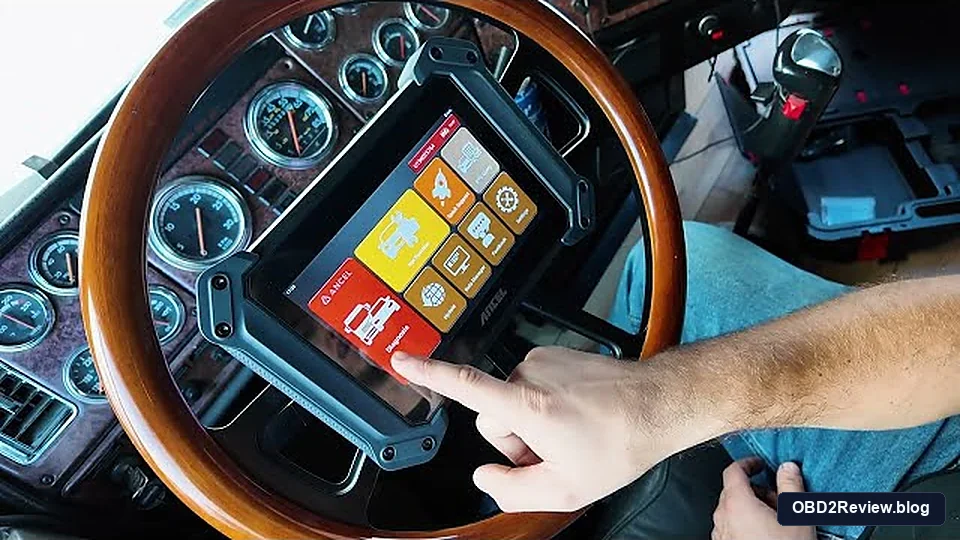
Internal processing speeds dictate how rapidly controllers boot up and query multiple vehicle modules simultaneously. Technicians relying on fast module scans will notice distinct operational differences between these two hardware tiers.
While evaluating baseline hardware capabilities, comparing against our ancel ad310 review reveals how the standard Ancel V6 utilizes a robust quad-core processor paired with 2GB of RAM for routine diagnostics.
Conversely, the V6 Pro upgrades the internal chipset configuration to include 32GB of onboard storage and enhanced memory bandwidth, significantly accelerating boot times and multi-module data stream rendering.
- Impact-resistant exterior casings protect sensitive internal logic boards.
- Standardized connection ports ensure secure cable locking during live data logging.
- Optimized power distribution prevents voltage drops during intensive diagnostic procedures.
Processor Architecture and Memory Limits
The standard model features a capable multi-core processor configured for routine diagnostic tasks. It handles standard read and clear operations without noticeable lag during normal workshop conditions.
Stepping up to the professional iteration introduces higher RAM allocations and faster clock speeds. This hardware enhancement dramatically reduces latency when graphing multiple live data PIDs.
- Enhanced memory bandwidth accelerates ECU handshake protocols significantly.
- Reduced latency during high-speed graphing sessions improves fault isolation accuracy.
Diagnostic Coverage and Protocol Capabilities
As noted within our ancel fx2000 review, comprehensive protocol compatibility ensures seamless communication across diverse global vehicle architectures for technicians working on mixed fleets requiring absolute reliability.
CAN FD and DoIP protocol integration represent the current benchmark for modern vehicle communication standards. Evaluating how each tool handles these fast protocols dictates long-term utility in modern repair facilities.
Both devices support standard OBD-II protocols, yet the V6 Pro expands deeper into CAN FD topology, allowing direct communication with newer GM and Ford architectures without requiring external protocol translation boxes.
Technicians servicing European luxury brands will find the V6 Pro handles bi-directional actuation tests more reliably due to its optimized ISO-TP protocol handling and expanded ECU coding databases.
- Full support for legacy OBDII protocols alongside modern high-speed networks.
- Automatic vehicle identification streamlines the initial connection and setup process.
- Extensive database coverage spans domestic, Asian, and European passenger vehicles.
Advanced Bi-Directional Control Depth
Active testing capabilities allow technicians to command vehicle actuators directly from the diagnostic tablet. This functional depth separates basic code readers from true diagnostic scan tools.
The professional variant unlocks deeper actuation routines, including fuel injector balancing and transmission adaptive resets. These advanced functions are essential for accurate drivability diagnosis and repair verification.
- Direct component actuation verifies mechanical integrity without manual probing.
- Specialized relearn procedures ensure proper sensor calibration post-replacement.
Performance and Real-World Output Metrics
Evaluating real-world diagnostic output requires measuring response times during complex system scans. Technicians demand rapid module identification to maintain high efficiency across busy repair service schedules.
Data refresh rates during live parameter monitoring impact a technician's ability to catch intermittent faults. Faster hardware configurations yield smoother waveform graphs and more reliable diagnostic conclusions.
As outlined inside our ancel bd310 review, the base V6 refreshes live parameter data streams at roughly 10Hz, which suffices for engine monitoring but occasionally introduces minor lag during graphing multiple PIDs.
Stepping up to the V6 Pro pushes refresh rates closer to 18Hz, providing mechanics with the real-time responsiveness necessary to diagnose intermittent misfires and erratic sensor voltage fluctuations accurately.
- Rapid full-system scanning reduces vehicle dwell time in the service bay.
- High-frequency data sampling captures elusive intermittent electrical glitches accurately.
- Clear graphical user interfaces minimize misinterpretation of complex sensor metrics.
Handling Heavy Data Streams Under Load
When monitoring dozens of live data parameters simultaneously, lesser processors often experience screen stutter. The upgraded processing unit maintains fluid interface responsiveness even during heavy graphing tasks.
This consistent performance prevents software crashes during critical module coding sessions where interruption risks are high. Reliability under demanding conditions protects both the vehicle and the repair facility.
- Maintains high frame rates during multi-parameter live data graphing.
- Eliminates software freezing risks during critical firmware update sequences.
Build Quality, Maintenance and Environmental Durability
Automotive repair shops expose diagnostic equipment to grease, solvents, and accidental drops from heights. Exterior housing materials must resist chemical degradation while protecting internal microelectronics effectively.
Routine maintenance for these tablets primarily involves keeping touchscreens clean and updating software packages. Rugged corner bumpers absorb kinetic energy during accidental impacts onto concrete floors.
Workshop environments demand high physical resilience, and both scanner housings utilize heavy-duty ABS plastics wrapped in impact-resistant rubber bumpers designed to absorb drops onto concrete shop floors.
However, the V6 Pro incorporates superior internal gasketing, achieving a higher resistance threshold against shop fluid ingress like brake fluid, oil, and coolant splashes common during heavy repairs.
- Chemical-resistant outer shells withstand exposure to brake fluid and solvents.
- Sturdy kickstands facilitate hands-free viewing during under-hood diagnostic testing.
- Sealed port covers prevent dust and metal shavings from entering internal components.
Thermal Management and Enclosure Longevity
Internal heat dissipation prevents thermal throttling during extended diagnostic sessions in warm environments. Passive cooling designs eliminate dust ingestion risks common in traditional fan-cooled diagnostic hardware.
Solid-state thermal pads transfer internal heat directly to the exterior metallic chassis safely. This engineering approach maximizes service life in demanding shop floor environments without adding weight.
- Fanless cooling architecture prevents internal contamination from workshop dust.
- Effective thermal management sustains peak processing speeds during long repairs.
Ergonomics, Noise, Efficiency and Footprint
Tool ergonomics directly influence daily technician fatigue during extended diagnostic troubleshooting sessions. A well-balanced tablet housing reduces wrist strain when held for long periods inside vehicles.
Operating noise remains entirely absent due to the silent thermal management and solid-state design. Energy efficiency optimization ensures the internal battery sustains adequate charge through multiple vehicle scans.
Weighing under two pounds, both tablets prevent wrist fatigue during extended diagnostic sessions, while their fanless designs ensure silent workshop operation free from distracting mechanical whines.
The V6 Pro features a slightly brighter capacitive touchscreen, improving outdoor readability under direct sunlight when technicians are diagnosing vehicles in uncovered parking lot bays.
- Textured grip surfaces prevent accidental slips during one-handed operation.
- Optimized screen brightness ensures clear visibility under direct sunlight conditions.
- Compact charging docks keep the hardware organized and powered between jobs.
Physical Dimensions and Workspace Integration
Screen size balances workspace visibility with comfortable handling characteristics inside tight vehicle cabins. The physical footprint fits standard diagnostic cart drawers without requiring custom storage modifications.
Integrated hanging straps allow technicians to secure the tablet safely from rearview mirrors during dynamic road testing procedures, ensuring data visibility without compromising driving safety.
- Optimal screen-to-body ratio maximizes viewing area without excessive bulk.
- Integrated mounting provisions support safe in-cabin positioning during testing.
Software Architecture and Update Mechanics
Diagnostic software utility relies heavily on intuitive menu layouts and frequent vehicle database updates. Technicians need quick access to common service functions without navigating through excessive submenu layers.
Wi-Fi connectivity enables seamless over-the-air updates directly inside the workshop environment. Clear navigation pathways reduce training time for junior technicians joining the repair facility team.
Software maintenance relies on seamless Wi-Fi connectivity, letting users download manufacturer-specific patches directly through the Android-based interface without needing complex PC companion software.
Building upon insights found in our ancel ad410 review, the V6 Pro typically receives priority server bandwidth from Ancel during major database revisions, ensuring technicians access the newest diagnostic trouble code definitions quickly.
- Intuitive touch interfaces accelerate menu navigation and function selection.
- Cloud-based update mechanisms deliver the latest vehicle coverage rapidly.
- Comprehensive diagnostic trouble code definitions include suggested repair paths.
Diagnostic Report Generation and Sharing
Professional repair shops require clear documentation for customer communication and insurance billing purposes. Both platforms generate detailed pre-scan and post-scan reports highlighting all detected system faults.
Completed reports transmit effortlessly via email or direct Wi-Fi printing to workshop management systems. This transparent documentation builds strong customer trust and protects liability for the shop.
- Detailed pre and post-repair reports verify complete system health.
- Wireless transmission options streamline communication with service advisors.
Which Option Fits Your Specific Workshop Workload
Selecting the correct diagnostic tool requires matching hardware capabilities to your daily repair volume. General service bays handling routine maintenance benefit greatly from the straightforward efficiency of the base model.
Conversely, specialized drivability and electrical repair facilities will quickly leverage the advanced bi-directional controls found on the professional tier. Assessing your typical job mix guarantees a sound investment.
General repair shops handling routine maintenance, basic resets, and standard OBD-II diagnostics will find the standard V6 provides adequate capabilities without introducing unnecessary hardware overhead.
Advanced diagnostic facilities and mobile mechanics should invest in the V6 Pro to leverage its expanded protocol support and faster processing speeds required for complex module programming.
- Base model perfectly serves general repair shops focusing on standard maintenance.
- Professional version empowers advanced technicians tackling complex electrical diagnostics.
- Evaluate long-term fleet trends before finalizing your shop equipment investment.
Return on Investment for Independent Shops
Diagnostic efficiency directly correlates with shop profitability and technician billing hours. Investing in faster processing speeds eliminates waiting time during routine module communication checks.
Reducing vehicle diagnostic turnaround time allows service bays to complete more jobs per week. Choosing the right platform maximizes overall shop productivity and long-term capital efficiency.
- Faster scan times increase daily vehicle throughput in active service bays.
- Advanced programming capabilities keep high-margin repairs in-house.
Frequently Asked Questions
Can both scanners perform oil reset and EPB service functions?
Yes, both diagnostic platforms include comprehensive reset capabilities for routine maintenance tasks. Routine service resets are fully supported across both hardware tiers.
Does the standard model support CAN FD vehicle communication protocols?
Compatibility varies by specific firmware version, but the professional variant guarantees native protocol support. Native protocol support is crucial for modern vehicle diagnostics.
How are software updates delivered to the diagnostic tablets?
Updates download seamlessly over standard Wi-Fi networks directly through the built-in application interface. Over-the-air updates ensure your diagnostic database stays completely current.
Are wireless VCI dongles included with both diagnostic systems?
Both packages include reliable vehicle communication interface modules for untethered diagnostic testing flexibility. Wireless VCI modules allow convenient movement around the vehicle bay.
Which platform offers better long-term durability for busy shops?
The professional iteration features reinforced exterior housing and upgraded internal thermal management components. Enhanced thermal management ensures superior longevity under heavy daily use.