Bluedriver Obd2 vs. Obdlink Mx+: Which Fits Your Setup Better?
Bluedriver and OBDLink MX+ represent opposing philosophies in Bluetooth diagnostics. Choosing between them requires balancing all-inclusive repair databases against advanced protocol support.

The BlueDriver dominates for DIYers seeking curated repair reports, while the OBDLink MX+ serves professionals requiring deep Ford and GM network access.
Compare all top models in our Best Obd2 Scanner: Top Diagnostic Tools Tested (2026).
Side-by-Side Breakdown
| Criteria | Bluedriver Obd2 | Obdlink Mx+ | Edge |
|---|---|---|---|
| Peak Performance & Output | Proprietary database queries with fast DTC generation | Blazing raw data refresh rates on multi-network buses | Obdlink Mx+ |
| Duty Cycle & Consistency | Stable consumer connection for standard diagnostic sessions | Engineered for continuous logging and monitoring tasks | Obdlink Mx+ |
| Operating Noise & Vibration | Completely silent solid-state housing with secure seating | Solid-state construction with zero audible mechanical noise | Tie |
| Portability & Footprint | Slightly bulkier ergonomic housing with easy grip | Ultra-low profile design prevents accidental knee strikes | Obdlink Mx+ |
| Maintenance & Service Life | Sealed unit requiring zero firmware flashing maintenance | Over-the-air firmware updates ensure long-term protocol support | Obdlink Mx+ |
| Power Requirements | Low parasitic drain with automatic sleep functionality | BatterySaver technology prevents dead vehicle batteries | Obdlink Mx+ |
| Best Ideal Use-Case | Everyday drivers needing verified repair fixes | Advanced tuners requiring comprehensive OEM network access | Split by User |
Architectural Design and Hardware Engineering
Evaluating the physical engineering of diagnostic dongles reveals distinct manufacturing priorities. BlueDriver utilizes a robust molded chassis designed for frequent plugging and unplugging.
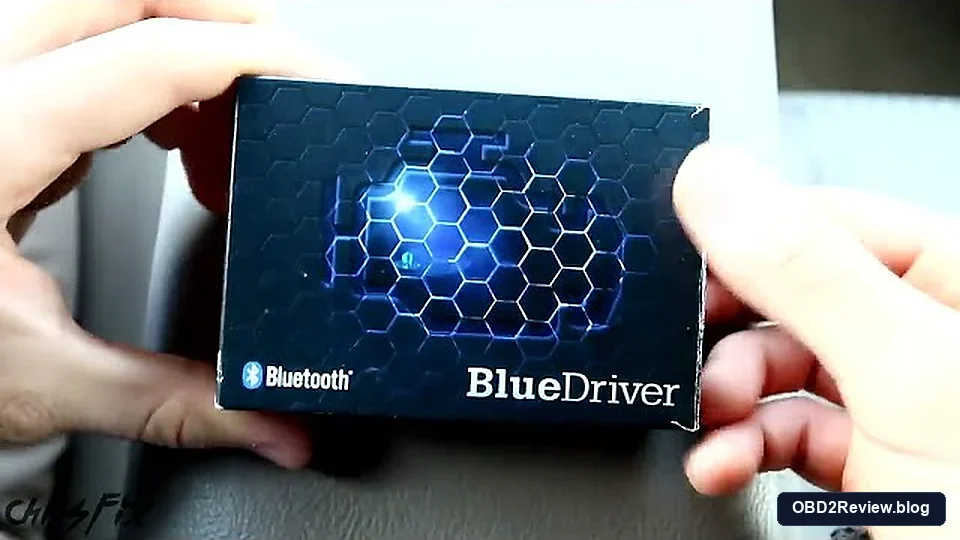
In contrast, the OBDLink MX+ features a compact form factor optimized for permanent under-dash mounting. Engineers prioritized low profile construction to prevent accidental knee strikes.
Internal circuit boards utilize surface-mount technology to withstand continuous vehicular vibration. Both units incorporate protection circuitry against reverse polarity and transient voltage spikes.
As detailed in our bluedriver pro obd2 review, the tool employs a custom STMicroelectronics ARM processor paired with Bluetooth 4.0 LE, maintaining a compact form factor that easily clears lower dashboards.
Conversely, the OBDLink MX+ integrates a faster 32-bit ST processor with extensive flash memory, supporting complex firmware updates over-the-air to ensure long-term compatibility with evolving automotive communication networks and protocol standards.
Both adapters utilize surface-mount technology on multi-layer PCBs, but the MX+ adds robust ESD protection diodes on the OBD-II interface pins to withstand severe electrostatic discharge events during frequent field insertions.
- Molded thermoplastic enclosures provide robust impact resistance
- Gold-plated OBD-II connector pins prevent oxidation over time
- Compact form factors fit beneath tight dashboard cowls easily
Connector Durability and Pinout Design
Frequent tool insertion tests the mechanical limits of diagnostic port pins. Reinforced housings ensure pins maintain proper tension across thousands of connection cycles.
Corrosion resistance remains critical in humid climates where condensation forms inside vehicle cabins. Quality plating on connector pins guarantees consistent electrical conductivity during diagnostics.
- Precision-molded pins align perfectly with vehicle ports
- Strain relief prevents internal wire fatigue during handling
Thermal Management Under Dashboards
Automotive cabins experience extreme temperature fluctuations during seasonal weather shifts. Internal components must dissipate heat efficiently without thermal throttling processor speeds.
Passive cooling designs inside both adapters rely on adequate airflow around the steering column area to maintain operational stability during extended diagnostic logging sessions.
- High-temperature polymers resist warping under direct sunlight
- Low-power chipsets minimize internal heat generation effectively
Protocol Compatibility and Vehicle Coverage
Modern vehicle networks demand extensive protocol support to communicate across various modules. OBDLink MX+ includes proprietary support for Ford and GM specific communication networks.
Comprehensive multi-protocol compatibility ensures seamless connection with classic OBD-II vehicles alongside modern CAN-FD architectures. Broad coverage eliminates the need for multiple adapter purchases.
Legacy vehicle support remains robust, accommodating older Chrysler and Asian import diagnostic requirements without manual switch flipping or external jumper cables.
Hardware-level protocol support defines the primary operational difference, with the MX+ natively handling SW-CAN and MS-CAN networks required for deep diagnostic access to GM and Ford body control modules.
BlueDriver relies heavily on standard OBD-II emission protocols like ISO 15765-4 CAN and SAE J1850, utilizing software-based switching to query enhanced manufacturer modules rather than native hardware bus multiplexing.
Technicians working on older pre-2008 vehicles will appreciate the MX+ legacy support for ISO 9141-2 and KWP2000, ensuring reliable connection speeds across diverse international import fleets without dropping packet frames.
- Supports all mandatory OBD-II protocols universally
- Includes advanced MS-CAN and SW-CAN networking capabilities
- Seamlessly interfaces with heavy-duty diagnostic software packages
Advanced Network Bus Integration
Accessing body control modules requires specialized medium-speed communication channels. Dual-network capability allows technicians to read airbag and ABS codes instantly.
Standard generic adapters often fail when attempting to query non-powertrain modules on domestic vehicles without supplementary multiplexer hardware modifications.
- Direct access to body and chassis control systems
- Eliminates manual toggle switch requirements entirely
Import Versus Domestic Vehicle Support
European vehicles rely heavily on specialized ISO communication standards for module interrogation. Both tools negotiate these complex handshakes rapidly upon ignition activation.
When evaluating options from our best obd2 bluetooth scanners guide, you notice high-end protocol chips ensure reliable communication across diverse global automotive platforms and unique manufacturer addressing schemes.
- Handles complex ISO and KWP protocols flawlessly
- Interrogates hybrid powertrain control modules accurately
Diagnostic Speed and Data Refresh Rates
Real-time parameter monitoring depends heavily on internal processor speed and buffer size. Fast refresh rates allow technicians to spot intermittent sensor dropouts accurately.
Latency during live data graphing frustrates mechanics diagnosing drivability issues. Optimized firmware execution ensures streaming metrics appear on screen without noticeable stuttering.
High-speed data transfer protocols maximize Bluetooth bandwidth utilization for fluid gauge readouts and rapid diagnostic trouble code retrieval procedures.
Data throughput heavily favors the MX+ due to its optimized STN2120 interpreter chip, which accelerates command processing and delivers exceptionally high PID polling frequencies for real-time graphing tasks.
BlueDriver achieves respectable live data speeds over Bluetooth LE, though heavy concurrent PID requests can occasionally trigger buffer overflow delays during aggressive logging sessions on high-speed CAN buses.
When monitoring multiple sensors simultaneously, the lower latency of the MX+ prevents data drops, making it superior for capturing intermittent transient faults during dynamic road testing procedures.
- Zero lag during live parameter graphing sessions
- Rapid diagnostic trouble code clearing capabilities
- Optimized packet handling reduces communication overhead
Live Data PIDs and Sampling Efficiency
Selecting dozens of parameter IDs simultaneously stresses slow processing hardware. Advanced microcontrollers prioritize critical engine sensors to maintain high sampling frequencies.
Efficient data pipelining prevents buffer overflows during high-rpm testing and aggressive dynamometer diagnostic runs.
- Supports custom PID creation for advanced tuning
- Maintains high frame rates during multi-sensor logging
Clearing DTCs and Resetting Monitors
Clearing emission readiness monitors requires precise command sequencing with the engine control unit. Reliable handshake protocols prevent interrupted diagnostic reset sequences.
Post-repair verification relies on swift clearing of pending diagnostic trouble codes to validate component replacement success.
- Instantaneous emission monitor status reporting
- Reliable clearing of hard fault codes
Companion Application Ecosystems and Usability
Software interfaces dictate the overall user experience far beyond raw hardware capability. App integration transforms raw hexadecimal data into actionable repair intelligence.
BlueDriver pairs with an all-inclusive proprietary application loaded with verified fixes. Curated repair reports written by professional mechanics save valuable troubleshooting time.
OBDLink MX+ relies on modular third-party software compatibility like FORScan and Torque Pro. This flexibility appeals to advanced users wanting customizable dashboards.
The BlueDriver application prioritizes out-of-the-box simplicity, pairing its robust repair report database directly with confirmed fixes submitted by professional technicians worldwide for specific trouble codes.
OBDLink software operates as an open canvas, allowing advanced users to configure custom dashboards using extensive PID formulas and export raw CSV log files for offline desktop analysis.
While BlueDriver locks users into its proprietary ecosystem, the MX+ supports third-party apps like FORScan and Torque, expanding its utility well beyond basic diagnostic routines into deep module programming.
- Proprietary apps offer streamlined user interfaces
- Third-party software compatibility expands functional capability
- Cloud backup stores historical diagnostic records securely
User Interface Design for DIY Mechanics
Navigating complex diagnostic menus requires intuitive icon layouts and clear text prompts. Simplified dashboards prevent user error during emergency roadside evaluations.
Color-coded health reports give non-technical drivers an immediate understanding of existing vehicular faults without reading raw codes.
- Clean visual hierarchy simplifies complex data
- Clear help menus guide novice users through testing
Advanced Customization for Power Users
Professional technicians demand customizable gauge clusters and raw data export functions. Flexible software ecosystems allow custom PID formulas and logging setups.
Exporting CSV log files enables deep offline analysis using spreadsheet software for intermittent drivability troubleshooting.
- Customizable digital dashboard gauge displays
- Direct CSV data export for offline analysis
Build Quality, Power Draw, and Field Durability
Leaving an adapter plugged in overnight should never drain a healthy starter battery. Smart sleep modes minimize parasitic power draw during extended parking periods.
Ruggedized external casings protect delicate internal electronics from grease, oil, and accidental drops inside busy automotive repair environments.
Long-term reliability depends on solder joint integrity and component selection designed to withstand extreme automotive electrical noise environments.
Extended diagnostic sessions require minimal parasitic drain, and both units feature intelligent sleep modes that automatically power down when vehicle ignition cycles terminate, preventing battery depletion.
The physical enclosure of the MX+ uses engineering-grade plastics with a textured grip surface, resisting harsh shop chemicals, grease, and accidental impacts during daily professional use in busy service bays.
BlueDriver features a smooth, streamlined profile with an integrated diagnostic status LED, though its polished plastic shell can be prone to scuffing when stored loosely in crowded toolbox drawers.
- Ultra-low standby current prevents vehicle battery drain
- Impact-resistant outer shells survive shop floor drops
- EMI shielding protects against alternator electrical noise
Parasitic Current Draw and Battery Protection
Modern vehicles feature numerous computers that remain awake if aftermarket accessories misbehave. Advanced power management circuits shut down radio transmitters automatically.
Low quiescent current draw ensures vehicles sit undisturbed for weeks without triggering low-voltage battery warning systems.
- Automatic power-down after engine shutdown
- Protects sensitive starting and charging systems
Resistance to Shop Environments
Many options featured in our best obd2 scanner roundup endure harsh workshop conditions. Sealed enclosures successfully prevent fluid ingress from damaging delicate internal circuit traces during daily shop repairs.
Ergonomic textures provide a secure grip even when hands are covered in grease or automotive transmission fluid during repairs.
- Chemical-resistant plastics withstand petroleum contact
- Textured grip surfaces prevent accidental dropping
Advanced Features and Enhanced Diagnostics
Basic code readers only expose powertrain faults, ignoring ABS, SRS, and transmission subsystems. Enhanced diagnostics unlock total vehicle health visibility.
Specialized bi-directional controls allow technicians to actuate fuel pumps, cooling fans, and door locks directly from their mobile device screen.
Manufacturer-specific diagnostic routines go far beyond standard generic emission testing parameters for thorough vehicle inspection.
Enhanced diagnostics on the BlueDriver cover ABS, airbag, and transmission modules, but additional vehicle-specific features require upfront software licensing included with the hardware purchase price.
The MX+ excels in bidirectional control capabilities, enabling technicians to execute active tests such as fuel pump activation and automated EVAP system leak checks directly from mobile devices.
Highlighted in our best professional obd2 scanner review, technicians benefit from reading manufacturer-specific trouble codes across multiple networks without paying separate subscription fees for comprehensive diagnostic coverage.
- Full system scanning covers ABS and airbags
- Bi-directional testing verifies component actuation
- Enhanced live data parameters track transmission temperatures
Bi-Directional Control Implementation
Testing actuators manually requires expensive factory-level scan tools historically. Advanced Bluetooth adapters now bridge this gap for mobile technicians.
Commanding components on and off verifies circuit wiring integrity without tearing apart interior dashboard harnesses.
- Active testing validates sensor feedback loops
- Command solenoids and relays directly
Enhanced Manufacturer Diagnostic Suites
Accessing proprietary manufacturer routines requires high-speed protocol translation. Dedicated software packages unlock deep diagnostic troubleshooting capabilities.
Reading transmission slip rates and ABS wheel speed sensors helps pinpoint intermittent mechanical failures rapidly.
- Access factory-level diagnostic trouble codes
- Monitor specialized transmission fluid parameters
Choosing the Right Tool for Your Garage
Selecting between these two industry-leading adapters depends entirely on your specific diagnostic goals. Matching features to your technical skill level ensures maximum return on investment.
DIYers tackling weekend driveway repairs benefit immensely from curated repair databases and straightforward reporting interfaces.
Professional technicians and custom tuners will appreciate the raw speed, deep bus access, and software flexibility offered by advanced multi-protocol options.
DIYers seeking straightforward trouble-code lookup and verified repair strategies will find the BlueDriver platform offers an intuitive, hassle-free diagnostic experience for routine automotive maintenance tasks.
Technicians and advanced enthusiasts requiring heavy-duty protocol support, fast PID refresh rates, and third-party app compatibility should select the MX+ for maximum technical versatility.
Evaluating your specific diagnostic requirements, target vehicle brands, and data logging needs will ensure your chosen adapter delivers long-term reliability and optimal shop productivity.
- Assess your need for enhanced ABS and SRS coverage
- Consider your preference for proprietary versus open software
- Evaluate long-term maintenance and firmware update needs
Cost Versus Capability Trade-Offs
Investing in diagnostic equipment requires weighing upfront costs against long-term utility. All-inclusive ecosystems eliminate hidden in-app subscription fees for repair data.
Open architecture adapters may require purchasing specialized third-party software to unlock advanced manufacturer-specific diagnostic features.
- Transparent software licensing models
- Evaluate total cost of ownership
Future-Proofing Your Diagnostic Toolkit
Automotive networking technology evolves rapidly with new CAN-FD and ethernet protocols. Over-the-air updates ensure your hardware remains compatible with upcoming vehicle releases.
Choosing flashable hardware protects your investment against premature obsolescence as vehicle architectures become increasingly complex.
- Firmware updatability ensures long service life
- Adaptable to emerging automotive communication standards
Frequently Asked Questions
Can both scanners read ABS and airbag codes?
Yes, both adapters support enhanced diagnostics beyond basic powertrain faults. Full system access covers body and chassis control modules.
Do these adapters work with third-party diagnostic apps?
The OBDLink MX+ offers extensive third-party software compatibility. Open architecture allows seamless connection with popular tuning packages.
Will leaving the adapter plugged in drain my battery?
Both units feature intelligent power management and automatic sleep modes. Low parasitic draw prevents battery depletion during storage.
Which tool provides better repair advice for DIYers?
BlueDriver includes a curated database of verified fixes. Expert-written reports help non-professionals interpret trouble codes accurately.
Are firmware updates available for these scanners?
Both manufacturers provide routine firmware updates through mobile applications. Over-the-air flashing ensures long-term vehicle protocol compatibility.