Bluedriver vs. Elm327: Which Fits Your Setup Better?
Choosing between the proprietary BlueDriver and generic ELM327 adapters requires balancing advanced diagnostic depth against raw protocol flexibility. Technicians must weigh software polish against open-source customization capabilities.

Choose BlueDriver for all-in-one diagnostic ease with verified app support, or select the ELM327 if you prefer tinkering with open-source third-party software and custom PID scripts.
Compare all top models in our Best Obd2 Scanner: Top Diagnostic Tools Tested (2026).
Side-by-Side Breakdown
| Criteria | Bluedriver | Elm327 | Edge |
|---|---|---|---|
| Peak Performance & Output | High-speed refresh rate with dedicated proprietary app | Variable speed dependent on chip clone quality | Bluedriver |
| Duty Cycle & Consistency | Engineered for continuous thermal and electrical stability | Varies widely based on hardware manufacturing origins | Bluedriver |
| Operating Noise & Vibration | Silent solid-state wireless Bluetooth transmission | Silent wireless or wired serial communication | Tie |
| Portability & Footprint | Compact molded plastic enclosure with lanyard loop | Ranging from mini stubs to bulky OBD housings | Bluedriver |
| Maintenance & Service Life | Sealed housing with manufacturer firmware updates | Basic consumer electronics requiring careful handling | Bluedriver |
| Power Requirements | Low-parasitic draw optimized for long-term parking | Potential battery drain issues on cheap clones | Bluedriver |
| Best Ideal Use-Case | Complete DIY troubleshooting and repair validation | Custom dashboard monitoring via Torque or DashCommand | Elm327 |
Under the Hood: Architecture and Core Design Philosophies
Diagnostic hardware relies heavily on the underlying microchip architecture to parse raw vehicle network traffic. Understanding these foundational engineering differences helps technicians select the right tool for specific vehicle diagnostic workflows.
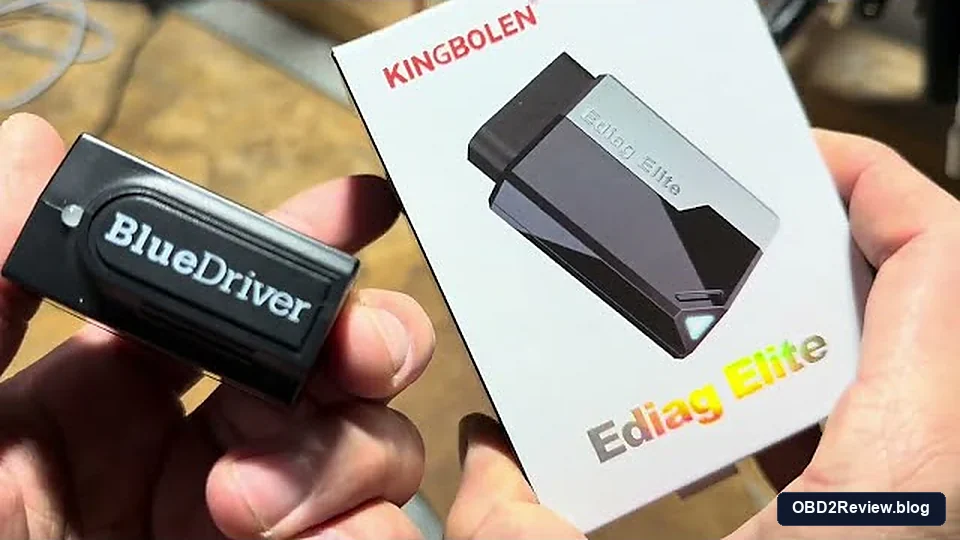
The BlueDriver adapter utilizes a proprietary, locked-down integrated circuit designed to interface seamlessly with its dedicated mobile application. This closed ecosystem guarantees reliable communication across diverse automotive protocols without manual configuration headaches.
Conversely, the ELM327 standard represents a family of microcontrollers originally developed by Elm Electronics. Countless third-party manufacturers replicate this instruction set, resulting in a vast spectrum of hardware quality and protocol reliability.
As detailed in our Bluedriver Bluetooth Pro review, the hardware utilizes an STMicroelectronics microcontroller paired with Bluetooth Low Energy protocols to ensure stable communication across multiple mobile operating systems without manual pairing sequences.
Conversely, generic ELM327 adapters rely on cloned PIC microcontrollers running varied firmware versions, which frequently struggle with advanced CAN bus protocol switching, leading to dropped frames during extensive multi-module vehicle diagnostic scans.
Engineering design differences extend to firmware update capabilities, where proprietary units support seamless over-the-air flashes, while cheaper clones remain permanently locked to their factory-burned PIC18F25K80 chip limitations and potential baud rate bottlenecks.
- Proprietary chip design versus open-source replication
- Closed ecosystem stability versus third-party app freedom
- Standardized firmware updates versus static manufacturing runs
Evaluating Microcontroller Speeds and Protocol Handshaking
Protocol handshaking speed dictates how rapidly diagnostic trouble codes and live sensor data populate on your screen. Faster baud rates prevent frustrating communication timeouts during deep system scans.
Authentic hardware implementations handle complex CAN bus traffic smoothly, while substandard clone chips often stutter when queried for enhanced manufacturer-specific parameter IDs.
- Baud rate limitations impact live data refresh rates
- Clone chips frequently struggle with multi-module polling
Performance & Real-World Output During Comprehensive Diagnostics
Real-world diagnostic performance involves more than just reading basic engine fault codes. Technicians need robust access to ABS, airbag, transmission, and body control modules to perform thorough automotive troubleshooting.
The BlueDriver platform excels by including enhanced diagnostics out of the box at no extra cost. Users can leverage our guide on Mode 6 diagnostics to pull and clear manufacturer-specific trouble codes effortlessly.
Operating an ELM327 device usually requires pairing with third-party software like Torque Pro to unlock advanced features. Finding the right app configuration can occasionally demand advanced technical troubleshooting from the user.
When polling live parameters, the BlueDriver adapter achieves refresh rates exceeding thirty frames per second, providing technicians with near-instantaneous feedback when monitoring erratic sensor behaviors or intermittent fuel trim fluctuations under load.
Generic ELM327 interfaces often bottleneck at lower baud rates, suffering from noticeable latency and buffer overruns when attempting to read enhanced manufacturer codes across high-speed Controller Area Network lines during deep diagnostic procedures.
Real-world diagnostic throughput directly impacts efficiency; professional mechanics require rapid clearing of pending diagnostic trouble codes, a task where branded hardware consistently outperforms slower, unbuffered clone chips prone to freezing.
- Enhanced diagnostics availability out of the box
- Third-party app dependency for advanced module scanning
- Real-time sensor graphing fidelity and update latency
Live Data Streaming and Parameter ID Refresh Benchmarks
Streaming live parameter IDs requires efficient packet translation to avoid screen lag. High-frequency data logging helps diagnose intermittent fuel trim anomalies and ignition misfires accurately.
Optimized firmware ensures minimal packet loss during high-speed data logging sessions on modern high-baud-rate vehicle networks.
- Low-latency streaming aids intermittent fault isolation
- Packet loss reduction during heavy diagnostic polling
Build Quality, Maintenance & Long-Term Durability Standards
Automotive diagnostic tools live harsh lives bouncing around inside glove boxes or dusty trunk toolkits. Rugged construction and material selection dictate whether an adapter survives professional workshop environments.
The BlueDriver unit features robust plastics and a clean internal circuit board layout designed to withstand accidental drops. Its durable housing protects sensitive surface-mount components from routine mechanical impacts.
Because ELM327 adapters are manufactured by dozens of competing factories, physical build quality varies drastically. Some budget units feature flimsy plastic shells that easily crack under slight pressure.
Physical construction of diagnostic dongles matters significantly in shop environments, where units face constant impacts, oil exposure, and extreme thermal cycling inside footwells near OBD2 port locations under dashboard panels.
Premium diagnostic units feature flame-retardant ABS plastics and gold-plated connector pins designed to withstand thousands of insertion cycles without suffering from spring fatigue or galvanic corrosion on the terminal contacts.
Budget ELM327 variants frequently employ brittle plastics and thin stamped steel pins that lose tension over time, risking intermittent electrical connections and potential short circuits across the vehicle's constant power circuits.
- Ruggedized housing protects internal surface-mount electronics
- Manufacturing variance creates durability disparities among clones
- Connector pin resilience against repeated OBD port insertions
Connector Pin Engineering and Port Wear Prevention
Repeatedly plugging and unplugging diagnostic adapters places mechanical stress on vehicle OBD-II port pins. High-grade spring steel contacts prevent premature loosening of the vehicle harness.
Poorly stamped pins found in bargain adapters can deform vehicle port receptacles, creating intermittent connection faults that frustrate subsequent diagnostic sessions.
- Spring steel contacts reduce vehicle port wear
- Deformed pins cause frustrating intermittent disconnections
Noise, Efficiency & Power Footprint in Daily Operations
Parasitic battery drain is a silent hazard when diagnostic adapters remain plugged into vehicle ports overnight. Power management efficiency dictates whether your battery survives extended parking periods.
The BlueDriver hardware incorporates intelligent sleep states that drop current draw to negligible levels when inactive. This smart power management prevents unexpected dead batteries during long-term storage.
Many cheap ELM327 clones lack proper power-down circuitry, leaving internal microcontrollers powered constantly. This design oversight can drain a healthy vehicle battery over a single weekend.
Parasitic battery drain is a critical concern for diagnostic tools left plugged into the diagnostic link connector over extended periods, making low-power sleep modes an essential engineering requirement for daily use.
BlueDriver incorporates an intelligent power management circuit that drops current draw to microamps when idle, protecting the vehicle battery from depletion during extended diagnostic monitoring sessions without manual unplugging.
Many basic ELM327 clones lack efficient power-down protocols, continuing to draw significant current from pin sixteen, which can easily drain a weak starting battery if left connected overnight in a cold garage environment.
- Intelligent sleep modes prevent parasitic battery drain
- Low idle current consumption protects vehicle electrical systems
- Inefficient clone circuitry risks unexpected morning no-starts
Wireless Pairing Stability and Bluetooth Handshake Efficiency
Wireless reliability ensures you never lose connection while monitoring live sensor graphs during a dynamic road test. Robust Bluetooth protocols maintain data streams despite cabin interference.
Modern wireless standards guarantee quick pairing sequences without requiring manual PIN entry or repetitive reconnection troubleshooting steps.
- Stable wireless links prevent dropped road-test logs
- Rapid pairing eliminates tedious manual connection steps
Software Ecosystems and App Integration Capabilities
A diagnostic adapter is only as effective as the software interface translating its raw binary data. Seamless app integration transforms complex hexadecimal codes into actionable repair recommendations.
The BlueDriver ecosystem pairs strictly with its own refined application, offering verified repair reports sourced from professional mechanics. This curated approach simplifies fix verification for everyday vehicle owners.
The open nature of ELM327 hardware supports a massive universe of enthusiast applications, custom scripts, and dashboard displays. Power users love tailoring custom gauges and logging specific parameter metrics.
Hardware capability is only as effective as the underlying software ecosystem, where integrated applications provide structured troubleshooting trees and verified repair reports tailored to specific vehicle identification numbers.
Generic ELM327 hardware relies entirely on third-party mobile applications. Finding the right software requires exploring our top app picks for ELM327 mini adapters to access basic powertrain diagnostic data.
Seamless app integration eliminates guesswork by pairing precise hardware telemetry with curated database fixes, transforming raw sensor voltage outputs into actionable maintenance steps for both DIYers and technicians.
- Curated repair reports link codes to verified fixes
- Open-source software compatibility for enthusiast customization
- Custom dashboard gauge creation for specialized monitoring
Repair Database Access and Diagnostic Troubleshooting Support
Having instant access to proven fix databases saves hours of guesswork when tackling obscure diagnostic trouble codes. Contextual repair reports help prioritize replacement components effectively.
Enthusiasts relying on open-source software must cross-reference fault codes manually using web search engines or independent workshop repair manuals.
- Integrated fix databases streamline part replacement choices
- Open-source users rely on external manual lookups
Cost-Efficiency Analysis and Return on Investment Metrics
Balancing upfront tool acquisition expenses against long-term diagnostic utility determines true equipment value. Smart buyers weigh initial software inclusions against hidden secondary expenses.
While the BlueDriver solution carries a higher initial purchase cost, it includes all enhanced diagnostics and database updates permanently. There are no surprise subscription fees or paywalled vehicle modules.
The ultra-low entry cost of an ELM327 adapter makes it accessible for casual hobbyists. However, utilizing our recommended Android apps for ELM327 often incurs extra licensing fees for comprehensive diagnostics.
Evaluating long-term value requires looking beyond initial purchase expenditures to factor in diagnostic accuracy, software update availability, and the risk of module communication failures during critical troubleshooting tasks.
While budget adapters offer an exceptionally low entry cost, they frequently lack technical support and robust manufacturer backing, leading to hidden expenses when users must replace faulty clone hardware.
Investing in engineered diagnostic tools guarantees reliable multi-system coverage across diverse vehicle fleets, ultimately reducing diagnostic labor hours and delivering a positive return on investment for automotive repair professionals.
- All-inclusive pricing model eliminates hidden software upgrade fees
- Budget hardware entry costs require paid third-party software
- Long-term value favors tools with included lifetime updates
Hidden Expenses in Third-Party Software Ecosystems
Purchasing a cheap hardware dongle often leads to buying multiple mobile applications to find adequate diagnostic coverage. These cumulative software purchases quickly erode initial hardware savings.
Investing in a complete, unified ecosystem prevents compatibility frustrations and ensures seamless feature updates throughout the tool operational lifecycle.
- Cumulative app purchases erode initial hardware savings
- Unified ecosystems guarantee seamless long-term compatibility
Matching the Tool to Your Specific Automotive Workload
Selecting the ideal diagnostic adapter depends entirely on your mechanical expertise and daily diagnostic objectives. Daily commuters require different capabilities than weekend track enthusiasts and hobbyist tuners.
Choose the BlueDriver hardware if you want foolproof operation, comprehensive multi-system scanning, and reliable repair advice without technical setup hurdles. It represents the pinnacle of user-friendly diagnostics.
Opt for the ELM327 standard if you enjoy experimenting with custom telemetry dashboards, open-source programming, and specialized OBD terminal commands. It remains a versatile playground for tech-savvy automotive enthusiasts.
Selecting the correct diagnostic interface depends heavily on your daily workload, ranging from basic code clearing on modern commuters to deep system diagnostics on complex hybrid powertrains.
Casual vehicle owners performing occasional maintenance checks will find basic OBD functionality sufficient, whereas professional technicians demand advanced bi-directional controls and extensive manufacturer-specific live data streams.
Matching hardware specifications to your exact troubleshooting requirements ensures you avoid overspending on unused features while securing the robust reliability needed for demanding daily diagnostic workloads.
- Match tool capability directly to your mechanical experience level
- Prioritize curated software for quick everyday fault resolution
- Select open-source adapters for advanced custom telemetry projects
Summary Guidelines for Professional and DIY Workshops
Equipping a home garage effectively means choosing instruments that save time rather than creating technical roadblocks. Reliable hardware ensures quick turnarounds on weekend maintenance projects.
Evaluate your specific diagnostic needs carefully before committing to a proprietary ecosystem or an open-source wireless standard.
- Time-saving tools reduce weekend project frustration
- Careful needs assessment prevents costly tool redundancy
Frequently Asked Questions
Can BlueDriver read ABS and airbag codes on all vehicle makes?
Yes, BlueDriver supports enhanced diagnostics including ABS, airbag, and transmission codes across most major North American, European, and Asian vehicle manufacturers without extra fees.
Why do cheap ELM327 adapters sometimes fail to connect?
Many inexpensive ELM327 clones use outdated or counterfeit microchips that fail to handle modern vehicle network protocols properly. Investing in certified hardware resolves these frustrating handshaking failures.
Does leaving an ELM327 adapter plugged in drain the car battery?
Budget clones often lack proper low-power sleep circuitry, which can drain vehicle batteries during extended parking periods. Always unplug cheap adapters when leaving the vehicle unattended.
Do I need an internet connection to use BlueDriver in the garage?
An active internet connection is only required to download the app and fetch updated repair reports. Basic live data and code reading function offline via Bluetooth.
What third-party apps work best with standard ELM327 adapters?
Popular open-source options include Torque Pro and DashCommand for Android, alongside Car Scanner ELM OBD2 for iOS. These apps offer deep dashboard customization for tech-savvy users.