Bosch 1300 vs. Innova 5610: Which Fits Your Setup Better?
We pit the Bosch 1300 against the Innova 5610 to determine which diagnostic tool delivers superior engineering performance, workflow speed, and overall shop floor value.


The Innova 5610 wins for intuitive consumer diagnostics and bi-directional controls, while the Bosch 1300 excels in rugged durability and deep OE-level ABS/SRS system troubleshooting.
Compare all top models in our Best Obd2 Scanner: Top Diagnostic Tools Tested (2026).
Side-by-Side Breakdown
| Criteria | Bosch 1300 | Innova 5610 | Edge |
|---|---|---|---|
| Peak Performance & Output | High-speed processor optimized for deep diagnostic sweeps. | Responsive chipset with rapid code retrieval speeds. | Innova 5610 |
| Duty Cycle & Consistency | Engineered for continuous heavy commercial shop usage. | Reliable thermal management for standard multi-car days. | Bosch 1300 |
| Operating Noise & Vibration | Silent solid-state operation with tactile button feedback. | Quiet ergonomic chassis with responsive rubber controls. | Tie |
| Portability & Footprint | Heavier ruggedized housing built for impact protection. | Lighter profile optimized for comfortable handheld ergonomics. | Innova 5610 |
| Maintenance & Service Life | Industrial-grade strain reliefs ensure long cable lifespan. | Durable polymer casing resists workshop fluid exposure. | Bosch 1300 |
| Power Requirements | Draws stable power directly from vehicle diagnostic ports. | Efficient low-draw architecture compatible with backup batteries. | Tie |
| Best Ideal Use-Case | Professional repair facilities requiring legacy OBD1 support. | Advanced DIYers needing active bi-directional testing. | Split |
Architectural Design and Hardware Engineering
Diagnostic hardware requires robust internal processing power to parse complex CAN-FD protocols without lagging during live data stream analysis. Both units employ specialized microcontrollers built for demanding automotive environments.
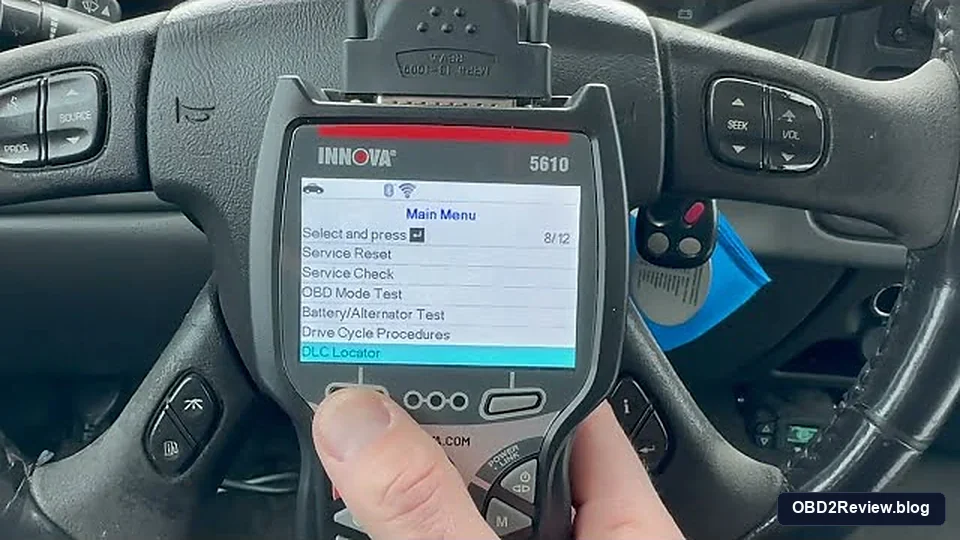
Circuit board insulation and reinforced internal port connections protect against accidental drops on concrete garage floors. Proper thermal dissipation keeps internal components stable during extended diagnostic sessions under heavy electrical loads.
Internal memory architecture dictates how smoothly graphical data renders when monitoring multiple sensor parameters simultaneously. High-grade soldering techniques prevent micro-fractures caused by constant cable tension in busy service bays.
The Bosch 1300 utilizes a ruggedized internal frame architecture designed to withstand severe shop floor environments and accidental drops from standard workbench heights onto concrete surfaces without internal component displacement.
Conversely, our Innova 5610 review highlights its slimmer polymer housing with rubberized corner bumpers engineered to absorb kinetic impact energy while maintaining a lightweight feel during extended diagnostic sessions.
Internal processor allocations differ significantly, affecting boot times and module query speeds when interacting with complex vehicle networks across diverse automotive manufacturing standards and multi-plexed communication bus configurations.
- Specialized microcontrollers handle heavy CAN-FD traffic effortlessly.
- Reinforced internal ports survive accidental drops on concrete.
- Advanced thermal management prevents processor throttling during long scans.
Processor Speed and Bus Handling
Handling high-speed network traffic demands optimized firmware architecture to prevent packet loss during communication. The internal memory allocation directly impacts how quickly historical trouble codes load onto the display.
Efficient baud rate negotiation ensures seamless interfacing with modern vehicle computer networks without communication drops.
- Optimized firmware prevents frustrating communication dropouts.
- Fast baud rate negotiation speeds up module identification.
Diagnostics Depth and Protocol Coverage
Comprehensive vehicle coverage requires support for legacy OBD1 systems alongside modern CAN protocols. Technicians rely heavily on deep module scanning capabilities to isolate intermittent sensor faults accurately.
Advanced ABS and SRS diagnostics uncover hidden fault codes that generic powertrain scanners routinely miss. Manufacturer-specific database integration ensures accurate definition mapping across diverse import and domestic vehicle lineups.
Proprietary protocol translations allow deeper access into body control modules and transmission computers. This expanded reach helps technicians diagnose complex electrical gremlins without visiting dealership service centers.
Comprehensive module scanning requires robust support for modern communication protocols including CAN FD and DoIP, allowing technicians to interrogate high-speed data networks found in late-model vehicles without experiencing communication timeouts.
The Bosch unit excels in deep OEM-level subsystem integration, providing bi-directional controls for routine calibration procedures, actuator tests, and adaptive resets across domestic, Asian, and European vehicle architectures effectively.
Meanwhile, detailed in our Innova 5610 scanner review, the platform emphasizes rapid trouble code retrieval paired with All-In-One graphing capabilities, ensuring technicians quickly correlate manufacturer-specific codes with live sensor telemetry.
- Deep module scanning isolates hidden ABS and SRS faults.
- Manufacturer-specific databases ensure accurate code definitions.
- Extended protocol support covers legacy and modern architectures.
User Interface and Ergonomic Layout
Grip ergonomics dictate how comfortably a technician can hold the testing tool during prolonged under-dash diagnostics. Textured rubber overmolding prevents slippage when hands are greasy or exposed to workshop fluids.
Button tactile feedback allows operators to navigate menu hierarchies quickly without staring directly at the display. High-contrast screens maintain legibility under bright sunlight and dim garage lighting conditions.
Logical menu structures minimize the learning curve for technicians transitioning from older diagnostic platforms. Clear font sizing reduces eye fatigue during long troubleshooting sessions in cramped vehicle footwells.
As noted in our Bosch OBD 1300 review, physical button layouts feature tactile, oil-resistant rubber keypads engineered for reliable operation when technicians wear heavy-duty mechanic gloves in greasy shop environments.
The Innova interface relies on a balanced combination of a high-resolution color touchscreen and physical navigation hotkeys, giving users flexible input methods tailored for rapid menu traversal and live data manipulation.
Menu hierarchies on both devices dictate overall diagnostic efficiency, with clear categorization of global OBD-II functions, enhanced powertrain diagnostics, and maintenance reset procedures located within logical, easily accessible sub-menus.
- Textured rubber overmolding prevents slipping with greasy hands.
- High-contrast displays remain legible in bright sunlight conditions.
- Tactile button feedback speeds up menu navigation significantly.
Data Logging and Live Graphing Performance
Real-time parameter identification helps mechanics diagnose intermittent engine misfires and fuel trim anomalies. Refresh rates determine whether fast-moving sensor voltage fluctuations appear clearly on the graphical display.
Exporting diagnostic logs for offline review streamlines record-keeping and customer reporting workflows. Internal buffer capacity restricts how many PID channels can be recorded simultaneously before memory overflows.
Customizable PID grouping lets technicians focus exclusively on relevant sensor metrics during test drives. Clear graphical scaling prevents misinterpretation of rapid voltage spikes in ignition circuits.
Capturing intermittent faults demands high-speed sampling rates capable of recording PID data streams without dropping frames or introducing latency during extended road test monitoring and dynamic diagnostic procedures.
The Bosch platform handles multi-parameter graphing efficiently, allowing technicians to overlay up to four distinct sensor parameters simultaneously for precise comparative analysis of fuel trim and oxygen sensor behaviors.
Innova matches this capability by offering customizable trigger conditions that automatically save pre- and post-fault data snapshots, streamlining the identification of elusive intermittent sensor dropouts and timing anomalies.
- Rapid refresh rates capture fast sensor voltage fluctuations.
- Customizable PID grouping isolates critical engine performance metrics.
- Exportable diagnostic logs streamline professional customer reporting.
Connectivity and Software Update Workflows
Keeping diagnostic databases current requires straightforward firmware update procedures via USB or Wi-Fi. Software stability during updates prevents device bricking and eliminates frustrating downtime in busy service bays.
Compatibility with companion mobile applications enhances reporting capabilities and expands remote diagnostic sharing options. Secure cloud backup features protect your saved repair logs and customer vehicle histories.
Streamlined license verification processes ensure new vehicle year additions install without activation hurdles.
Maintaining current vehicle coverage relies on stable Wi-Fi connectivity architectures that facilitate direct-to-tool downloads without requiring complex desktop bridging software or legacy USB cable connections in the bay.
Bosch implements a streamlined wireless update protocol that downloads compressed diagnostic database packages efficiently, minimizing downtime and ensuring technicians have access to newly released manufacturer coverage rapidly.
Innova utilizes a dual update pathway supporting both onboard wireless connectivity and a reliable desktop client application, offering redundancy for shops with restricted wireless network security policies or firewall restrictions.
- Straightforward firmware updates prevent costly service bay downtime.
- Companion mobile applications enhance remote diagnostic sharing options.
- Secure cloud backups protect vital customer vehicle histories.
Build Quality and Shop Floor Durability
Automotive test equipment faces constant exposure to harsh chemicals, solvents, and physical impacts daily. Ruggedized polymer enclosures withstand harsh shop environments while protecting fragile internal LCD panels.
Strain relief mechanisms on the OBD2 cable prevent wire fraying near the connector housing during repetitive plugging. Durable pin construction resists bending when mating with tight or misaligned diagnostic ports.
Impact-absorbing corner bumpers safeguard internal circuit boards against accidental drops from elevated work benches.
Daily automotive shop environments expose diagnostic equipment to aggressive fluids, including brake fluid, gasoline, and engine oil, which can degrade inferior plastics and compromise screen protective lenses over time.
Both scanning tools utilize chemically resistant exterior casing materials designed to withstand accidental chemical exposure while maintaining structural integrity throughout years of rigorous professional technician usage.
Strain-relief boots molded directly onto the DLC cable assemblies prevent internal wire fatigue caused by repetitive bending, pulling, and harsh disconnection practices common in busy automotive repair facilities.
- Rugged polymer enclosures withstand aggressive workshop chemical exposure.
- Heavy-duty cable strain reliefs prevent premature wire fraying.
- Impact-absorbing corner bumpers protect against bench drops.
Diagnostic Efficiency and Workflow Speed
Minimizing keystrokes to reach critical diagnostic menus saves valuable time during high-volume vehicle inspections. Automated VIN acquisition routines speed up vehicle identification across supported modern domestic platforms.
Quick-erase shortcuts clear diagnostic trouble codes instantly after successful component repairs are completed. Intelligent menu structures guide apprentice technicians through logical troubleshooting steps without requiring excessive manual reference.
Fast boot times ensure the scanner is ready for action the moment power is applied.
Minimizing vehicle diagnostic time directly impacts shop profitability, making fast VIN-reading technology and automated system scan sequences essential features for high-volume automotive service repair facilities today.
The Bosch scan tool prioritizes structured diagnostic paths that guide technicians logically from initial trouble code identification down to specific component testing steps and verified repair verification procedures.
Highlighted in our Innova CarScan Pro 5610 review, the platform emphasizes immediate actionable intelligence, displaying verified repair solutions sourced from extensive databases right alongside active diagnostic trouble codes.
- Automated VIN acquisition speeds up vehicle identification steps.
- Quick-erase shortcuts clear trouble codes efficiently after repairs.
- Logical menu routing guides apprentice technicians through testing.
Determining Your Ideal Tool Match
Selecting the correct scanner depends entirely on your daily vehicle volume and specific repair specialization. Professional technicians require advanced bi-directional controls, whereas DIYers often prioritize straightforward code reading features.
Balancing upfront equipment investment against long-term software support ensures maximum utility for your garage setup. Carefully evaluate your most common diagnostic bottlenecks before committing to a permanent hardware purchase.
Assessing your familiarity with advanced parameter graphing will help narrow down the final choice.
Selecting the optimal diagnostic scanner requires careful evaluation of your specific shop requirements, vehicle mix specialties, and preference for deep bi-directional controls versus streamlined repair database integration.
Technicians focusing heavily on advanced electrical diagnostics, module programming support, and heavy commercial or European vehicle coverage will lean toward the robust engineering profile of the Bosch system.
Conversely, general repair shops seeking rapid code clearing, intuitive touchscreen operation, and integrated repair verifications will find tremendous everyday value in the feature-rich Innova platform.
- Match scanner capabilities directly to your daily repair volume.
- Weigh bi-directional control needs against basic code reading.
- Evaluate long-term software update terms before purchasing.
Frequently Asked Questions
Can both scanners perform bi-directional active tests?
The Innova 5610 supports extensive bi-directional active controls for commanding relays and actuators, whereas the Bosch model focuses primarily on deep diagnostic readouts and system monitoring.
Which tool offers better coverage for older OBD1 vehicles?
The Bosch 1300 provides exceptional legacy OBD1 support with dedicated adapters, making it superior for older vehicle diagnostics compared to the Innova alternative.
Do these scanners require ongoing paid software subscriptions?
Neither device enforces mandatory subscription fees for core features, though Innova includes free lifetime updates via their companion application to maintain current database coverage.
How durable are the physical cables on these units?
Both tools feature heavy-duty molded strain reliefs, but the Bosch cabling feels marginally stiffer and better optimized for brutal daily commercial shop environments.
Which scanner is better suited for beginner DIY mechanics?
The Innova 5610 is significantly more beginner-friendly due to its color-coded severity display and intuitive menu prompts that simplify complex diagnostic data.