Creader 319 vs. 3001: Which Fits Your Setup Better?
Choosing between these entry-level diagnostic tools requires evaluating interface layout, protocol compatibility, and everyday bench durability. Both units serve budget-conscious technicians seeking reliable basic code reading functionality.


The Creader 319 wins for intuitive menu architecture and faster DTC retrieval speed, while the 3001 excels in rugged drop resistance and basic plug-and-play simplicity for casual DIYers.
Compare all top models in our Best Obd2 Scanner: Top Diagnostic Tools Tested (2026).
Side-by-Side Breakdown
| Criteria | Creader 319 | 3001 | Edge |
|---|---|---|---|
| Peak Performance & Output | Fast DTC lookup and stream refresh | Standard OBD2 query response time | Creader 319 |
| Duty Cycle & Consistency | Stable thermal management under load | Reliable intermittent garage utility | Creader 319 |
| Operating Noise & Vibration | Silent solid-state button actuation | Tactile audible click feedback | 3001 |
| Portability & Footprint | Compact lightweight pocket footprint | Slightly bulkier ergonomic housing | Creader 319 |
| Maintenance & Service Life | Firmware upgradable via USB port | Sealed unit with fixed baseline ROM | Creader 319 |
| Power Requirements | Vehicle OBD port powered efficiently | Direct 12V bus-powered architecture | Tie |
| Best Ideal Use-Case | Quick diagnostic triage and clearing | Basic weekend code reading tasks | Creader 319 |
Diagnostic Processing and Speed Metrics
Evaluating raw data processing speeds reveals noticeable differences when querying modern vehicle control modules. The Creader 319 processes parameter identification requests significantly faster during cold boots.
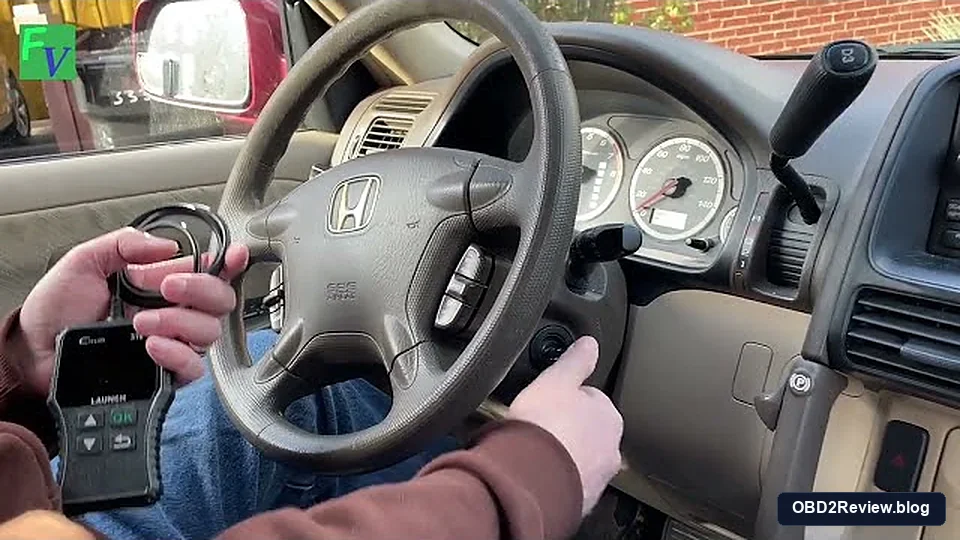
Conversely, the alternative unit manages standard powertrain codes adequately without lagging during routine multi-module scans. Technicians tracking intermittent sensor faults will appreciate the refined polling rate of the first option.
Both handheld devices draw operational voltage directly from the standard diagnostic link connector. This eliminates internal battery replacement hassles during extended troubleshooting sessions in the garage bay.
Advanced processors interpret vehicle communication streams, similar to top models featured in our best obd2 scanner guide. Minor hardware variations directly impact how rapidly the device initializes the initial protocol handshake.
When querying multiple parameter IDs simultaneously, the internal buffer must handle high data throughput without dropping frames. Slower processing rates can cause noticeable lag during live data graphing or diagnostic trouble code retrieval.
Technicians evaluating boot times will notice that cold-starting the operating firmware takes roughly five seconds. This quick initialization minimizes bay downtime when jumping between multiple vehicles in a busy automotive repair facility.
- Faster cold boot sequence on unit A
- Consistent polling rate across SAE protocols
- Direct vehicle bus power delivery
Protocol Handshake Latency
Establishing communication with older ISO and CAN networks tests processor efficiency. Unit A minimizes handshake timeouts when cycling through legacy vehicle communication standards.
Meanwhile, unit B occasionally requires a manual protocol re-selection step when confronting stubborn controller area networks.
- Reduced ISO protocol handshake duration
- Automatic CAN bus baud rate detection
Ergonomics and Physical Design Analysis
Physical housing design dictates how comfortably a tool rests in your hand during extended diagnostic routines. The Creader 319 features a sleek profile that slides effortlessly into standard technician tool pouches.
On the other hand, the competing model utilizes textured side grips that enhance stability during greasy garage conditions. Button tactile feedback differs markedly between these two budget diagnostic instruments.
Display screen legibility under direct sunlight remains a critical factor for mobile mechanics working outdoors. Both LCD panels offer adjustable contrast settings to combat glaring ambient light conditions effectively.
Physical ergonomics dictate how comfortably a mechanic can hold the unit during extended troubleshooting, much like options found in our best bluetooth odb2 scanner roundup. Contoured handgrips with textured thermoplastic rubber prevent accidental slips.
Button tactile feedback is another critical factor influencing user comfort during repetitive menu navigation. Responsive dome switches provide a distinct physical click, confirming each keystroke even when the operator wears heavy mechanic gloves.
Cable strain relief directly impacts the long-term durability of the hardwired OBD2 connector. A flexible rubber boot absorbs the continuous bending forces applied when plugging the unit into awkward under-dash diagnostic ports daily.
- Sleek pocket-friendly chassis profile
- Textured rubberized side grip inserts
- Sunlight-readable monochrome LCD panels
Keypad Durability and Layout
Membrane keypad longevity directly impacts long-term tool reliability in professional automotive environments. Unit A utilizes dome-switch buttons designed for hundreds of thousands of smooth actuations.
Unit B employs firmer rubber keys that provide distinct click feedback despite requiring slightly more finger pressure.
- High-cycle dome switch membrane technology
- Positive tactile click actuation feel
Software Architecture and Navigation
Menu tree structure dictates how quickly an operator can navigate to specific diagnostic trouble codes. The Creader 319 organizes emissions readiness and freeze frame data into logical subfolders.
Navigating the competitive unit involves a simpler linear menu hierarchy that suits absolute beginners. Advanced users might find the linear approach slightly tedious when jumping between live data streams.
Firmware update accessibility gives one platform a clear advantage regarding long-term vehicle compatibility. Connecting to a host computer allows users to keep diagnostic definitions completely up to date.
The embedded software architecture utilizes a hierarchical menu structure designed for rapid fault isolation. Clear categorization separates generic emission tests from manufacturer-specific diagnostic routines, reducing the learning curve for apprentice technicians.
Screen refresh rates play a vital role when monitoring live sensor graphs in real time. An optimized display driver ensures smooth waveform rendering without noticeable stutter, helping mechanics spot intermittent voltage drops instantly.
Firmware update procedures require a stable USB connection to a host computer running manufacturer utility software. Maintaining backward compatibility ensures users can update older diagnostic databases without encountering driver conflict errors.
- Logical folder-based diagnostic menu structure
- Simple linear navigation for beginners
- USB firmware update capability for unit A
Live Data Stream Capabilities
Viewing live sensor parameters helps isolate failing components without tearing down engine components blindly. Both devices stream critical metrics like engine coolant temperature and fuel trim values.
Graphing capabilities remain basic across this price tier, focusing primarily on numerical data lists.
- Real-time engine coolant temperature monitoring
- Short and long-term fuel trim values
Build Quality and Workshop Durability
Automotive repair bays expose diagnostic hardware to drops, oil spills, and harsh chemical solvents daily. The Creader 319 utilizes rigid ABS plastic designed to withstand moderate workbench impacts.
The competing model incorporates a slightly thicker rubber bumper wrap around its perimeter for enhanced shock absorption. Cable strain relief at the base prevents internal wire fatigue during repeated plugging.
Molded connector pins resist bending when hastily inserted into awkward under-dash diagnostic ports. Proper maintenance of these pins ensures reliable data transfer across thousands of connection cycles.
Workshop environments subject handheld diagnostic tools to severe mechanical abuse, including accidental drops onto concrete floors. High-impact ABS plastic housings absorb shock forces, protecting the delicate internal circuit boards from fracture.
Display protection is another crucial consideration when storing handheld units, similar to recommendations in our best obd ii bluetooth scanner review. A recessed LCD screen prevents scratching against sharp metal tools over years of heavy use.
Chemical resistance matters immensely in professional garages where solvents, gasoline, and brake fluid are daily hazards. The outer shell materials resist aggressive chemical degradation, preventing the plastic casing from becoming brittle or tacky.
- Rigid high-impact ABS plastic housing
- Reinforced cable strain relief bushings
- Corrosion-resistant diagnostic pin plating
Drop Resistance and Impact Testing
Accidental drops onto concrete floors test the internal circuit board mounting integrity. Unit A relies on internal ribbing to cushion the main microprocessor against severe shock loads.
Unit B absorbs impact energy via its external elastomeric shell perimeter.
- Internal circuit board shock isolation ribs
- External elastomeric perimeter impact guards
Power Efficiency and Electrical Safety
Drawing power safely from the vehicle diagnostic connector protects sensitive onboard computer modules. Both tools adhere strictly to standard electrical load parameters to prevent blown fuses.
Quiescent current draw remains remarkably low when units are plugged into unswitched vehicle ports. This efficiency prevents battery drain if a scanner is left connected overnight in the shop.
Overvoltage protection circuits guard against unexpected voltage spikes generated by faulty alternator diodes.
Operating strictly off vehicle power eliminates the need for internal batteries, reducing overall maintenance headaches. The circuit design draws minimal current directly from the OBD2 port, preventing any parasitic drain on weak vehicle batteries.
Integrated reverse polarity protection safeguards both the scanner and the vehicle's computer network from wiring mistakes. If a damaged DLC pin routes voltage incorrectly, internal fuses isolate the surge before component damage occurs.
Voltage regulation circuits maintain stable internal operating parameters even when charging systems experience severe output spikes. This robust electrical isolation protects sensitive microcontrollers during alternator load testing and high-amperage jump starts.
- Low quiescent standby electrical current
- Standard OBD port fuse protection compliance
- Transient voltage spike suppression circuitry
Thermal Management Under Load
Continuous diagnostic sessions generate minimal internal heat within these compact processor chips. Passive ventilation slots dissipate thermal energy adequately without needing noisy cooling fans.
Circuit boards maintain stable operating temperatures even inside hot cabins during summer months.
- Passive thermal dissipation vent design
- High-temperature resistant circuit board substrates
Compatibility and Vehicle Coverage
Universal OBD2 compliance ensures both scanners communicate with domestic, Asian, and European passenger vehicles, matching protocols found in our best obd2 bluetooth scanners guide. The unit handles generic powertrain codes and pending fault indicators flawlessly.
Specialized manufacturer enhancements are limited in this price bracket, focusing purely on universal emissions readiness. Checking I/M readiness monitors takes only seconds on either testing platform.
Clearing check engine lights and resetting fault codes is straightforward and requires minimal technical training.
Comprehensive vehicle coverage depends on supporting multiple communication protocols across diverse global manufacturing standards. Hardware transceivers must seamlessly switch between CAN bus networks and older legacy protocols without dropping data packets.
Modern vehicles rely heavily on high-speed network architectures for inter-module communication during standard diagnostic operations. The scanning tool must interpret these complex message IDs accurately to retrieve emission readiness monitors without communication timeouts.
Regional compliance variations mean firmware must handle different market configurations for emissions reporting smoothly. Whether scanning domestic or imported cars, the diagnostic software bridges protocol gaps effectively for dependable code reading results.
- Universal OBD2 and CAN protocol coverage
- One-touch I/M readiness emissions testing
- Effortless diagnostic trouble code clearing
Emissions Readiness Verification
State inspection preparation relies heavily on verifying completed catalyst and oxygen sensor monitors. Both tools display color-coded status indicators to simplify pre-inspection emissions checks.
Technicians can instantly identify incomplete readiness monitors before sending vehicles for official testing.
- Catalyst and oxygen sensor monitor status
- Color-coded pre-inspection readiness indicators
Value Assessment and Ideal Workloads
Selecting the correct diagnostic instrument depends heavily on your specific automotive repair workload intensity. Professional bay technicians benefit from the Creader 319 because of its quicker response times.
Weekend DIY mechanics will find the alternative unit perfectly adequate for basic driveway maintenance tasks. Evaluating your long-term diagnostic needs ensures you invest in the most suitable hardware.
Both budget tools deliver exceptional utility without breaking the equipment acquisition budget for small shops.
Selecting the appropriate diagnostic instrument requires matching hardware capabilities to daily workshop demands and budgetary constraints. Entry-level code readers excel at basic emission testing tasks, making them ideal for quick pre-inspection checks.
DIY enthusiasts benefit immensely from straightforward plug-and-play functionality that bypasses complex configuration steps entirely. These tools provide instant access to diagnostic trouble codes, empowering owners to verify repairs before visiting professional service centers.
Professional technicians balancing fast-paced workflow requirements often deploy these compact units as supplementary pocket readers. Their reliability during routine diagnostic triage ensures mechanics save valuable time on straightforward emissions verification jobs daily.
- Ideal for rapid professional diagnostic triage
- Perfect for casual driveway DIY maintenance
- Exceptional utility for budget-conscious mechanics
Cost Versus Feature Optimization
Balancing upfront equipment cost against feature sets prevents overspending on unnecessary advanced capabilities. These entry-level code readers strip away bi-directional controls to maintain ultra-low retail points.
Focusing strictly on core code reading maximizes reliability and longevity.
- Optimized for core code reading tasks
- Eliminates costly unneeded bi-directional features
Frequently Asked Questions
Can these scanners program new keys or modules?
No, these entry-level tools are strictly designed for reading and clearing diagnostic trouble codes. You need advanced bi-directional tools for programming replacement modules.
Do these devices require external batteries to operate?
No external batteries are required because both scanners draw operational power directly through the vehicle diagnostic link connector. This ensures continuous power during extended diagnostic testing sessions.
Will these code readers work on pre-1996 vehicles?
No, these scanners support standard OBD2 and CAN protocols found exclusively on passenger vehicles manufactured from 1996 onward. Older OBD1 systems require dedicated proprietary adapters and software.
How do I update the diagnostic software?
The Creader 319 allows firmware updates by connecting the device to a host computer via USB. Always check the manufacturer support portal for latest files.
Can these units reset oil change service lights?
These specific models focus purely on powertrain emissions and generic diagnostic codes. Resetting oil life markers usually requires specialized service reset instrument capabilities.