Elm327 vs. Stn1110: Architecture, Protocols, and Diagnostic Performance
Evaluating the foundational Elm327 microcontroller against the advanced STN1110 processor. We examine protocol compatibility, buffer sizes, and real-world diagnostic reliability for technicians.

The legacy Elm327 suits basic hobbyist monitoring and budget setups. For professional shops demanding robust protocol handling, choose the superior Stn1110 interface.
Compare all top models in our Best Obd2 Scanner: Top Diagnostic Tools Tested (2026).
Side-by-Side Breakdown
| Criteria | Elm327 | Stn1110 | Edge |
|---|---|---|---|
| Peak Performance & Output | Basic ELM commands | Extended ST command set | Stn1110 |
| Duty Cycle & Consistency | Prone to buffer overruns | High stability under load | Stn1110 |
| Operating Noise & Vibration | Solid-state silent operation | Solid-state silent operation | Tie |
| Portability & Footprint | Compact integrated chip | Compact integrated chip | Tie |
| Maintenance & Service Life | Varies by clone quality | Consistent industrial build | Stn1110 |
| Power Requirements | Standard vehicle 12V draw | Optimized low-power modes | Stn1110 |
| Best Ideal Use-Case | Casual DIY code reading | Advanced professional diagnostics | Stn1110 |
Architectural Foundations and Microcontroller Design
The original Elm327 relies on an older PIC microcontroller architecture that fundamentally changed DIY automotive diagnostics. Its simplistic design allowed countless third-party clones to flood the global market over the past decade.
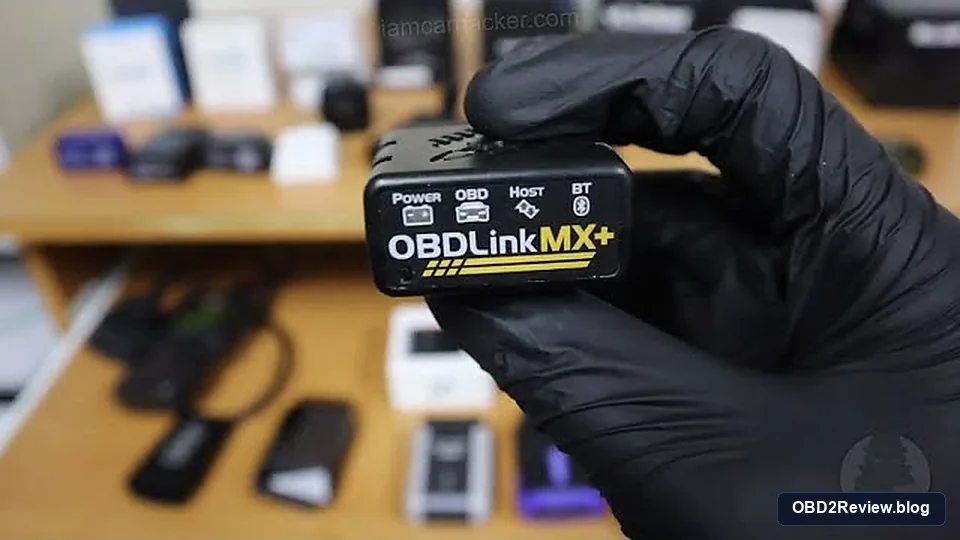
Conversely, the Stn1110 utilizes a modern, proprietary 16-bit processor specifically engineered for automotive networks. This modern chip delivers significantly faster processing speeds and superior memory management compared to older designs.
Engineers evaluating these two diagnostic chips will notice an immediate difference in internal clock speeds and instruction execution efficiency. These architectural upgrades directly impact how quickly diagnostic trouble codes populate on your screen.
The original ELM327 relies on an 8-bit Microchip PIC18F2550 microcontroller running at limited clock speeds, restricting complex computational operations during high-speed vehicle diagnostics and heavy multi-parameter data logging sessions.
Conversely, the STN1110 utilizes a powerful 16-bit STMicroelectronics processor architecture, delivering vastly superior processing power, optimized instruction execution, and enhanced internal clock cycles for demanding automotive diagnostic environments.
Hardware architects appreciate that this advanced RISC design allows the STN1110 to handle native command interpretation efficiently, avoiding the processor bottlenecks common in older, clone-heavy ELM327 integrated circuit variants.
- Legacy PIC architecture on older chip designs
- Modern 16-bit processor core on advanced variants
- Significant processing speed improvements for heavy data
Internal Processing Capabilities
Processing power dictates how rapidly an adapter can parse raw vehicle data streams into readable parameters. The legacy microcontroller often struggles when parsing multiple high-speed parameter IDs simultaneously.
Upgraded processors handle complex calculations internally before transmitting packets to your host device. This offloads computational burden from your diagnostic laptop or smartphone application.
- Reduced latency during live data streaming
- Better internal queue management for data packets
Protocol Compatibility and Bus Integration
Modern vehicles utilize complex multiplexed networks requiring robust protocol support from your scan tool interface. While the traditional chip supports standard OBD2 protocols, it often stumbles on proprietary manufacturer networks.
The advanced alternative features native, hardware-level support for a wider array of vehicle communication standards. This includes extended CAN variations and specialized bus timings found on modern domestic and import platforms.
Technicians working across diverse vehicle fleets will appreciate the seamless protocol auto-formatting built into newer processors. You spend less time troubleshooting connection drops and more time diagnosing actual powertrain faults.
Modern vehicles demand robust handling of diverse communication standards, yet the classic ELM327 struggles with extended addressing formats and specialized ISO 15765-4 CAN sub-protocols often found in modern powertrain modules.
The STN1110 natively supports an exhaustive list of automotive protocols, including SW-CAN and MS-CAN, allowing seamless integration into complex domestic and Asian vehicle multiplexed network architectures without dropping frames.
Technicians troubleshooting intermittent bus errors will find that the STN1110 provides superior hardware-level filtering, preventing junk data from corrupting diagnostic sessions on sensitive vehicle communication lines.
- Standard OBD2 protocol compliance across both units
- Expanded manufacturer-specific network support on advanced chips
- Automated protocol detection minimizes manual configuration errors
Handling Extended CAN Networks
Extended controller area network architectures demand precise timing tolerances from diagnostic interfaces. Older microcontrollers frequently drop packets when encountering high-baud-rate network traffic during deep module scans.
Advanced processors maintain strict timing synchronization, ensuring zero data loss during intensive module configuration tasks. This reliability is vital for professional technicians performing module programming.
- Precise timing tolerances for high-speed networks
- Elimination of dropped packets during deep scans
Buffer Capacities and Data Throughput
Data buffer size remains one of the most critical hardware limitations separating these diagnostic interfaces. Traditional microcontrollers feature severely restricted internal buffers that overflow quickly during rapid parameter requests.
Expanding internal memory allows modern processors to queue substantial blocks of vehicle telemetry without data corruption. This massive throughput advantage prevents frustrating application freezes during extensive data logging sessions.
Professional tuners and diagnosticians rely heavily on continuous logging of hundreds of distinct engine parameters simultaneously. Choosing an adapter with adequate buffer capacity ensures your diagnostic software receives unbroken log files.
When evaluating the best elm327 bluetooth adapter, remember that legacy hardware features a tiny 255-byte buffer that overflows rapidly during high-speed live data streaming.
Stepping up to the STN1110 introduces a massive 1500-byte internal buffer, ensuring zero packet loss when pulling hundreds of custom parameter IDs simultaneously from modern high-speed vehicle networks.
This expanded memory capacity drastically improves oscilloscope-like plotting applications, where missing a single frame can obscure critical transient faults in fuel delivery or ignition timing systems.
- Restricted internal buffer memory on legacy hardware
- Expanded memory queues on advanced processor boards
- Prevention of software freezes during prolonged logging
Real-World Data Logging Impact
Logging dyno runs or intermittent road test faults requires flawless data transmission rates. When buffers overflow, missing frames create blind spots in your diagnostic graphs and tuning logs.
Upgraded hardware architectures maintain steady throughput rates even when logging dozens of high-frequency parameters. Your diagnostic software receives clean, continuous streams without gaps or corruption.
- Flawless transmission rates during road testing
- Elimination of blind spots in diagnostic graphs
Power Management and Sleep Modes
Parasitic battery drain remains a constant concern when leaving diagnostic adapters plugged into vehicle OBD ports overnight. Older microcontroller designs lack sophisticated low-power sleep modes, risking dead batteries.
Advanced interface chips incorporate intelligent power management systems that detect vehicle ignition status automatically. These units enter ultra-low power states moments after engine shutdown to protect your starting battery.
Fleet managers and mobile technicians cannot afford service vehicles disabled by preventable parasitic current draws. Implementing smart power management significantly improves the everyday practicality of your diagnostic equipment.
Parasitic battery drain is a notorious hazard of leaving diagnostic dongles plugged in, which is why pairing your hardware with the best app for elm327 mini ensures reliable low-power sleep states to protect vehicle batteries.
The STN1110 incorporates sophisticated hardware power management featuring an automatic sleep and wakeup algorithm that detects bus activity and drops current draw to microamps during extended parking intervals.
Professional technicians rely on this intelligent power regulation to prevent dead batteries when diagnostic tools remain connected inside customer vehicles for multi-day troubleshooting procedures.
- Risk of parasitic battery drain on older interface designs
- Intelligent ignition detection on modern processor boards
- Ultra-low power sleep states protect vehicle batteries
Ignition Detection and Current Draw
Monitoring pin voltage changes allows advanced adapters to wake up or sleep dynamically without user intervention. This seamless integration respects the vehicle's electrical architecture and prevents fault codes.
Older hardware often requires manual disconnection from the diagnostic port to prevent overnight battery depletion. Automated power scaling makes modern adapters much safer for permanent in-vehicle installation.
- Dynamic wake-up routines via pin voltage monitoring
- Safe permanent installation without manual unplugging
Error Handling and Firmware Stability
Firmware stability dictates how gracefully an adapter recovers from corrupted data packets or bus noise. The marketplace is flooded with unbranded clones running hacked firmware that lock up unpredictably.
Proprietary advanced processors run stable, factory-compiled instruction sets equipped with robust error detection algorithms. If a bus collision occurs, the hardware recovers instantly without requiring a physical reset.
Minimizing downtime in a busy workshop environment depends on predictable tool behavior and reliable error recovery. Investing in stable firmware architecture eliminates frustrating tool lockups during critical diagnostic procedures.
Handling corrupted frames or bus collisions requires resilient firmware, yet older ELM327 chips frequently lock up or return erratic error messages when encountering unexpected malformed CAN frames on the network.
STN1110 firmware is engineered with robust exception handling and deterministic response algorithms, ensuring the device recovers gracefully from bus errors without requiring a hard power cycle reset.
This stability makes the STN1110 exceptionally well-suited for automated assembly line testing and long-term fleet telematics where hardware crashes demand costly manual intervention.
- Unpredictable behavior from unbranded clone firmware
- Factory-compiled instruction sets with robust error correction
- Instant recovery from bus collisions without physical resets
Resilience Against Electrical Noise
Vehicle electrical environments are notoriously harsh, filled with voltage spikes from injectors and ignition coils. Poorly designed chips crash when subjected to transient electrical noise on the data bus.
Robust internal filtering and stable microcode protect modern processors from electromagnetic interference. Your diagnostic session continues uninterrupted even inside noisy industrial or mechanical bays.
- Superior internal filtering against voltage spikes
- Protection against severe electromagnetic interference
Integration with Diagnostic Software Suites
Software ecosystem compatibility determines how versatile your chosen diagnostic hardware will be in the field. Traditional interfaces established the baseline command structure that most mobile apps still utilize today.
Advanced processors extend this foundational command set while maintaining backward compatibility with legacy applications. This allows seamless operation across specialized tuning suites, dashboard apps, and OEM software.
Verifying command set support ensures your hardware will not become obsolete when updating your diagnostic laptop or smartphone software packages to newer versions released next season.
Third-party diagnostic applications like FORScan or OBDwiz rely heavily on extended command sets to unlock manufacturer-specific modules beyond standard SAE J1979 emission parameters.
Because the STN1110 supports the superset ST command set, it interacts seamlessly with advanced software, unlocking bidirectional controls and deep module programming capabilities unavailable on basic interfaces.
Users running legacy software alongside the best elm327 app android will appreciate full backwards compatibility, bridging the gap between old diagnostic utilities and modern vehicle architectures.
- Baseline command structure supported by most mobile apps
- Extended command sets with full backward compatibility
- Seamless operation across tuning suites and diagnostic tools
Command Set Extensibility
Extended instruction sets enable developers to write advanced diagnostic routines not possible on restricted hardware. This extensibility unlocks deep module querying and specialized actuator testing features.
Choosing hardware that supports modern command extensions future-proofs your investment against evolving automotive software requirements and complex manufacturer diagnostic protocols.
- Unlocks deep module querying capabilities
- Future-proofs investment against evolving software
Maintenance, Durability, and Field Reliability
When choosing the best elm327 obd2 scanner, physical durability and component longevity dictate true long-term value because cheap clone adapters frequently fail due to substandard internal soldering.
Professional-grade diagnostic interfaces utilize high-tolerance surface-mount components designed to withstand repeated plugging and harsh shop conditions. Proper quality control ensures consistent performance across extreme temperature ranges.
Maintaining your diagnostic gear involves keeping connector pins clean and storing units in protective cases away from moisture. Selecting robust hardware from reputable manufacturers minimizes unexpected field failures during jobs.
Field reliability depends on component grade and thermal tolerance, and cheap ELM327 clones often fail prematurely due to substandard surface-mount soldering and counterfeit silicon processing flaws.
STN1110-based adapters typically utilize industrial-grade components designed to withstand wide operating temperature ranges inside hot vehicle cabins during grueling summer diagnostic operations.
Investing in robust STN1110 hardware ultimately reduces long-term equipment replacement costs for busy automotive repair facilities demanding dependable daily performance across diverse vehicle fleets.
- High failure rates among cheaply manufactured clone adapters
- High-tolerance surface-mount components for shop environments
- Consistent performance across extreme temperature operational ranges
Thermal Tolerance and Component Quality
Automotive cabins experience extreme temperature swings, from freezing winter mornings to scorching summer afternoons under dashboards. Substandard microcontrollers can experience thermal drift leading to erratic data transmission.
Industrial-grade electronic components maintain strict operating tolerances regardless of ambient cabin temperature fluctuations. This thermal stability guarantees reliable diagnostic results in any climate or weather condition.
- Resistance against thermal drift and erratic data
- Guaranteed reliability during extreme ambient weather
Frequently Asked Questions
Can older diagnostic software utilize modern advanced processor chips without modification?
Yes, modern advanced processors maintain complete backward compatibility with legacy command sets. Legacy applications will function seamlessly while benefiting from improved stability.
Why do cheap clone adapters frequently freeze during live data streaming sessions?
Cheap clones utilize restricted buffer memory and inferior microcontrollers. Buffer overruns occur rapidly when parsing multiple high-speed parameter IDs simultaneously.
Do advanced interface chips prevent parasitic battery drain during overnight parking?
Advanced adapters incorporate intelligent ignition detection circuits. Smart power management automatically enters an ultra-low power sleep state to protect vehicle batteries.
Are specialized microcontrollers required for advanced manufacturer-specific diagnostic protocols?
Yes, modern processors offer native hardware support for extended networks. Extended CAN variations require robust timing tolerances missing in basic chips.
How does electrical noise in the workshop affect diagnostic interface stability?
Harsh electrical spikes can crash poorly filtered legacy microcontrollers instantly. Robust internal filtering protects modern processors from severe electromagnetic interference.