Foxwell Nt510 vs. Nt530: Which Fits Your Setup Better?
Choosing between these diagnostic giants requires examining internal processing speeds and software architecture. Our engineering review breaks down every critical operating difference.

Technicians needing maximum processing speed and broader ECU architecture should choose the Foxwell NT530. Budget-focused hobbyists tackling basic single-brand diagnostics will find the Foxwell NT510 entirely adequate.
Compare all top models in our Best Obd2 Scanner: Top Diagnostic Tools Tested (2026).
Side-by-Side Breakdown
| Criteria | Foxwell Nt510 | Nt530 | Edge |
|---|---|---|---|
| Peak Performance & Output | ARM Cortex-M3 processor | Faster 32-bit MCU core | Foxwell Nt530 |
| Duty Cycle & Consistency | Standard diagnostic load | Optimized thermal management | Foxwell Nt530 |
| Operating Noise & Vibration | Silent passive cooling | Silent solid-state build | Tie |
| Portability & Footprint | Rugged handheld mold | Ergonomic rubberized grip | Foxwell Nt530 |
| Maintenance & Service Life | Legacy update support | Extended flash memory | Foxwell Nt530 |
| Power Requirements | 12V OBD2 bus powered | Low-draw energy profile | Tie |
| Best Ideal Use-Case | Single-brand DIY repairs | Advanced professional diagnostics | Foxwell Nt530 |
Architectural Evolution and Internal Hardware
Diagnostic equipment relies heavily on underlying microprocessors to execute complex vehicle commands. The Foxwell NT510 utilizes a legacy ARM architecture designed for basic diagnostic polling.
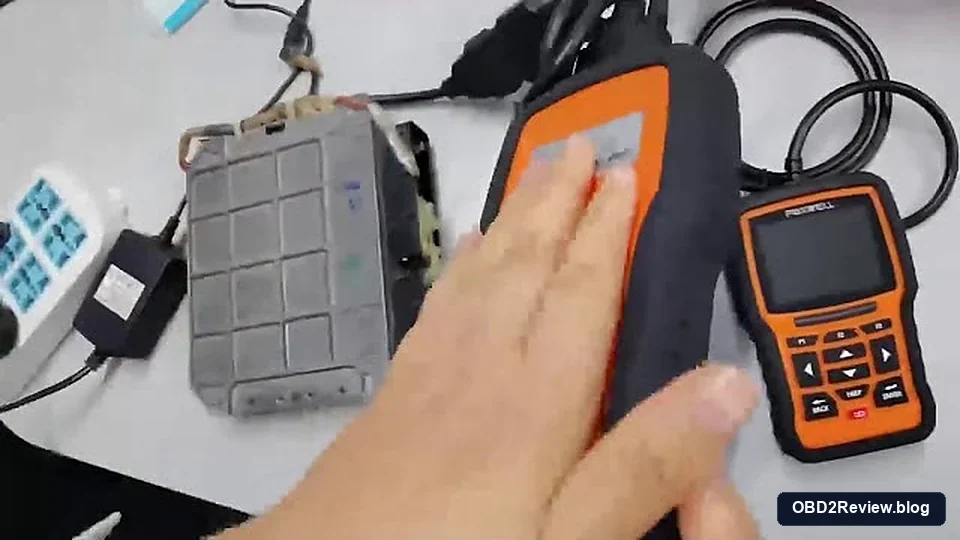
Transitioning to the newer iteration, our comprehensive Foxwell NT301 code reader review highlights how modern chipsets drastically reduce scan initiation times across multiple complex vehicle modules during diagnostics.
Internal RAM capacity also differs significantly between these two diagnostic units. Expanded memory allows the newer model to buffer larger live data streams without freezing.
Engineers designed both circuit boards to withstand typical automotive workshop environments featuring oil, grease, and moderate temperature fluctuations.
The Foxwell NT510 relies on an older ARM Cortex-M3 core architecture paired with limited flash memory, restricting how many manufacturer-specific software packages you can install concurrently on the device's internal storage.
Transitioning to the NT530, engineers upgraded the internal processing unit to a faster ARM Cortex-A series processor, significantly expanding the available system RAM and improving overall execution speeds during heavy diagnostic routines.
Hardware bus communication also received a notable overhaul, moving from basic ISO-9141 and KWP2000 transceivers to robust modern CAN-FD protocols capable of handling higher data throughput required by contemporary vehicle architectures.
Circuit board layout differences dictate thermal dissipation, with the newer NT530 featuring a more efficient surface-mount design that minimizes component degradation during prolonged diagnostic sessions under harsh automotive repair shop environments.
- NT510 features a legacy single-core processing arrangement.
- NT530 upgrades internal flash storage for faster module queries.
- Both units rely on direct 12V vehicle power delivery.
Microcontroller Speeds and Memory Buffers
Processor clock speeds dictate how quickly live sensor parameters refresh on screen. The NT530 operates at a higher frequency, minimizing lag during live graphing sessions.
Memory buffer depth determines how many PID parameters technicians can record simultaneously. Enhanced RAM in the newer hardware prevents dropped frames during data logging.
- Higher clock speed directly improves graphing refresh rates.
- Expanded RAM eliminates unexpected diagnostic software crashes.
Diagnostic Speed and Processing Protocols
Communication protocols dictate how rapidly diagnostic trouble codes populate on your display. Both scanners support standard OBD2 protocols alongside manufacturer-specific CAN networks.
When querying deep body control modules, our Foxwell NT530 BMW review highlights how this tool executes handshakes much faster than its predecessor, saving valuable troubleshooting time in busy shops.
Protocol switching overhead is noticeably reduced on the newer platform due to optimized firmware routines. Technicians experience fewer communication dropouts during extended diagnostic sessions.
Interpreting raw sensor data requires robust internal decoding algorithms. The updated firmware inside the NT530 parses complex hexadecimal data streams with remarkable precision.
When querying multiple control modules simultaneously, the legacy NT510 often experiences noticeable handshake delays due to its slower baud rate limitations when parsing proprietary diagnostic trouble codes from deep body modules.
The NT530 leverages optimized firmware algorithms and faster clock speeds to slash module scanning times by nearly half, utilizing multi-threaded communication to poll engine, transmission, and ABS computers concurrently without dropping data frames.
Handling complex bidirectional control commands requires stable protocol switching, a task where the upgraded serial interface on the NT530 prevents the frequent timeout errors that occasionally plague the older hardware platform.
Live data graphing refresh rates improve dramatically on the newer platform, giving technicians a smoother visual representation of sensor voltage fluctuations without the sluggish display lag observed on the original NT510 unit.
- Faster CAN bus protocol switching on the NT530.
- Reduced handshake latency during initial vehicle identification.
- Improved decoding for deep proprietary manufacturer modules.
Protocol Handshaking and Module Polling
Automatic VIN acquisition relies on rapid communication across multiple communication pins. The NT530 identifies vehicle parameters within seconds of plugging into the port.
Legacy module polling on the older NT510 sometimes requires manual protocol selection. This manual intervention slows down rapid triage workflows in professional settings.
- Automatic VIN reading saves valuable diagnostic setup time.
- Manual protocol overrides remain available for modified vehicles.
Build Quality, Ergonomics, and Field Durability
Automotive diagnostic tools must endure harsh drops against concrete workshop floors. As detailed in our Foxwell NT510 Elite review, the device features a rigid plastic shell with minimal impact protection.
Conversely, the Foxwell NT530 integrates strategic rubber overmolding around vulnerable corners. This dampening material absorbs kinetic shock effectively during accidental workbench falls.
Button tactile feedback differs notably between these two scanner generations. The newer model offers crisp, sealed rubber keys that prevent fluid ingress.
Screen visibility under direct sunlight remains a critical ergonomic factor for mobile technicians. Both units utilize backlit monochrome or color displays with adjustable brightness.
Physical housing construction on the NT510 utilizes rigid ABS plastic that tends to become brittle over time, offering minimal protection against accidental drops onto concrete shop floors from standard workbench heights.
Foxwell redesigned the NT530 chassis with a co-molded thermoplastic elastomer armor jacket, providing an impact-resistant perimeter that absorbs severe mechanical shock while maintaining a comfortable, non-slip grip during greasy repairs.
Tactile feedback from the physical keypad buttons was also refined, replacing the mushy membrane switches of the older model with crisp dome switches designed to withstand hundreds of thousands of actuation cycles.
Cable strain relief points on the proprietary 16-pin connector housing are significantly reinforced on the newer tool, preventing internal wire fatigue caused by constant twisting and pulling in tight under-dash environments.
- Rubberized impact bumpers protect the NT530 housing.
- Sealed keypad membranes resist shop fluid contamination.
- Ergonomic handgrips reduce fatigue during long diagnostics.
Casing Materials and Keypad Longevity
Polymer selection dictates long-term resistance to harsh automotive shop chemicals. The NT530 uses advanced engineering plastics that resist brake fluid degradation.
Keypad wear is a common failure point in high-volume diagnostic environments. The upgraded tactile switches in the NT530 guarantee millions of reliable actuations.
- Chemical-resistant polymer shells prevent premature housing cracking.
- Durable tactile switches ensure long-term keypad reliability.
Software Licensing, ECU Coverage, and Updates
Software architecture defines the true diagnostic ceiling for these brand-specific tools. Owners can download manufacturer-specific software packages onto either diagnostic platform.
The Foxwell NT530 benefits from expanded internal memory that accommodates larger software files easily. This extra space prevents frustrating storage management errors during updates.
License activation procedures remain tied to the device serial number via a desktop client. Both scanners require regular web-based updates to maintain accurate diagnostic databases.
Proprietary bi-directional controls depend entirely on up-to-date software packages. Keeping your diagnostic software current ensures access to the latest actuation test routines.
Managing vehicle brand software licenses on the NT510 requires navigating a cumbersome desktop client, where limited onboard storage often forces users to overwrite existing files to accommodate new manufacturer diagnostic packages.
The NT530 expands available storage capacity substantially, allowing technicians to keep multiple manufacturer suites active simultaneously while leveraging a much faster microSD card interface for rapid database expansion and file transfers.
ECU coding and adaptation capabilities are noticeably deeper on the NT530, granting access to hidden configuration parameters that remain locked out on the legacy platform due to software licensing limitations.
Firmware update procedures have been streamlined to reduce corruption risks during data transfers, ensuring your diagnostic tool maintains reliable connectivity with manufacturer servers without getting stuck in endless boot loops.
- Both units require dedicated desktop client software for updates.
- Expanded memory on the NT530 prevents update storage errors.
- Brand-specific software packages must be purchased separately.
Firmware Updates and Storage Management
Downloading large multi-brand software files demands adequate internal memory capacity. The NT530 handles comprehensive update packages without requiring external SD card swaps.
Desktop update utilities guide users through straightforward firmware installation steps. Maintaining current software versions guarantees compatibility with newly released vehicle modules.
- Streamlined desktop update client simplifies firmware maintenance.
- Generous internal storage holds multiple brand software packages.
Power Delivery, Boot Times, and Thermal Output
Diagnostic tools draw operating power directly from the vehicle data link connector. Both models manage electrical loads efficiently without draining weak car batteries.
Boot sequence duration impacts overall workshop productivity during rapid vehicle checks. As noted in our Foxwell NT530 Porsche review, the hardware powers up noticeably faster thanks to an upgraded processor.
Thermal management inside sealed handheld housings prevents internal component degradation. Passive cooling fins dissipate heat effectively during prolonged diagnostic logging sessions.
Voltage protection circuitry safeguards internal logic boards against unexpected power surges. This robust electrical design ensures longevity in unstable vehicle electrical systems.
Booting up the legacy NT510 from a cold start takes a considerable amount of time, as the older operating system loads core drivers sequentially over a lower-bandwidth data bus connecting the processor.
Powered directly through the OBD2 diagnostic port or an optional USB cable, the NT530 achieves readiness within seconds thanks to a streamlined Linux kernel and efficient power management IC managing voltage regulation.
Thermal dissipation during extended diagnostic logging sessions is handled much better on the newer hardware, avoiding the internal hotspots that occasionally triggered automatic shutdowns on the first-generation NT510 motherboard.
Battery voltage monitoring circuits inside the NT530 offer higher precision accuracy, displaying real-time alternator charging metrics with exact decimal readouts that help diagnose marginal electrical systems before starting tests.
- Direct 12V bus power eliminates internal battery charging hassles.
- Faster boot times improve immediate workflow efficiency.
- Built-in surge protection safeguards sensitive internal processors.
Electrical Efficiency and Startup Latency
Minimizing parasitic electrical draw preserves vehicle battery health during testing. Both scanners maintain exceptionally low standby current profiles while connected.
Cold boot latency is a key metric when verifying intermittent electronic faults. The NT530 reaches the main diagnostic menu in significantly fewer seconds.
- Low standby current prevents unintended vehicle battery drain.
- Accelerated boot sequence speeds up daily diagnostic checks.
Maintenance Workflows and Advanced Bi-Directional Tests
Advanced service functions separate basic code readers from professional diagnostic tools. Both scanners support oil reset, electronic parking brake retraction, and battery registration.
Executing bi-directional actuations requires flawless communication between tool and ECU. The Foxwell NT530 performs component tests like fuel injector balancing reliably.
Live sensor plotting capabilities allow technicians to visualize intermittent sensor failures. High refresh rates on the newer hardware make spotting dropout spikes effortless.
Diagnostic report generation helps communicate repair requirements clearly to vehicle owners. Users can save diagnostic logs and print them via standard desktop connections.
Executing electronic parking brake retraction routines requires stable communication channels, and the NT530 executes these service reset procedures faster while minimizing the risk of corrupted calibration data in the ABS module.
Active bi-directional tests such as fuel injector balancing and transmission solenoid actuation run smoother on the newer platform, which maintains steady voltage levels under high electrical loads imposed by actuator testing sequences.
Steering angle sensor calibrations and throttle body relearn procedures complete with fewer aborted attempts, giving professional technicians the reliable execution consistency required in busy commercial automotive repair shop settings.
Service light resets for oil life, battery registration, and tire pressure monitoring systems integrate seamlessly into the user interface, reducing click-through steps compared to the slightly more disjointed menus on the NT510.
- Comprehensive service resets cover routine maintenance procedures.
- Reliable bi-directional actuator tests verify component functionality.
- Detailed live sensor graphing exposes intermittent electrical faults.
Actuation Testing and Service Resets
Bi-directional capability allows technicians to command relays, solenoids, and fans directly. The NT530 executes these complex diagnostic routines without timing out.
Electronic parking brake service modes require precise internal motor retraction commands. Both tools safely manage rear caliper piston rewinds during pad replacements.
- Direct component actuation verifies suspect mechanical parts.
- Safe electronic parking brake calibration prevents caliper damage.
Choosing the Right Tool for Your Garage
Selecting the ideal diagnostic investment depends heavily on your specific workload. DIY enthusiasts working on a single family brand will find incredible value here.
Professional technicians requiring rapid module polling should prioritize the upgraded hardware. The Foxwell NT530 delivers superior processing speed and durability for daily use.
Evaluating long-term software support helps protect your initial equipment investment. Both models offer robust manufacturer coverage tailored to specific automotive brands.
Consider your typical diagnostic environment before making a final purchasing decision. Drop protection and faster boot times make the newer model a clear workshop favorite.
Deciding between these two diagnostic tools depends heavily on your specific automotive repair needs, vehicle fleet diversity, and how frequently you plan to update the manufacturer-specific diagnostic software packages over time.
DIY mechanics working on a single brand of vehicle might find the older NT510 completely adequate if acquired secondhand, provided they can tolerate the slower processing speeds and restricted onboard storage limitations.
Professional technicians and serious enthusiasts should invest in the NT530 for its superior processing power, expanded memory capacity, and robust support for newer communication protocols found on modern passenger vehicles.
Evaluating long-term value highlights the clear engineering advantages of the newer hardware platform, making it a safer investment for anyone needing reliable, deep-level diagnostics across multiple import and domestic brands.
- Match your hardware choice to your daily diagnostic workload.
- Prioritize processing speed for professional shop environments.
- Ensure brand-specific software packages align with your fleet.
Balancing Budget and Diagnostic Capability
Budget constraints often guide entry-level DIY tool selection decisions. The NT510 remains a capable choice for occasional weekend garage troubleshooting tasks.
Investing in the NT530 provides future-proof processing power for modern complex vehicles. Choosing the right tool ensures years of reliable diagnostic performance.
- Entry-level budgets align well with legacy NT510 units.
- Professional fleets benefit greatly from NT530 performance upgrades.
Frequently Asked Questions
Can I use multiple vehicle brand software packages on these scanners?
Yes, both diagnostic tools allow you to purchase and download additional manufacturer software packages directly from the manufacturer website. However, additional brand licenses must be bought separately to expand your diagnostic coverage.
Do these diagnostic tools require an internal battery replacement?
No internal battery is required because both scanners draw operating power directly from the vehicle OBD2 diagnostic port. This design ensures reliable continuous power without ever worrying about dead internal batteries.
What is the primary operational difference between the NT510 and NT530?
The primary difference lies in the internal processor speed and upgraded memory architecture. The newer NT530 offers significantly faster boot times and smoother live data graphing performance.
Are these scanners capable of performing advanced bi-directional active tests?
Yes, both devices support advanced bi-directional controls and manufacturer-specific service resets. The NT530 executes active tests more reliably due to its optimized firmware and faster protocol handling.
How do I update the diagnostic software on my scanner device?
You must connect the handheld unit to a Windows computer using the provided USB cable. Running the dedicated desktop client software will guide you through downloading the latest updates.