Hardwired Obd2 Scanner vs. Bluetooth Adapter: Which Fits Your Setup Better?
Choosing the right diagnostic interface requires balancing cable reliability against wireless convenience. Technicians must evaluate latency limits and shop floor demands carefully.

Professional mechanics should choose the Hardwired Obd2 Scanner for heavy-duty diagnostics, while mobile enthusiasts will prefer the Bluetooth Adapter for casual monitoring.
Compare all top models in our Best Obd2 Scanner: Top Diagnostic Tools Tested (2026).
Side-by-Side Breakdown
| Criteria | Hardwired Obd2 Scanner | Bluetooth Adapter | Edge |
|---|---|---|---|
| Peak Performance & Output | High speed multi-module scanning | Dependent on tablet processor | Hardwired Obd2 Scanner |
| Duty Cycle & Consistency | Continuous all-day shop use | Battery and pairing dependent | Hardwired Obd2 Scanner |
| Operating Noise & Vibration | Silent passive physical link | Radio frequency emissions | Bluetooth Adapter |
| Portability & Footprint | Bulky handheld unit with cord | Ultra-compact pocket dongle | Bluetooth Adapter |
| Maintenance & Service Life | Ruggedized exterior housing | Prone to loss or port damage | Hardwired Obd2 Scanner |
| Power Requirements | Draws directly from vehicle bus | Low parasitic battery drain | Bluetooth Adapter |
| Best Ideal Use-Case | Full automotive repair shops | DIY diagnostics and logging | Hardwired Obd2 Scanner |
Architectural Design and Physical Interface Standards
Hardwired diagnostic tools connect directly to the vehicle data link connector using a dedicated physical cable. This eliminates pairing drops and ensures a rock-solid transmission during extended ECU flash routines.
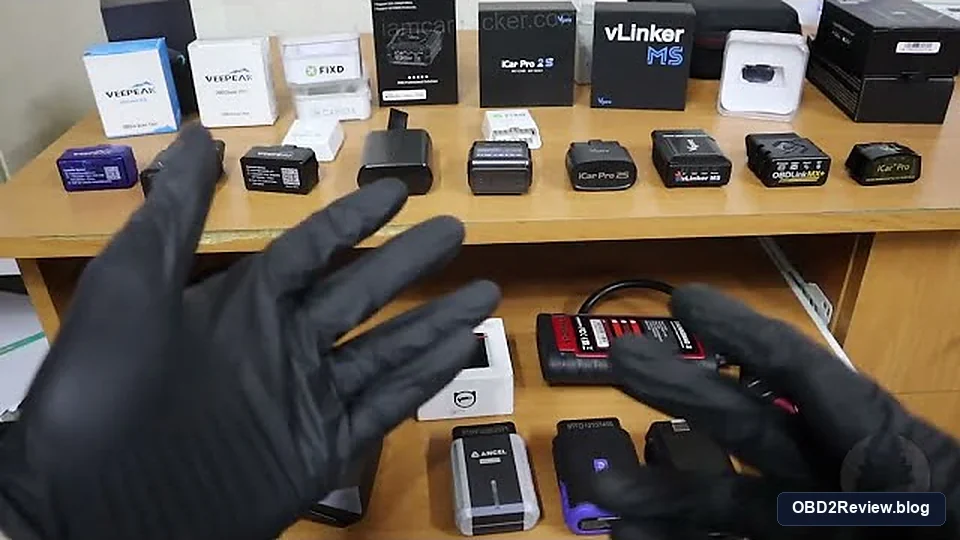
Vehicle networks utilize complex topologies requiring strict physical layer adherence. Understanding how these interfaces physically anchor to the diagnostic bus dictates long-term reliability in professional shop environments.
Hardwired diagnostic tools utilize direct serial connections adhering strictly to SAE J1962 specifications. This physical coupling ensures reliable pin engagement and minimizes signal degradation across long diagnostic sessions inside bustling automotive repair facilities.
Conversely, Bluetooth adapters rely on micro-controllers integrated directly into the vehicle data port. Engineers must balance enclosure size limitations with internal antenna placement to prevent electromagnetic interference from surrounding engine components.
- Physical connection provides continuous uninhibited data flow.
- Cable shielding prevents ambient electromagnetic interference in bays.
Connector Durability and Pin Integrity
Repeatedly plugging and unplugging interface cables places mechanical stress on the vehicle port. High-end wired scanners incorporate reinforced strain relief to protect internal wiring harnesses.
Wireless dongles remain plugged into the port for extended durations, risking accidental knee strikes. Choosing our tested best obd2 bluetooth adapter minimizes physical leverage against delicate pins and prevents port damage.
- Strain relief boots prevent premature cable fatigue.
- Flush-mount designs protect against accidental passenger strikes.
Data Bus Throughput and Latency Measurements
Diagnostic speed heavily depends on how fast data travels from the vehicle control modules to your screen. Wired units leverage high-speed serial links to maintain zero packet loss during intensive logging sessions.
Wireless models must translate vehicle bus data into radio packets before transmitting. This conversion introduces slight latency that can affect real-time graphing of rapid sensor fluctuations.
Wired connections achieve superior data bus throughput by utilizing physical copper traces. This direct wiring harness bypasses wireless radio frequency bottlenecks, allowing technicians to stream live parameters without dropping critical packet frames.
Wireless adapters introduce measurable latency caused by Bluetooth stack overhead. Evaluating a specialized best bluetooth obd2 scanner for diesel helps technicians avoid buffering delays during complex diagnostics.
- Baud rate capacities dictate how many live PIDs stream simultaneously.
- Packet translation over wireless channels introduces minor response lag.
High-Speed CAN Bus Handling
Modern vehicles operate multiple CAN networks running at ultra-high baud rates simultaneously. Hardwired equipment processes these heavy streams without buffering bottlenecks or dropped frames during diagnostics.
Bluetooth adapters occasionally struggle when polling dozens of high-frequency sensors at once. Choosing a dual-core wireless chip helps mitigate these bandwidth limitations effectively.
- Multi-CAN support requires robust internal processing power.
- Buffer management prevents data overflow during deep scans.
Power Management and Thermal Stability
Diagnostic hardware draws continuous electrical current from the vehicle port during active testing. Well-designed circuits prevent overheating and maintain stable voltage regulation over multi-hour repair operations.
Wireless adapters sit continuously inside the under-dash panel where cabin heat accumulates. Premium models utilize internal thermal throttling to prevent silicon degradation under high ambient temperatures.
Hardwired units draw continuous operating current directly from the vehicle battery safely. Thermal dissipation is managed through large internal circuit boards, preventing overheating during extended module programming and exhaustive diagnostic testing procedures.
Bluetooth dongles operate within restricted spaces prone to elevated footwell temperatures. Reviewing options in our best bluetooth odb2 scanner roundup highlights units with reliable thermal management inside compact plastic housings.
- Parasitic draw must remain minimal when vehicle ignition is off.
- Thermal dissipation protects internal microchips from failure.
Voltage Fluctuations and Protection
Electrical surges during vehicle cranking can damage sensitive diagnostic microprocessors instantly. Professional wired scanners include robust transient voltage suppression to safeguard internal logic boards.
Bluetooth units rely on compact power conversion circuits that require careful fusing. Protecting against alternator spikes ensures your wireless interface survives harsh electrical environments.
- Surge suppression guards against sudden electrical spikes.
- Reverse polarity protection prevents accidental wiring damage.
Ergonomic Factors and Workspace Integration
Technician workflow efficiency relies heavily on how easily equipment moves around the bay. Hardwired units offer an all-in-one handheld enclosure but tether you directly to the steering column area.
Bluetooth options separate the vehicle interface from your display tablet completely. This freedom lets you monitor live data from outside the vehicle during road testing procedures safely.
Handheld hardwired scanners offer integrated displays and tactile buttons designed for greasy hands. This ergonomic design eliminates the need for external mobile devices, keeping critical shop workflows streamlined and focused on vehicle repairs.
Bluetooth setups require balancing a phone or tablet alongside the vehicle connection. Technicians must manage battery levels across multiple devices while navigating diagnostic apps, introducing potential distractions into the active workspace environment.
- Cable length determines movement freedom inside the cabin.
- Wireless tethering allows remote monitoring up to thirty feet.
Shop Floor Mobility and Visibility
Diagnosing intermittent engine faults often requires observing components while operating the vehicle controls. A wireless setup lets you place the display screen securely on the passenger seat or workbench.
Wired tools restrict your physical positioning due to fixed cable constraints and tether limits. Managing long cords across dirty shop floors requires constant vigilance against tripping hazards.
- Remote monitoring simplifies road test data capture.
- Cable management prevents accidental entanglement hazards.
Firmware Updates and Protocol Compatibility
Automotive protocols evolve continuously with every new model year and electronic architecture update. Hardwired diagnostic tablets feature direct USB ports for fast, reliable firmware flashing without connection drops.
Wireless adapters depend on smartphone or tablet applications to push wireless updates over the air. Maintaining a stable internet connection during updates is crucial to prevent corrupted firmware.
Dedicated hardware scanners frequently utilize proprietary microchip architectures requiring specialized vendor update utilities. Maintaining firmware compatibility ensures proper communication with newly introduced vehicle communication networks and manufacturer-specific diagnostic trouble codes.
Wireless adapters typically depend on smartphone application updates to refresh protocol libraries. This decoupling allows rapid software patches, though users must manage operating system compatibility hurdles as mobile platforms evolve over time.
- Manufacturer support ensures compatibility with newer vehicle gateways.
- Over-the-air updates provide convenient software maintenance.
Gateway Protocols and Security Access
Modern vehicles utilize secure gateways that require authenticated diagnostic software connections. Advanced hardware incorporates built-in security bypass capabilities for seamless module coding without third-party workarounds.
Basic adapters may require separate subscription apps to unlock secure diagnostic functions. Ensuring your chosen tool supports necessary protocols saves valuable time during complex module programming tasks.
- Security gateway access simplifies modern vehicle diagnostics.
- Protocol versatility expands diagnostic coverage across brands.
Durability Under Shop Floor Conditions
Automotive service environments expose diagnostic tools to grease and drops. Selecting the right best obd2 scanner ensures you get impact-resistant casings designed to survive daily shop floor abuse.
Bluetooth adapters are lightweight and small, making them vulnerable to being misplaced or crushed. Storing them in protective cases ensures your wireless investment remains functional long-term.
Shop environments subject diagnostic tools to severe mechanical abuse, chemical exposure, and accidental drops. Hardwired units feature ruggedized enclosures built to withstand heavy impacts against concrete floors during daily repair tasks.
Compact Bluetooth adapters protruding from lower dash panels remain vulnerable to accidental knee strikes. Their smaller plastic shells often lack heavy-duty impact resistance, making them susceptible to internal component cracking under stress.
- Rubberized armor absorbs shock from accidental drops.
- Chemical resistance protects against workshop fluid exposure.
Environmental Sealing and Maintenance
Shop tools frequently encounter moisture, coolant splashes, and aggressive cleaning solvents daily. Selecting equipment with sealed button pads prevents fluid ingress from destroying internal circuit boards prematurely.
Wipe down connectors regularly to remove microscopic metallic debris and oil residue. Proper maintenance guarantees reliable electrical contact every time you plug into a vehicle port.
- Sealed enclosures block moisture and workshop grime.
- Regular cleaning maintains optimal electrical pin contact.
Security Protocols and Connection Stability
Diagnostic sessions involving ECU programming demand absolute communication integrity and zero dropouts. Hardwired connections provide a closed-loop pathway that cannot suffer from radio frequency interference or pairing loss.
Bluetooth signals can experience interference from shop Wi-Fi routers and heavy machinery. Utilizing modern encryption standards helps protect your wireless data stream from outside electronic disruption.
Wired connections eliminate security vulnerabilities associated with wireless radio frequency interception. Technicians performing critical module programming rely on this isolated physical link to prevent unauthorized data packet injection during sensitive operations.
Bluetooth interfaces must implement robust encryption standards to protect against malicious pairing attempts. Maintaining a stable wireless link requires minimizing interference from shop Wi-Fi routers and heavy diagnostic equipment operating nearby.
- Closed-loop wiring guarantees absolute signal stability.
- Radio shielding reduces susceptibility to local interference.
Encryption Standards and Data Safety
Flashing vehicle computers requires secure data transmission to prevent catastrophic module corruption. Premium diagnostic interfaces utilize advanced encryption to secure the communication channel against packet injection.
Always verify that your wireless adapter implements secure pairing PIN requirements. Neglecting basic security measures leaves your vehicle network vulnerable to unauthorized wireless access attempts.
- Data encryption prevents module flashing errors.
- Secure pairing stops unauthorized device connection attempts.
Frequently Asked Questions
Which option offers faster data refresh rates for live sensor graphing?
Hardwired scanners generally provide superior refresh speeds because they eliminate wireless packet translation delays entirely. This direct physical connection ensures smooth real-time data streaming without frustrating lag.
Can a bluetooth adapter drain my car battery if left plugged in?
Yes, leaving certain adapters plugged into the port can cause a minor parasitic draw. Always check for an auto-sleep feature or unplug the unit during extended vehicle storage.
Are hardwired scanners better suited for professional mechanic repair shops?
Professional shops greatly benefit from rugged wired tools that withstand daily abuse and heavy usage. Their dependable build quality and uninterrupted power delivery make them indispensable for busy technicians.
Do bluetooth adapters support advanced bi-directional active testing controls?
Many high-end wireless interfaces fully support bi-directional controls when paired with professional diagnostic software. However, users must ensure their chosen app unlocks these advanced programming features properly.
How do I prevent connection drops when using wireless diagnostic adapters?
Minimizing physical obstructions and keeping your mobile device close to the dashboard prevents signal degradation. Using adapters with modern Bluetooth chips significantly improves overall link stability.