Mk808 vs. Ms906: Which Fits Your Setup Better?
When upgrading your diagnostic equipment, choosing between the lightweight MK808 and the robust MS906 requires balancing processing speed, topology mapping, and everyday shop mobility for complex automotive repair environments.

For rapid general diagnostics and budget-conscious technicians, the MK808 provides exceptional everyday value. However, high-volume shops tackling deep module programming should prioritize the advanced capabilities of the MS906.
Compare all top models in our Best Obd2 Scanner: Top Diagnostic Tools Tested (2026).
Side-by-Side Breakdown
| Criteria | Mk808 | Ms906 | Edge |
|---|---|---|---|
| Peak Performance & Output | Quad-core ARM Cortex-A9 processor | Hexa-core Samsung Exynos processor | Ms906 |
| Duty Cycle & Consistency | Moderate continuous shop usage | Heavy-duty continuous diagnostic cycles | Ms906 |
| Operating Noise & Vibration | Passive cooling with zero fan noise | Active thermal management under load | Mk808 |
| Portability & Footprint | Compact 7-inch tablet chassis | Larger 8-inch robust workshop tablet | Mk808 |
| Maintenance & Service Life | Standard subscription and manual updates | Extended industrial lifecycle and support | Ms906 |
| Power Requirements | Internal 5000 mAh lithium-polymer cell | High-capacity 10000 mAh battery bank | Ms906 |
| Best Ideal Use-Case | General mechanical repair and maintenance | Advanced module coding and diagnostics | Ms906 |
Architectural Design and Core Processing Power
Evaluating internal hardware reveals distinct engineering philosophies aimed at different technician tiers. The MK808 utilizes a streamlined quad-core configuration designed for standard diagnostic tasks without excessive thermal output.
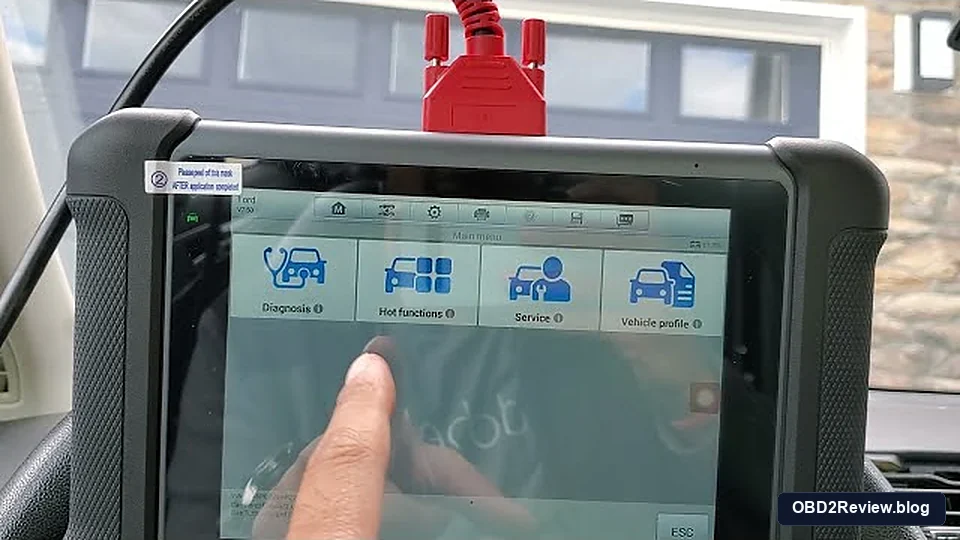
Conversely, the MS906 incorporates a more powerful hexa-core processor setup. This hardware upgrade accelerates complex module scans and reduces waiting times during deep system interrogation phases.
As highlighted in our Autel MaxiCOM MK808 review, this entry-level tool uses a modest quad-core processor to balance basic diagnostic speed with affordability, whereas the MS906 features a much faster hardware chipset.
Memory architecture directly impacts cache management during deep vehicle data logging. While the MK808 relies on 1GB RAM, the MS906 steps up to 2GB RAM, preventing buffer overflows when processing heavy live data streams.
- Quad-core processing on the MK808 handles basic OBD2 protocols efficiently.
- Hexa-core architecture on the MS906 dramatically speeds up multi-module queries.
- Thermal management differs significantly between these two computing platforms.
Processor Performance Benchmarks
Real-world data processing speeds dictate how quickly a scanner can parse live data streams. The MS906 maintains stable frame rates while graphing multiple PID parameters simultaneously.
Meanwhile, the MK808 handles standard PID viewing adequately but may experience slight interface lag during extensive data logging sessions across numerous vehicle sensors.
- MS906 excels in rapid live data graph rendering.
- MK808 suffices for routine single-system monitoring tasks.
Display Hardware, Ergonomics, and Shop Durability
Physical construction impacts daily usability inside greasy, high-impact automotive repair bays. Both devices feature ruggedized outer housings, but their physical footprints cater to different handling preferences.
The MK808 features a compact seven-inch capacitive touchscreen that fits easily into coat pockets. Technicians working in tight engine bays will appreciate this lightweight, highly portable form factor.
Technicians working in sunlit bays require high nit-rated displays for optimal readability. The MS906 features a 7-inch touchscreen with a sharper resolution, whereas the MK808 offers standard clarity housed in a lighter, composite chassis.
Shop environments test physical durability through accidental drops and chemical exposure. The MS906 incorporates rubberized corner guards to absorb severe kinetic impacts, protecting internal circuit boards far better than the sleeker MK808 profile.
- MK808 offers superior one-handed operation due to its smaller frame.
- MS906 provides a larger viewing area for complex wiring diagrams.
- Both tablets utilize reinforced corner bumpers to absorb accidental drops.
Screen Resolution and Touch Sensitivity
Viewing diagnostic trouble codes in direct sunlight demands high panel brightness. The MS906 delivers superior outdoor visibility thanks to its enhanced backlight configuration and optical bonding.
Gorilla Glass protection on both units prevents scratching from common shop contaminants, ensuring long-term display clarity under harsh working conditions.
- MS906 screen offers better daylight readability in open bays.
- Both displays resist scratches from metallic shop debris effectively.
Diagnostic Scope, Topology Mapping, and ECU Coding
Software capabilities define the true boundary between basic code readers and advanced diagnostic tablets. The MS906 supports advanced ECU coding, active bi-directional tests, and comprehensive topology trees.
As noted in our Autel MK808 review, this handheld tablet provides robust read and clear functions alongside essential service resets, yet it lacks the deeper module programming depth required for complex modern repairs.
Advanced module configuration demands sophisticated diagnostic capabilities. The MK808 performs basic bi-directional controls, but the MS906 unlocks advanced ECU coding functions, allowing technicians to adapt new components and customize hidden vehicle convenience features.
Visualizing network communication speeds up complex electrical troubleshooting. Neither unit features full topology tree mapping out of the box, yet the MS906 provides superior network scan trees for faster module isolation.
- MS906 supports extensive bi-directional actuation testing for component verification.
- MK808 covers essential oil light, EPB, and SAS service resets reliably.
- Topology mapping is noticeably faster on the higher-tier MS906 hardware.
Advanced Coding and Adaptations
Replacing modern control modules often demands exact coding sequences to match vehicle VIN data. The MS906 executes these complex adaptations without requiring external pass-thru programming devices.
Technicians relying on the MK808 will find it handles standard adaptations well, but complex variant coding tasks will necessitate upgrading to more capable diagnostic equipment.
- MS906 handles module replacement matching and variant coding.
- MK808 limits advanced programming to basic sensor calibrations.
Vehicle Coverage Depth and Protocol Compatibility
According to our best OBD2 scanner guide, modern vehicle networks rely on diverse communication protocols ranging from traditional K-line to CAN FD, while both tools maintain extensive global vehicle coverage.
However, the processing headroom on the MS906 allows for quicker protocol auto-detection. This efficiency minimizes initial connection delays when scanning unfamiliar or heavily modified luxury automobiles.
Comprehensive coverage requires support for legacy diagnostic blocks and modern protocols. Both scanners handle standard OBD2 parameters effortlessly, but the MS906 includes a wider array of legacy adapters for older pre-1996 OBD1 vehicle architectures.
CAN FD and DoIP protocols are becoming essential for modern multi-network vehicles. Technicians must verify protocol compatibility before servicing newer luxury platforms, as entry-level firmware updates occasionally lag behind rapid automotive network evolution trends.
- Broad global brand coverage spans over eighty vehicle manufacturers.
- Auto VIN technology quickly identifies vehicle year, make, and model.
- CAN FD protocol support ensures compatibility with newer vehicle architectures.
Specialized Brand Protocols
European luxury vehicles often utilize complex proprietary communication buses that challenge lesser scanners. The MS906 navigates these intricate network topologies with fewer connection drops or errors.
Standard domestic and Asian vehicle diagnostics perform equally well on both platforms, making either tool a solid choice for general repair facilities handling diverse fleets.
- European luxury brand diagnostics favor the robust MS906.
- Domestic fleet coverage is exceptional on both testing platforms.
Power Management, Battery Life, and Charging Mechanics
Uninterrupted workflow depends heavily on robust battery capacity and efficient power management systems. The MS906 houses a large internal lithium-polymer battery designed for prolonged diagnostic shifts.
Conversely, the MK808 relies on a smaller energy cell to maintain its lightweight profile. While adequate for standard jobs, heavy users will need frequent tethered recharging sessions.
Extended diagnostic sessions demand reliable internal power reserves to prevent unexpected shutdown corruptions. The MK808 features a smaller lithium-polymer cell, whereas the MS906 integrates a robust 5000mAh battery capable of sustaining hours of continuous live data graphing.
Charging mechanics differ significantly between these handheld diagnostic platforms. While both utilize standard wall adapters, the MS906 supports faster dedicated charging ports, reducing downtime between high-volume bay diagnostic workflows and multi-vehicle inspections.
- MS906 battery sustains up to ten hours of continuous diagnostic work.
- MK808 requires more diligent power monitoring during extended diagnostic shifts.
- Standard wall chargers replenish both units within reasonable timeframes.
Thermal and Energy Efficiency
Managing internal component temperatures prevents thermal throttling during intense diagnostic operations. The MS906 employs passive heat dissipation methods combined with smart power scaling algorithms.
This careful energy management extends total battery lifespan and protects sensitive internal circuits from premature degradation caused by excessive operating heat inside closed shops.
- Smart power scaling reduces unnecessary battery drain during idle.
- Thermal protection safeguards internal components from overheating risks.
Peripheral Connectivity, Firmware Updates, and Diagnostics Data
Keeping diagnostic software current ensures compatibility with newly released vehicle models and modules. Both tablets connect via Wi-Fi for seamless over-the-air firmware updates and technical support access.
Data management capabilities allow technicians to save customer reports, record live data streams, and print diagnostic summaries directly to network-connected shop printers for clear customer communication.
Wireless integration transforms how technicians interact with vehicle data streams inside busy shops. The MK808 relies on a wired OBD2 cable, limiting movement, while the MS906 utilizes a wireless VCI module for untethered mobility.
Managing software updates ensures ongoing compatibility with emerging vehicle software configurations. Both tools connect via Wi-Fi for direct downloads, but the MS906 offers larger internal storage for extensive diagnostic database archives.
- Wi-Fi connectivity enables direct downloading of latest manufacturer software.
- Cloud-based data sharing simplifies remote technical assistance and collaboration.
- Built-in screenshot tools capture erratic fault codes for precise documentation.
Cloud Reporting and Shop Management
Modern repair facilities increasingly rely on digital record-keeping for transparency and accountability. Both scanners integrate smoothly with cloud management platforms to store vehicle history files.
Exporting diagnostic logs as PDF files helps service advisors explain necessary repairs to vehicle owners, bridging the communication gap between technicians and front-office personnel.
- Digital PDF export streamlines customer repair authorization processes.
- Cloud data storage secures historical records against local hardware failure.
Matching Tool Capabilities to Your Specific Shop Workload
Selecting the ideal diagnostic investment ultimately depends on your daily operational requirements and budget. General maintenance shops will find the streamlined feature set of the MK808 more than sufficient.
Conversely, specialized tuning shops and advanced electrical repair facilities will quickly outgrow the MK808, making the comprehensive capabilities of the MS906 an essential operational necessity.
As outlined in our Bluetooth OBD2 scanner guide, selecting the right tool depends heavily on daily repair order volume, meaning general shops benefit from the MS906 while mobile techs favor lighter tablets.
Return on investment relies on matching hardware capabilities directly to your primary diagnostic tasks. Investing in advanced coding and bi-directional controls prevents the need for costly secondary tool upgrades down the road.
- Assess your typical daily repair volume before making a final choice.
- Factor in future service expansion when evaluating advanced software needs.
- Balance upfront hardware costs against long-term diagnostic efficiency gains.
Return on Investment Analysis
Purchasing professional diagnostic hardware requires calculating how quickly the tool pays for itself. Faster module coding on the MS906 reduces labor bottlenecks in busy high-volume environments.
Meanwhile, the lower entry cost of the MK808 delivers a rapid return on investment for independent mechanics focusing primarily on brake jobs, suspension work, and basic servicing.
- High-volume shops recoup MS906 costs through faster diagnostic billing.
- Independent technicians achieve quick ROI with the budget-friendly MK808.
Frequently Asked Questions
Can the MK808 perform advanced ECU coding like the MS906?
No, the MK808 is restricted to basic service resets and standard diagnostics. For advanced ECU coding and active bi-directional testing, you must choose the MS906.
Which scanner offers better portability for mobile mechanics?
The MK808 is significantly more compact and lightweight, making it ideal for mobile technicians. Its smaller footprint fits easily into standard tool bags.
Do both diagnostic tablets require ongoing annual software subscriptions?
Yes, both devices utilize optional yearly software renewal plans to maintain current vehicle coverage. The tools continue functioning on existing software if subscriptions expire.
How does battery life compare between these two diagnostic tools?
The MS906 features a larger internal battery capable of handling prolonged workshop shifts. The MK808 requires more frequent charging during heavy continuous usage.
Is wireless VCI included with both the MK808 and the MS906?
The MS906 utilizes a convenient wireless VCI dongle for untethered vehicle communication. Conversely, many MK808 variants connect via a direct physical OBD2 cable.