Mk808Ts vs. Ms906Ts: Which Fits Your Setup Better?
Choosing between these diagnostic platforms requires balancing portability with advanced ECU coding depth. Professional technicians must evaluate hardware processing speed alongside specific TPMS integration capabilities.


For shop environments requiring comprehensive ECU programming, Ms906Ts dominates due to its superior processing power. Mobile technicians favoring lightweight service calls will find Mk808Ts exceptionally practical.
Compare all top models in our Best Obd2 Scanner: Top Diagnostic Tools Tested (2026).
Side-by-Side Breakdown
| Criteria | Mk808Ts | Ms906Ts | Edge |
|---|---|---|---|
| Peak Performance & Output | Quad-core processor with standard diagnostic speed | Hexa-core processor with lightning-fast ECU data throughput | Ms906Ts |
| Duty Cycle & Consistency | Reliable for routine diagnostic scans and basic resets | Engineered for continuous heavy shop duty cycles | Ms906Ts |
| Operating Noise & Vibration | Completely passive cooling with zero acoustic output | Internal cooling management handles high thermal loads | Mk808Ts |
| Portability & Footprint | Compact 7-inch tablet ideal for tight engine bays | Larger 8-inch robust housing with VCI integration | Mk808Ts |
| Maintenance & Service Life | Standard update cycle with integrated service functions | Extended diagnostic coverage with advanced topology mapping | Ms906Ts |
| Power Requirements | Internal rechargeable lithium-polymer battery setup | High-capacity internal battery with VCI wireless power | Ms906Ts |
| Best Ideal Use-Case | General maintenance and dedicated TPMS servicing | Advanced diagnostics, module coding, and key programming | Ms906Ts |
Core Hardware Architecture and Processing Power
Evaluating internal computing hardware reveals massive differences in operational capability. The Mk808Ts utilizes a modest quad-core processor tailored for everyday service routines and standard system scans. Conversely, the Ms906Ts features a robust hexa-core configuration.
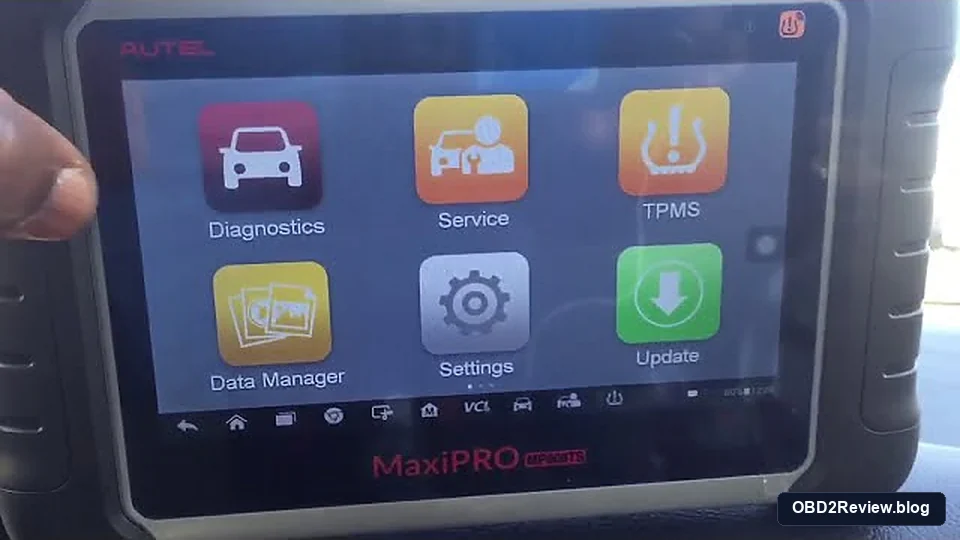
This upgraded processor inside the heavier unit ensures rapid module communication. Technicians working on modern European vehicles will appreciate the zero lag during complex data logging sessions. Processing heavy live data streams requires serious hardware overhead to prevent freezing.
Memory allocation also dictates multitasking performance across multiple vehicle systems simultaneously. Tablet architecture must balance thermal dissipation with rapid query execution speeds during demanding diagnostic routines.
The Autel MaxiCOM MK808TS relies on a standard quad-core processor paired with 32GB of solid-state onboard memory, providing adequate processing speed for routine diagnostic scans across domestic and Asian vehicle applications.
Conversely, the MS906TS steps up to a heavy-duty Samsung Exynos hexa-core processor supported by 64GB of storage, which dramatically accelerates module booting times and complex graphing tasks during deep diagnostic troubleshooting sessions.
Engineers servicing modern CAN-FD and DoIP protocols will notice that the advanced processor architecture in the higher-tier tool minimizes data latency, ensuring smoother live-data stream refreshes when monitoring multiple PID parameters simultaneously.
- Quad-core processing versus hexa-core processing capabilities
- RAM allocation impacts simultaneous live data stream rendering
- Thermal management dictates sustained heavy workshop duty cycles
Processor Performance Benchmarks
Running multi-system auto-scans highlights the raw speed disparity evaluated in our best obd2 scanner guide. Execution times drop significantly when utilizing the higher-tier processing unit.
Shops dealing with high vehicle turnover benefit immensely from minimized boot and scan durations.
- Faster module identification across all network topologies
- Reduced latency during bi-directional control testing phases
Diagnostic Coverage and Bi-Directional Controls
Bi-directional control allows technicians to command actuators directly from the diagnostic tablet interface featured across top best obd2 bluetooth scanners. Both tools support active tests, but ECU coding unlocks deeper options.
Standard system diagnostics cover engine, transmission, ABS, and SRS across most global brands. However, advanced adaptations often require the expanded software architecture found in the higher model.
Component matching and parameter resets demand precise communication protocols between tool and module.
Both scanning tools deliver comprehensive OE-level diagnostics across all available vehicle modules, allowing technicians to read and clear diagnostic trouble codes, view freeze-frame data, and reset critical service interval warning lights efficiently.
However, the MS906TS unlocks advanced bi-directional controls and active tests, enabling mechanics to command fuel pumps, actuate injectors, and cycle ABS modulator valves directly through the diagnostic interface for pinpoint verification.
While the MK808TS handles basic actuation tests for popular vehicle lines, shops dealing with deep electronic repairs require the expanded ECU coding and adaptation capabilities found natively within the MS906TS software ecosystem.
- Comprehensive active testing for emissions and powertrain components
- Advanced coding capabilities restricted primarily to the higher platform
- Extensive global vehicle manufacturer database compatibility
Active Testing and Actuator Control
Verifying component functionality relies heavily on accurate bi-directional command execution. Technicians can cycle fuel injectors and test cooling fans instantly.
Reliable feedback loops ensure diagnostic accuracy during complex troubleshooting procedures.
- Instant verification of electrical circuit integrity
- Precise calibration of steering angle sensors
TPMS Integration and Sensor Programming
Tire Pressure Monitoring System servicing requires specialized antenna hardware built directly into the chassis. Both devices excel at activating, reading, and relearning standard OE sensors.
The integrated antenna on the lighter tool offers surprising accuracy for quick mobile tire rotations. Advanced programming functions support multi-sensor retrofits without external programming pads.
Proper TPMS tool calibration prevents costly comebacks from stubborn vehicle relearn procedures.
Integrated TPMS antenna modules distinguish both diagnostic tablets from standard code readers, allowing technicians to trigger, read, and diagnose tire pressure monitoring sensor IDs, battery status, and ambient tire temperatures.
Both platforms support MX-Sensor programming, enabling shops to clone universal 315MHz and 433MHz sensors quickly without needing specialized secondary standalone programming tools cluttering up the technician workbench area.
Advanced relearn procedures, including those detailed in any best obd ii bluetooth scanner review, are thoroughly documented with step-by-step instructions built directly into the software.
- Built-in low-frequency antenna for triggering sensor signals
- Support for programmable universal sensor generation and cloning
- Step-by-step on-screen relearn procedures for domestic and import models
Sensor Relearning Procedures
Executing stationary and OBD relearns requires robust software guidance protocols. Technicians save valuable bay time using integrated sensor ID matching guides.
Flawless TPMS execution remains a hallmark of both diagnostic systems.
- Automated OBD relearn routines for stubborn vehicle computers
- Clear diagnostic trouble codes related to receiver module faults
Display Quality and Ergonomic Form Factor
Physical ergonomics dictate how comfortably a technician can hold the tablet during extended diagnostics. The Mk808Ts features a compact seven-inch display optimized for tight engine bays.
Meanwhile, the larger eight-inch screen on the companion tool improves graph legibility significantly. Rubberized corner bumpers protect both units from accidental drops on hard concrete floors.
Screen brightness matters when working outdoors under direct sunlight conditions.
Display performance directly impacts everyday usability, with the MK808TS featuring a compact 7-inch LCD capacitive touchscreen with a standard 1024x600 resolution designed for high portability and one-handed diagnostic operations inside cramped vehicle cabins.
The MS906TS upgrades the viewing experience with a larger 8-inch high-definition screen sporting a crisp 1024x768 resolution, offering significantly more workspace for viewing multi-channel waveform graphs and detailed diagnostic trouble code descriptions.
Protective rubberized corner bumpers and durable plastic housings on both units ensure they withstand harsh automotive workshop environments, surviving accidental drops onto concrete shop floors during busy, high-pressure repair workdays.
- Compact seven-inch versus expansive eight-inch touchscreens
- Ruggedized housing design protects against workshop fluid exposure
- Balanced weight distribution reduces wrist fatigue during long shifts
Display Legibility Under Shop Lighting
High-resolution LCD panels ensure live data waveforms remain crisp and easy to read. Anti-glare coatings minimize eye strain during long diagnostic troubleshooting sessions.
Touch sensitivity remains accurate even when wearing mechanic gloves.
- Clear multi-parameter waveform graphing capabilities
- Adjustable backlight settings for dark garage environments
Wireless Connectivity and VCI Hardware
Wireless vehicle communication frees technicians from being tethered directly to the steering column. The Ms906Ts utilizes a dedicated MaxiVCI wireless dongle for stable data transfer.
Maintaining a reliable connection prevents data packet loss during critical module programming events. Bluetooth stability ensures seamless roaming when choosing a best bluetooth obd2 scanner model.
Physical cable backups guarantee operation even in heavy RF interference zones.
Wireless diagnostics revolutionize workflow efficiency by eliminating tethered cables, and the MK808TS utilizes a streamlined Bluetooth VCI dongle for communicating with the vehicle diagnostic port from a reasonable distance away.
The MS906TS employs a more robust MaxiVCI V100 wireless interface equipped with advanced wireless communication technology, ensuring stable data transmission stability even inside busy shops with heavy electromagnetic interference.
Maintaining a reliable wireless link prevents interrupted software updates and corrupted module programming sessions, making the upgraded VCI hardware on the MS906TS a critical asset for professional heavy-duty repair facilities.
- Robust Bluetooth VCI module for untethered diagnostic mobility
- Stable communication range across standard automotive service bays
- Wired USB connection options for high-security module flashing
Bluetooth Pairing Stability
Reliable pairing between the tablet and the VCI dongle prevents workflow interruptions. Automatic reconnection features save time if communication drops temporarily.
Interference management keeps data streams fluid and uninterrupted.
- Fast initial pairing sequence with distinct device naming
- Strong signal transmission through steel vehicle doors
Battery Capacity and Power Management
Uninterrupted workflow depends heavily on dependable internal battery longevity during busy shifts. The higher-capacity battery in the flagship model sustains extended live testing sessions.
Smart power-saving modes dim screens automatically when idle to conserve precious milliamp hours. Charging docks provide convenient overnight power replenishment for the next workday.
Low battery warnings alert technicians well before shutdown protocols initiate.
Field portability relies heavily on internal power reserves, with the MK808TS packing a dependable 5000mAh lithium-polymer battery capable of sustaining continuous diagnostic work through several hours of active workshop troubleshooting tasks.
Step up to the MS906TS and you gain a massive 10000mAh rechargeable battery, effectively doubling operational runtime and easily lasting through an entire multi-vehicle diagnostic shift without requiring constant midday recharging interruptions.
Intelligent power management systems in both tablets optimize energy consumption during standby modes, preserving battery longevity and ensuring the diagnostic tool remains ready for immediate deployment whenever urgent vehicle problems arise.
- Extended lithium-polymer battery life for full-day shop usage
- Intelligent power management features preserve internal cell health
- Rapid charging protocols minimize downtime between diagnostic jobs
Power Efficiency During Extended Diagnostics
Running multiple system tests drains power faster than idle menu navigation. Efficient thermal design prevents premature battery degradation under heavy loads.
Reliable power delivery ensures safe ECU programming completion.
- Stable voltage regulation during critical software flashes
- Low standby power drain during overnight storage periods
Software Update Policies and Long-Term Value
Manufacturer software updates introduce coverage for newly released vehicle models annually. Subscription models ensure your investment remains compatible with evolving automotive architectures.
The update ecosystem provides regular firmware patches that optimize existing diagnostic functions continuously. Long-term tool ownership relies heavily on consistent developer support and bug fixes.
Archiving past vehicle diagnostic reports protects shop liability records.
Long-term diagnostic capability depends on manufacturer update support, with both Autel tools typically offering standard periods of complimentary software downloads covering newly released vehicle models and expanded system diagnostic coverages.
Subscription renewals maintain access to annual vehicle database updates, ensuring technicians can service the latest automotive technologies, security gateway protocols, and advanced driver assistance calibration requirements entering the modern repair market.
Evaluating overall return on investment requires weighing upfront tool costs against specific workshop diagnostic demands, ensuring general maintenance shops and specialized electronics repair centers select the ideal hardware performance tier.
- Regular software patches expand vehicle database coverage annually
- Cloud-based report sharing simplifies customer communication workflows
- Subscription renewal options keep legacy hardware fully operational
Cloud Reporting and Data Management
Generating comprehensive pre-scan and post-scan reports builds immense customer trust. Technicians can email PDF documents directly from the diagnostic interface.
Cloud storage organization keeps repair histories accessible anywhere.
- Instant PDF report generation for customer service advisors
- Secure cloud backup prevents accidental diagnostic data loss
Frequently Asked Questions
Can both scanners perform advanced ECU coding?
The Ms906Ts offers full advanced coding and adaptation capabilities, whereas the smaller model focuses strictly on basic resets and maintenance routines. Professional shops requiring deep module configuration should choose the higher-tier platform.
Is wireless connectivity standard on both diagnostic tools?
Wireless VCI communication comes standard on the Ms906Ts, utilizing a dedicated Bluetooth dongle for untethered mobility. The alternative model relies more heavily on direct physical connections for certain functions.
Do these tablets require annual software subscription renewals?
Both platforms operate on an optional subscription model that delivers continuous database updates and new vehicle coverage. The tools remain fully functional for existing diagnostics even if you let the subscription lapse.
How does TPMS service compare between the two units?
Both diagnostic systems feature robust built-in low-frequency antennas capable of activating and programming standard sensors. They handle complex relearn procedures with identical software guidance efficiency.
Which scanner is better suited for mobile diagnostic technicians?
The Mk808Ts provides an ideal lightweight footprint with exceptional portability for mobile service calls. Its compact form factor fits easily into crowded service kits.