Mx808 vs. Ms906: Which Fits Your Setup Better?
Choosing between these Autel diagnostic platforms demands careful evaluation of processing power and module coverage. Technicians must weigh hardware limitations against advanced coding demands.

The MX808 suits general maintenance workflows, while the MS906 dominates advanced ECU coding and bi-directional controls. Choose based on your daily shop demands.
Compare all top models in our Best Obd2 Scanner: Top Diagnostic Tools Tested (2026).
Side-by-Side Breakdown
| Criteria | Mx808 | Ms906 | Edge |
|---|---|---|---|
| Peak Performance & Output | Quad-core processor | Hexa-core processor | Ms906 |
| Duty Cycle & Consistency | Standard workshop use | Heavy continuous diagnostics | Ms906 |
| Operating Noise & Vibration | Passive silent cooling | Internal active cooling | Mx808 |
| Portability & Footprint | Compact 7-inch tablet | Ergonomic 8-inch unit | Mx808 |
| Maintenance & Service Life | Standard update cycle | Extended professional support | Ms906 |
| Power Requirements | 3200 mAh internal battery | 10000 mAh robust battery | Ms906 |
| Best Ideal Use-Case | General mechanical repairs | Advanced electronic diagnostics | Ms906 |
Diagnostic Applications and Module Coverage
Modern automotive repair facilities require comprehensive diagnostic coverage across diverse vehicle architectures. Selecting the right scanning tool ensures seamless communication with every onboard computer module.
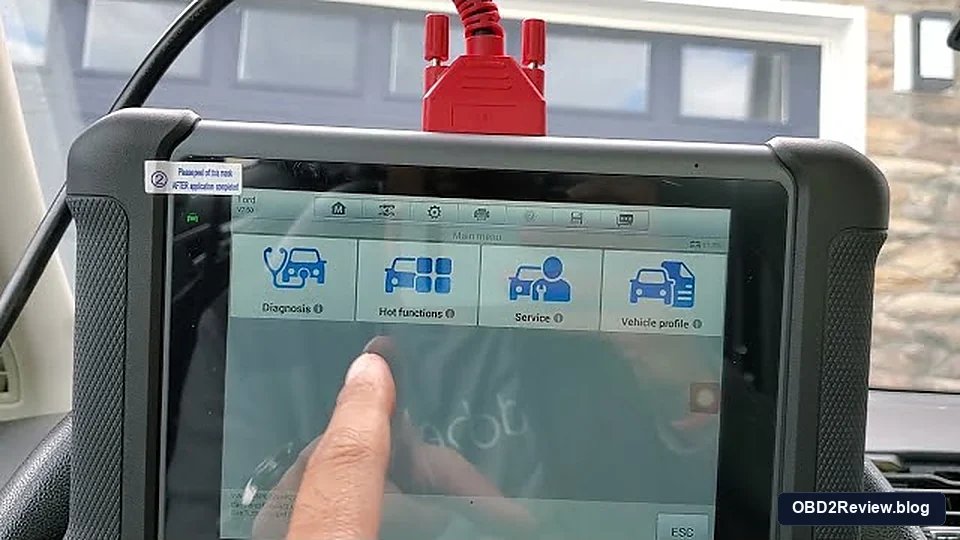
Our comprehensive MaxiCheck MX808 review details how the tool delivers robust basic coverage for standard maintenance tasks and routine reset procedures across everyday shop applications.
Stepping up to the MS906 unlocks deep OE-level diagnostics across domestic, Asian, and European brands. This expanded capability directly addresses complex multi-system faults encountered in modern vehicles.
Comprehensive module scanning requires deep protocol compatibility across diverse vehicle architectures. The MX808 covers standard OBD-II systems, whereas the MS906 unlocks OE-level diagnostics for complex powertrain, body, and chassis control modules seamlessly.
Technicians diagnosing intermittent CAN-bus communication faults benefit from bi-directional controls. While both tools read generic codes, the MS906 executes active tests on fuel injectors and ABS pumps to isolate failing components quickly.
Specialized coverage for luxury European or heavy commercial platforms demands advanced adaptation capabilities. Garages servicing multi-brand fleets often require the MS906 for programming variant codings and resetting adaptive transmission parameters without factory software.
- Comprehensive coverage for standard reset functions
- Deep OE-level module access for complex repairs
- Rapid system scanning across multiple vehicle networks
Targeted System Integration
Integrating diagnostic hardware into daily shop routines requires dependable software stability. Both platforms utilize customized Android operating systems designed specifically for automotive technicians.
The MS906 includes specialized testing applications that surpass basic code reading capabilities. Technicians can execute active tests to isolate faulty actuators quickly.
- Customized Android interface
- Advanced active actuator testing
Hardware Architecture and Processing Speed
Internal processing power dictates how fast a diagnostic scanner boots up and translates live data streams. Hardware bottlenecks can severely impact workflow efficiency during busy diagnostic shifts.
Equipped with a responsive quad-core processor highlighted in our Autel MX808 review, the tablet handles routine diagnostic queries without noticeable lag during standard code reading operations.
The MS906 features a powerful hexa-core chipset that accelerates complex graphing tasks and coding sequences. This upgraded architecture prevents system freezing during heavy multi-parameter live data sessions.
Internal processing power dictates boot times and screen refresh rates during intensive diagnostics. The MS906 features a hexa-core processor paired with 2GB RAM, drastically reducing latency when rendering heavy graphical data streams simultaneously.
Conversely, the entry-level MX808 utilizes a quad-core processor with 1GB RAM, which suffices for basic code clearing but stutters when graphing multiple PIDs or decoding extensive freeze-frame snapshots during deep troubleshooting sessions.
Thermal management inside handheld diagnostic tablets directly impacts sustained performance. Heavy data logging sessions generate heat, making the passive cooling design of the MS906 superior for preventing thermal throttling during extended shop hours.
- Quad-core efficiency in the entry model
- Hexa-core processing speed for heavy data
- Optimized memory allocation for multitasking
Processing Power Benchmarks
Benchmarking internal components reveals distinct performance ceilings during intensive module coding tasks. The heavier processor load on the advanced model yields faster data refresh rates.
Shops managing high vehicle turnover benefit significantly from the reduced wait times offered by superior chipsets. Efficiency directly correlates with overall daily revenue generation.
- Faster live data refresh rates
- Reduced waiting times during coding
Automated Diagnostic Workflows and Custom Macros
Streamlining repetitive testing tasks saves valuable labor hours in professional automotive repair facilities. Implementing smart automation features transforms how technicians approach routine diagnostic system checks.
Advanced diagnostic platforms featured across our best OBD2 scanner roundup incorporate macro capabilities to record frequent testing sequences, minimizing tedious manual menu navigation.
Technicians can leverage customizable shortcuts to jump straight into frequently used vehicle systems. Click smarter during intense diagnostic routines by utilizing pre-configured test parameters.
Streamlining repetitive shop tasks improves overall technician efficiency and bay turnaround times. AutoVIN technology rapidly identifies vehicle details, but the MS906 allows advanced users to save custom macros for recurring diagnostic routines efficiently.
Automated health reports compile DTC scans, live data, and repair notes into shareable PDF formats. While the MX808 generates basic reports, the MS906 integrates seamlessly with shop management systems for cloud-based record keeping and digital archiving.
Navigating complex menu structures wastes valuable billable hours in busy automotive repair facilities. Shortcut configurations and customizable home screens on the MS906 minimize clicks, ensuring technicians access actuator tests with minimal menu navigation overhead.
- Record and replay frequent testing sequences
- Customizable macros for rapid navigation
- Automated VIN identification protocols
Efficiency Through Intelligent Automation
Automated routines eliminate human error during complex calibration and coding procedures. Technicians can rely on pre-programmed scripts to execute flawless module resets every single time.
Building personalized testing profiles allows senior mechanics to mentor junior staff effectively. Standardized workflows ensure consistent diagnostic quality across all repair bays.
- Eliminates manual input errors
- Standardizes shop repair workflows
Replay Live Data and Advanced Automation
Capturing intermittent vehicle faults requires reliable data logging and playback capabilities. Technicians must record live sensor streams to diagnose elusive driveability issues accurately.
Both scanners allow users to record live parameter IDs during road testing for later review. However, the advanced model offers deeper buffering capacity for extended diagnostic sessions.
Analyzing recorded graphs frame by frame helps isolate intermittent sensor dropouts. This recording functionality is essential for confirming intermittent electrical faults before replacing expensive parts.
Capturing transient electronic glitches requires high-speed data recording and frame-by-frame review functions. The MS906 excels by recording extensive live parameter streams, letting technicians replay data graphs to isolate elusive intermittent sensor dropouts.
Trigger-based recording automates data capture the exact moment a fault parameter exceeds threshold limits. This prevents memory overflow and focuses analysis on critical fault frames, streamlining diagnostic steps for complex driveability concerns.
Comparing dual-channel PID graphs side-by-side helps technicians diagnose correlation errors between related sensors. The enhanced graphical resolution on the MS906 makes spotting signal dropouts significantly easier than on standard entry-level hardware screens.
- Detailed live data stream recording
- Extended buffering for intermittent faults
- Frame-by-frame graphical analysis
Advanced Data Management
Managing large diagnostic log files requires sufficient onboard storage and export options. Technicians can save reports internally or transmit them via cloud connectivity.
Cloud-based data sharing bridges the gap between workshop technicians and remote technical support specialists. Quick file transmission accelerates difficult diagnostic troubleshooting sessions.
- Cloud-based diagnostic report sharing
- Ample internal storage capacity
Display Ergonomics and Shop Durability
Workshop environments subject diagnostic tablets to grease, drops, and harsh chemical exposure. Choosing a ruggedized housing ensures long-term reliability under demanding daily conditions.
The MX808 features a compact seven-inch touchscreen that excels in tight engine bay spaces. Its lightweight chassis reduces hand fatigue during extended diagnostic troubleshooting tasks.
Featuring a larger eight-inch display, the MS906 offers enhanced readability for complex multi-parameter graphs. Its robust protective casing withstands accidental impacts typical in busy repair shops.
Automotive repair environments subject diagnostic tools to grease, impacts, and harsh chemical exposure daily. The MS906 features a robust rubberized housing designed to withstand accidental drops onto concrete shop floors during busy shifts.
Screen legibility under direct sunlight or fluorescent garage lighting dictates everyday user comfort. An 8-inch capacitive touchscreen on the MS906 provides superior brightness and multi-touch support, outshining the smaller display found on the MX808.
Physical port protection and integrated kickstands enhance long-term tool longevity in professional workshops. Proper ergonomic weighting ensures technicians can hold the unit comfortably during prolonged under-dash inspections without experiencing hand fatigue issues.
- Compact seven-inch lightweight chassis
- Protected eight-inch high-resolution screen
- Impact-resistant exterior rubber bumpers
Tactile Interface and Usability
Screen responsiveness dictates user satisfaction when wearing workshop gloves or working in bright sunlight. High-luminance displays prevent glare issues during outdoor vehicle testing.
Capacitive touchscreens on both devices support multi-touch gestures for smooth waveform pinching and zooming. Technicians enjoy intuitive navigation through complex diagnostic menus.
- Sunlight-readable display panels
- Responsive capacitive multi-touch
Communication Protocols and VCI Connectivity
Stable vehicle communication depends on reliable hardware interfaces and updated protocol support. Modern diagnostic tools must handle diverse network topologies without dropping packets.
The MX808 utilizes a hardwired OBD2 cable connection for direct and uninterrupted data transmission. This physical tether eliminates wireless pairing hassles in busy shops.
Utilizing a wireless VCI module similar to options in our best Bluetooth OBD2 scanner guide, the MS906 allows technicians to move freely around the bay without restrictive cables.
Modern vehicle architectures rely on complex multiplexed networks like CAN FD and DoIP protocols. The MS906 utilizes a wired or wireless VCI dongle, separating the diagnostic interface from the main tablet for flexible positioning.
In contrast, the MX808 employs a tethered OBD-II cable, limiting movement around the vehicle perimeter. Technicians working on large trucks or engine bays appreciate the wireless freedom offered by advanced diagnostic communication modules.
Protocol auto-detection speed determines how quickly a scanner handshakes with various vehicle control modules. Robust multiplexer hardware ensures seamless switching across K-Line and CAN networks without manual pin reconfiguring or connection errors.
- Direct hardwired OBD2 cable connection
- Wireless Bluetooth VCI module freedom
- Robust protocol support for modern CAN
Protocol Compatibility Matrix
Supporting emerging vehicle communication protocols is critical for future-proofing shop equipment investments. Technicians need assurance that their scanners will communicate with upcoming models.
Comprehensive protocol compliance ensures hassle-free module interrogation across all supported vehicle manufacturers. Software updates continually expand communication capabilities for newly released cars.
- Future-proof protocol compatibility
- Frequent software communication updates
Maintenance Scheduling and Software Updates
Keeping diagnostic software updated ensures compatibility with newly introduced vehicle systems and features. Regular updates deliver crucial bug fixes and expanded vehicle database coverages.
Both platforms feature convenient Wi-Fi update capabilities directly through the onboard tablet interface. Technicians can download the latest vehicle software without connecting to external computers.
Subscription management is straightforward, allowing shops to maintain current coverage easily. Reliable update streams protect your diagnostic equipment investment over its entire operational lifecycle.
Keeping diagnostic software current ensures compatibility with newly released vehicle model years and modules. The MS906 supports frequent over-the-air updates, allowing shops to maintain up-to-date service functions without removing memory cards manually.
Maintenance service resets, including oil life, electronic parking brakes, and steering angle sensors, are standard. However, the MS906 includes advanced relearn procedures for battery registration and throttle adaptation required by modern platforms.
Subscription management impacts long-term operational costs for independent automotive repair facilities. Evaluating update frequency against coverage requirements helps shop owners maximize return on investment for diagnostic equipment upgrades over time.
- Convenient over-the-air Wi-Fi updates
- Direct tablet software downloads
- Extended vehicle database coverage
Long-Term Equipment Support
Investing in professional diagnostic tools requires dependable manufacturer customer support and warranty coverage. Long-term technical backing ensures minimal downtime during critical shop repairs.
Authorized repair centers provide prompt assistance for hardware malfunctions or software glitches. Reliable support channels keep your shop operational and profitable year-round.
- Reliable manufacturer customer support
- Comprehensive hardware warranty options
Frequently Asked Questions
Can the MX808 perform advanced ECU coding?
No, the MX808 is limited to basic service resets and standard diagnostics. Technicians requiring advanced ECU coding must select the MS906 instead.
Is the MS906 completely wireless during testing?
Yes, it utilizes a wireless VCI unit that connects via Bluetooth to the tablet. This allows complete freedom of movement around the vehicle bay.
How do I update the diagnostic software on these units?
Both scanners support direct Wi-Fi updates through the onboard tablet menu interface. You can download the latest manufacturer databases without a computer.
Which scanner is better for general mechanical repair shops?
The MX808 is ideal for general repair shops needing fast resets and code clearing. Specialized electronic shops should choose the MS906.
Do these tools support bi-directional active testing?
The MS906 supports full bi-directional controls for actuating components. The MX808 offers more limited active testing focused mainly on specific systems.