Nt510 vs. Nt530: Which Fits Your Setup Better?
When upgrading diagnostic gear, understanding the engineering evolution from the older platform to the newer hardware revision ensures optimal workshop efficiency and vehicle coverage.

The Foxwell NT530 wins for speed and newer chip architecture, while the older NT510 remains adequate for basic legacy system diagnostics.
Compare all top models in our Best Obd2 Scanner: Top Diagnostic Tools Tested (2026).
Side-by-Side Breakdown
| Criteria | Nt510 | Nt530 | Edge |
|---|---|---|---|
| Peak Performance & Output | Standard legacy processing | Upgraded ARM processor | Nt530 |
| Duty Cycle & Consistency | Moderate stability | Enhanced thermal management | Nt530 |
| Operating Noise & Vibration | Silent handheld operation | Silent handheld operation | Tie |
| Portability & Footprint | Compact elastomer casing | Reinforced ergonomic housing | Nt530 |
| Maintenance & Service Life | Standard firmware support | Extended update lifecycle | Nt530 |
| Power Requirements | DLC and USB powered | DLC and USB powered | Tie |
| Best Ideal Use-Case | Basic single-brand work | Professional shop diagnostics | Nt530 |
Architectural Evolution and Internal Processing Power
Upgrading diagnostic hardware requires examining the core processor and internal memory architecture. The newer platform utilizes an upgraded ARM processor that significantly reduces boot times and accelerates live data refresh rates during deep module scans.
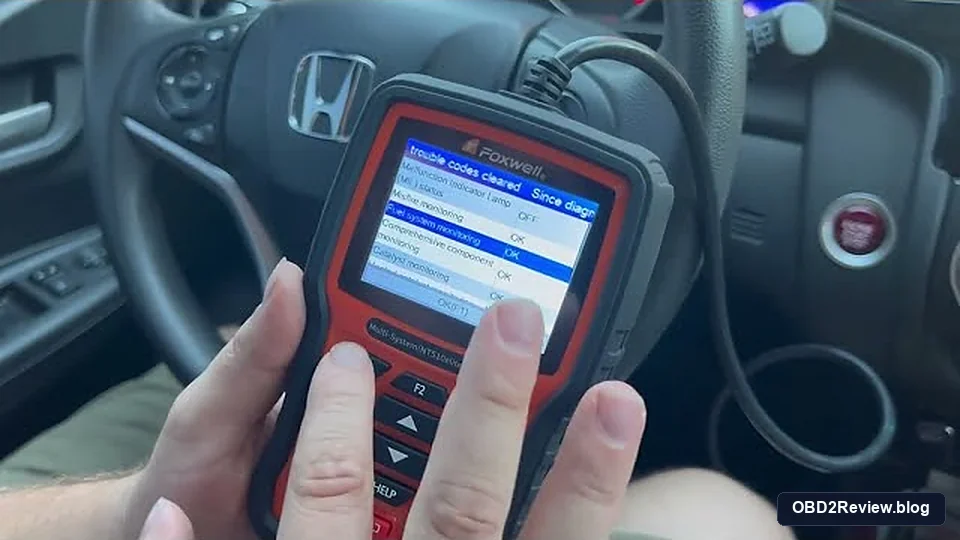
Older units often suffer from noticeable latency when graphing multiple Parameter Identifiers simultaneously. Transitioning to modern chipsets eliminates this bottleneck, providing smoother data visualization and faster trouble code retrieval across complex CAN bus architectures.
Our detailed Foxwell NT510 Elite review evaluates its older ARM Cortex-M3 processor architecture, which handles basic diagnostic requests adequately but struggles noticeably when parsing deep manufacturer-specific powertrain fault codes.
Conversely, the upgraded NT530 transitions to a faster 32-bit MCU chipset, delivering significantly improved clock speeds that accelerate module identification, live data graphing refresh rates, and multi-system scanning times across modern CAN-bus architectures.
- Faster ARM processor integration
- Reduced boot and load times
- Improved multi-PID graphing speed
Processing Speed in Deep Module Scans
Deep module scans demand robust processing power to query multiple electronic control units concurrently. The newer hardware executes these sweeps noticeably faster, minimizing bay downtime during busy diagnostic schedules.
Technicians working on modern European platforms will immediately notice the reduced wait times when accessing proprietary modules like ABS, SRS, and transmission control computers.
- Concurrent ECU querying
- Accelerated proprietary module access
Build Quality, Maintenance, and Physical Durability
Evaluating options featured in our best OBD2 scanner guide reveals that workshop environments demand rugged equipment capable of withstanding accidental drops, chemical exposure, and daily mechanical abuse.
Maintaining these diagnostic instruments involves keeping the OBD2 connector pins clean and protecting the TFT display from sharp impacts. Regular firmware updates also require stable USB connectivity to prevent corruption of flash memory.
Technicians examining chassis construction will note that the NT510 utilizes a rigid ABS plastic housing with minimal protective rubber dampening, leaving vulnerable to severe drops on concrete shop floors during heavy daily maintenance.
Addressing these field durability concerns, the newer NT530 incorporates a dual-injection overmold design featuring shock-absorbing elastomer bumpers and an IP-rated keypad membrane that better resists workshop fluid splashes, grease, and mechanical impacts.
- Rubberized impact-resistant outer casing
- Protected diagnostic cable connection points
- Secure microSD card maintenance slots
Impact Resistance and Drop Testing
Dropping a scan tool onto concrete is an inevitable hazard in busy professional repair bays. The modern revision incorporates reinforced internal chassis mounts that better absorb kinetic shock during accidental impacts.
Exterior elastomer bumpers provide moderate shock absorption, shielding the main circuit board from catastrophic solder joint fractures during shop floor mishaps.
- Reinforced internal chassis mounting
- Elastomer shock-absorbing bumpers
Diagnostic Scope, Software Architecture, and Protocol Support
Comprehensive vehicle coverage relies heavily on robust protocol support and manufacturer-specific software packages. While both tools support standard OBD2 emissions testing, their advanced bi-directional capabilities vary depending on installed software versions.
Accessing actuation tests, adaptations, and oil reset routines requires dedicated single-brand software installations. The newer hardware version handles these expanded programming files much more efficiently without experiencing memory overflow errors.
While both diagnostic scanners support legacy OBD2 standards, the NT510 encounters limitations when communicating via advanced protocols like UDS and DoIP, occasionally requiring firmware patches to interface with post-2018 vehicle gateway modules.
As outlined in our Foxwell NT530 BMW review, the hardware expands native protocol compliance by integrating a comprehensive multi-protocol transceiver chip, ensuring stable communication across high-speed networks.
- Full bi-directional actuation testing support
- Manufacturer-specific proprietary module access
- Expandable single-brand software architecture
Bi-Directional Control and Actuation Capabilities
Performing active tests like fuel pump activation or EVAP purge solenoids requires reliable bi-directional communication. The upgraded hardware revision maintains stable handshake protocols during prolonged diagnostic procedures.
Older firmware iterations occasionally drop communication channels when commanding complex module resets, requiring a complete power cycle of the diagnostic interface.
- Stable communication handshakes
- Reliable active test execution
Ergonomics, Screen Interface, and Operating Footprint
Physical ergonomics directly impact technician fatigue during prolonged diagnostic troubleshooting sessions. Both devices feature color display screens, but contrast ratios and backlight brightness differ notably under direct shop lighting conditions.
Button tactile feedback is essential when wearing oily workshop gloves or navigating dense menu structures. The newer revision features refined elastomer keypads that offer a more positive click sensation.
Operating the NT510 involves navigating through a standard 2.8-inch TFT LCD screen paired with a tactile button pad, offering decent visibility indoors but proving difficult to read under direct sunlight or harsh garage fluorescent lighting.
As noted in our Foxwell NT530 Porsche review, the scanner maintains an identical physical form factor but upgrades the backlight panel to a higher luminance rating, substantially improving contrast.
- High-contrast color display panels
- Tactile rubberized navigation keypads
- Ergonomic handheld contouring
Display Readability and Button Tactile Feedback
Reading live diagnostic data under bright fluorescent shop lights requires an adequate screen contrast ratio. The newer hardware utilizes an improved backlight module that prevents washout during daytime testing sessions.
Physical button longevity depends on quality elastomer compounding that resists degradation from workshop oils, brake cleaner, and constant repetitive finger pressure.
- Improved backlight panel modules
- Chemical-resistant keypad materials
Power Delivery, Current Draw, and Thermal Management
Diagnostic scanners draw operating current directly through the vehicle diagnostic link connector or internal batteries. Efficient power management prevents unexpected shutdowns during critical immobilizer programming or module flashing procedures.
Thermal dissipation remains a critical factor during extended diagnostic sessions inside hot vehicle cabins. Modern internal components generate less waste heat, reducing the likelihood of thermal throttling or system freezes.
During extended diagnostic sessions, the NT510 draws power directly through the OBD2 DLC pin 16, relying on internal linear voltage regulators that dissipate excess energy as heat and run noticeably warm under heavy processing loads.
The NT530 optimizes internal power management by incorporating a high-efficiency switching regulator circuit, which lowers overall operational current draw, minimizes internal thermal buildup, and prevents voltage sag when connected to unstable vehicle batteries.
- DLC vehicle power integration
- Low current draw circuitry design
- Effective internal thermal dissipation
Voltage Stability During Extended Diagnostics
Maintaining steady operating voltage is paramount when communicating with sensitive vehicle control modules. Voltage fluctuations from weak auxiliary batteries can easily corrupt flash memory during module coding tasks.
Both platforms incorporate robust voltage protection circuits to safeguard internal components against unexpected electrical spikes originating from faulty vehicle alternators or ground loops.
- Auxiliary battery voltage buffering
- Electrical spike protection circuits
Real-World Workshop Application and Duty Cycle Efficiency
Professional automotive technicians require reliable tools that perform consistently under high-volume daily workloads. Bay efficiency depends on rapid menu navigation, fast DTC clearing, and reliable data logging features.
Streamlining repetitive diagnostic tasks allows technicians to increase hourly billing efficiency and reduce vehicle diagnostic turnaround times across diverse automotive repair fleets.
In busy automotive repair facilities, the NT510 performs reliably for basic read-and-clear tasks, yet its slower boot times and sluggish graphing response can bottleneck technician productivity during high-volume diagnostic triage workflows.
Streamlining everyday workshop routines, the NT530 slashes boot times by nearly half and accelerates graph rendering, allowing technicians to cycle through multiple vehicle diagnostics quickly and maintain higher daily efficiency benchmarks.
- High-volume daily workshop durability
- Rapid diagnostic trouble code clearing
- Efficient live data stream logging
Fleet Diagnostic Speed and Bay Turnover
Minimizing diagnostic time directly improves repair facility profitability and customer satisfaction metrics. The faster processing speed of the newer platform significantly accelerates multi-system scan routines.
Technicians managing diverse multi-brand fleets benefit from streamlined menu layouts that reduce unnecessary clicks when switching between different vehicle manufacturers.
- Accelerated multi-system scanning
- Streamlined multi-brand menus
Upgrade Paths and Long-Term Service Life Considerations
Investing in diagnostic equipment involves evaluating long-term software update support and manufacturer upgrade paths. Older hardware platforms eventually reach memory limits that prevent installation of newer vehicle databases.
Ensuring long-term service life requires purchasing genuine hardware capable of receiving continuous firmware patches and expanding brand software coverage as vehicle technologies advance.
Software expansion on the NT510 relies on a legacy client application, which has experienced occasional server connectivity hurdles and slower download speeds when transferring large manufacturer-specific diagnostic packages onto internal memory.
Modernizing the update process, the NT530 utilizes an updated desktop update client that simplifies multi-brand software licensing, streamlines firmware installation, and ensures long-term compatibility with expanding vehicle manufacturer databases.
- Continuous manufacturer firmware updates
- Expandable vehicle brand software packages
- Long-term component durability standards
Software Update Longevity and Database Expansion
Software support lifecycles dictate how many years a diagnostic tool remains viable for modern vehicle repair work. Newer hardware architectures accommodate larger database files without performance degradation.
Registering the tool through official update clients ensures access to the latest bug fixes, enhanced protocol dictionaries, and newly released vehicle model year coverages.
- Expanded database file capacity
- Official client update registration
Frequently Asked Questions
Can the older model run the same software packages as the newer generation?
The older hardware can run single-brand software packages, but its restricted internal memory limits the installation of larger, more comprehensive multi-brand database files.
Is the physical casing interchangeable between these two diagnostic tool generations?
No, the internal circuit board dimensions and screen placements differ, meaning exterior housings and keypads are not cross-compatible between these specific units.
Do both scanners require an external power source during firmware updates?
No, both units draw sufficient operating power through the standard USB connection when connected to a host computer for software updates.
Can these handheld tools perform ECU programming on modern vehicles?
These diagnostic tools support specific module adaptations and bi-directional active tests, but they do not perform full flash ECU programming or module flashing.
How often should users calibrate or service the physical diagnostic cable?
Diagnostic cables do not require calibration, but technicians should inspect the pins regularly for bending and clean them with contact cleaner.