Obd1 vs. Obd2 Scanner: Which Fits Your Setup Better?
Older vehicle diagnostics require understanding legacy proprietary protocols and flashing blink codes. Modern diagnostic tools standardize data streams across global manufacturers through a universal data link connector.


OBD2 scanners dominate modern maintenance through universal standardization and live data graphing capabilities. OBD1 systems remain essential exclusively for vintage restoration work involving non-standard diagnostic port pinouts.
Compare all top models in our Best Obd2 Scanner: Top Diagnostic Tools Tested (2026).
Side-by-Side Breakdown
| Criteria | Obd1 | Obd2 Scanner | Edge |
|---|---|---|---|
| Peak Performance & Output | Proprietary blink codes | High-speed live data streams | Obd2 Scanner |
| Duty Cycle & Consistency | Manual diagnostic jumpers | Continuous multiplexed monitoring | Obd2 Scanner |
| Operating Noise & Vibration | Analog dashboard indicators | Digital display readouts | Obd2 Scanner |
| Portability & Footprint | Bulky proprietary interface kits | Pocket-sized handheld modules | Obd2 Scanner |
| Maintenance & Service Life | Simple circuitry repair | Firmware updates required | Obd1 |
| Power Requirements | Dedicated under-hood hookups | 12V DLC power delivery | Obd2 Scanner |
| Best Ideal Use-Case | Pre-1996 vintage vehicles | 1996 and newer fleets | Obd2 Scanner |
Architectural Evolution of Vehicle Diagnostic Ports
Early automotive computers utilized entirely disparate diagnostic architectures across every single manufacturer. Engineers designed proprietary diagnostic links that lacked any form of cross-platform standardization or universal hardware compatibility.
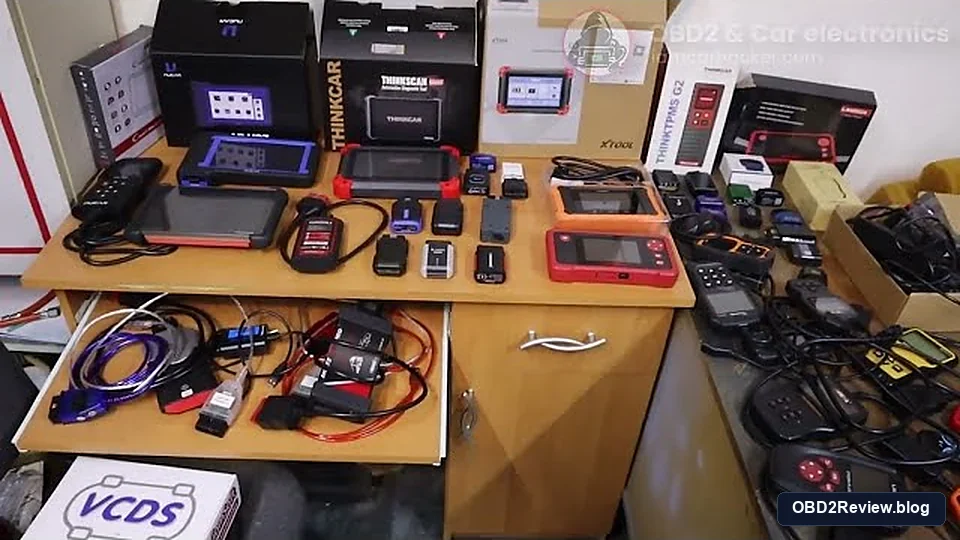
Technicians servicing pre-1996 automobiles must navigate a maze of unique under-hood connectors. These legacy systems demand specialized adapter cables because no universal plug existed prior to federal emissions mandates.
The introduction of standardized diagnostic requirements transformed automotive troubleshooting methodologies completely. Modern computer networks now rely on centralized data links that streamline module communication across diverse global manufacturing platforms.
Early vehicle diagnostics relied on proprietary under-hood connectors that varied by manufacturer. Technicians faced severe standardization hurdles because each brand utilized unique pinouts and voltage thresholds for basic fault code retrieval.
The mandate for a universal port transformed automotive repair operations globally. Society of Automotive Engineers standards established a standardized 16-pin layout ensuring uniform power supply, ground paths, and core communication bus lines.
Pin 16 permanently delivers battery voltage while pins four and five handle chassis and signal grounds. This robust electrical architecture eliminates auxiliary power cords during routine module interrogation and oscilloscope data logging.
- Proprietary manufacturer pinout layouts
- Under-hood adapter cable requirements
- Pre-1996 hardware fragmentation
Legacy Pinout Variations
Manufacturers like Ford and General Motors deployed vastly different wiring schematics for their early computers. Mechanics frequently consulted thick paper manuals to identify correct jumper pins before reading error codes.
Decoding dashboard warning lights often required counting manual flashes from illuminated instrument clusters. This tedious process introduced significant human error into initial fault diagnosis workflows across older workshops.
- Manual dashboard flash counting
- Complex paper manual referencing
Signal Processing and Communication Protocol Differences
Older diagnostic tools process analog electrical voltage fluctuations rather than digital data packets. Technicians upgrading from vintage multimeters rely on our top obd2 scanner picks to evaluate raw signal waveforms inside electronic control units.
Modern scanning equipment utilizes high-speed digital communication protocols to query onboard vehicle computers instantaneously. These advanced networks transmit multiplexed data streams directly to handheld diagnostic display screens.
Signal latency remains a major performance differentiator between vintage and modern diagnostic hardware interfaces. Legacy connections suffer from severe bandwidth limits that restrict real-time sensor monitoring capabilities.
Legacy systems transmitted slow blinking dashboard signals or basic serial data streams. Modern networks utilize high-speed differential signaling over twisted-pair cables to handle massive volumes of real-time parameter data.
Older architectures implemented proprietary protocols like Chrysler's collision detection or Ford's EEC-IV. Conversely, contemporary standards enforce Controller Area Network architecture achieving speeds up to five hundred kilobaud.
Signal processing hardware must filter severe electrical noise generated by high-energy ignition systems. Advanced differential transceivers reject common-mode interference to guarantee packet integrity across heavy electromagnetic interference environments.
- Analog voltage signal interpretation
- High-speed digital packet transmission
- Severe vintage bandwidth limitations
Protocol Standardization Benefits
Universal communication rules eliminated the need for multiple brand-specific diagnostic interfaces in modern shops. Standardized protocols ensure seamless tool compatibility across every compliant vehicle entering the service bay.
Enhanced network speeds allow technicians to monitor dozens of live parameters simultaneously without system lag. This capability improves diagnostic accuracy during complex intermittent drivability fault tracing tasks.
- Universal tool compatibility rules
- Simultaneous live parameter monitoring
Hardware Interface Design and Connector Standardization
Physical connection points underwent radical redesigns alongside the evolution of onboard automotive computer systems. Early connectors featured fragile plastic tabs that frequently snapped during routine under-dashboard module plugging.
The universal sixteen-pin interface established a robust mechanical standard for all passenger vehicles sold after 1996. This trapezoidal connector design ensures secure pin engagement and prevents accidental disconnection during testing.
Ergonomic improvements in modern tool casing materials protect internal circuitry from workshop chemical exposure. Technicians benefit from ruggedized rubber boots that absorb severe impacts on concrete garage floors.
Physical connector durability dictates scanner longevity in harsh professional shop environments. When selecting equipment from our professional obd2 scanner guide, look for molded thermoplastic housings with gold-plated brass pins ensuring high mating cycle endurance.
SAE J1962 mandates specific physical dimensions and trapezoidal geometry to prevent incorrect cable insertion. This mechanical keying protects sensitive interface circuitry from catastrophic over-voltage conditions caused by reversed polarity seating.
Strain relief boots engineered from flexible elastomer compounds protect internal solder joints from repetitive bending stresses. Technicians rely on these ruggedized physical interfaces during continuous daily plug-in cycles inside tight driver footwells.
- Fragile legacy plastic retention tabs
- Sixteen-pin trapezoidal connector standard
- Ruggedized workshop casing materials
Durability and Ergonomics in the Field
Field technicians require handheld equipment that withstands harsh automotive fluid contamination and repeated physical drops. Modern diagnostic units feature sealed membrane keypads to block moisture ingress effectively.
Legacy diagnostic adapters lacked protective enclosures, leaving delicate circuit boards exposed to shop dust. Contemporary tools prioritize impact-resistant housings to guarantee longevity in professional repair environments.
- Sealed membrane keypad designs
- Impact-resistant professional equipment housings
Live Data Streaming Versus Static Fault Retrieval
Vintage diagnostic units primarily function as basic static fault code retrieval devices without memory buffers. Mechanics received only stored trouble codes rather than contextual engine operating parameters during failure events.
Modern testing equipment records comprehensive live data streams to evaluate sensor behavior dynamically. Technicians analyze graphical parameter trends to pinpoint failing components before complete mechanical breakdown occurs.
Freeze frame capabilities allow modern tools to capture exact snapshot conditions when a trouble code triggers. This functionality provides crucial environmental context that simplifies complex intermittent electronic diagnostic challenges.
Older diagnostic tools merely captured static Diagnostic Trouble Codes stored after sensor failure thresholds were breached. Modern software samples dozens of sensor feeds simultaneously to map dynamic engine performance metrics and transient operating anomalies.
Streaming parameter identifiers require high-bandwidth communication lines to update telemetry values multiple times per second. Automotive engineers analyze these rapid refresh rates to diagnose intermittent misfires and fuel trim fractional adjustments.
Graphing multiple live sensors simultaneously helps technicians isolate mechanical wear from electronic sensor drift. This capability transforms generic fault diagnosis into precise mechanical analysis reducing unnecessary component replacement costs.
- Basic static fault code retrieval
- Dynamic graphical parameter trend analysis
- Comprehensive freeze frame condition capture
Analyzing Dynamic Sensor Performance
Evaluating oxygen sensor switching speeds requires high-frequency sampling rates found only in advanced digital scanners. Mechanics rely on real-time graphing functions to verify proper catalytic converter conversion efficiency.
Older diagnostic setups provide zero visibility into closed-loop fuel trim adjustments during active road testing. Modern tools enable comprehensive data logging for later desktop analysis by master technicians.
- High-frequency digital sampling rates
- Comprehensive road test data logging
Diagnostic Troubleshooting Workflows for Legacy Fleets
Servicing vintage vehicles demands a methodical approach that combines manual testing with basic code reading. Technicians must understand analog circuit principles because computer diagnostics offer limited system visibility.
Diagnostic trees for older cars rely heavily on physical component testing using digital multimeters. Mechanics verify reference voltage supplies manually at the sensor harness before condemning expensive control modules.
Time management in restoration shops differs starkly from high-volume general repair facilities due to documentation gaps. Technicians often spend hours locating rare technical manuals for obsolete electronic systems.
Servicing older vehicles requires manual multimeter testing alongside specialized breakout boxes to intercept analog signals. Technicians checking our budget obd2 scanner reviews can cross-reference paper service manuals to accurately interpret reference voltage drops.
Without automated digital handshakes, mechanics rely on jumper wire procedures to flash dashboard indicator codes. This manual workflow demands rigorous adherence to safety protocols to prevent accidental short-circuit damage.
Legacy diagnostic routines emphasize mechanical fundamentals including fuel pressure gauge testing and vacuum leak detection. Technicians bridge generational gaps by combining traditional physical inspection methods with oscilloscope waveform analysis.
- Methodical analog circuit testing
- Manual sensor reference voltage verification
- Obsolete technical manual research
Managing Obsolete Electronic Control Units
Replacement computer modules for vintage automobiles are increasingly scarce and often require specialized bench testing. Mechanics must handle sensitive vintage microprocessors with extreme care to prevent irreparable hardware damage.
Rebuilt vintage units frequently demand manual PROM chip swapping to match specific vehicle trim configurations. This intricate procedure requires steady soldering skills alongside traditional mechanical diagnostic expertise.
- Specialized vintage bench testing
- Intricate PROM chip swapping
Software Flash Capabilities and Emission Testing Standards
Modern diagnostic tools frequently incorporate bidirectional control and module programming capabilities for routine service work. Technicians rely on software flash updates to resolve factory drivability bugs without replacing hardware.
Environmental compliance testing relies entirely on readiness monitors embedded within contemporary vehicle computer systems. Modern scanners verify emission monitor status instantly without requiring tailpipe exhaust sniffers in most regions.
Legacy vehicles lack internal emissions monitoring logic entirely, necessitating traditional dyno-based exhaust gas analysis procedures. State inspection stations utilized mechanical gas sampling probes to measure hydrocarbon and carbon monoxide levels.
Modern diagnostic equipment supports complete module reprogramming using standardized J2534 pass-thru flashing protocols. Technicians update factory firmware to resolve driveability bugs and maintain strict compliance with changing environmental protection regulations.
State emission inspection stations interface directly with vehicle computers to verify readiness monitor status. Scanners query internal emission control modules to confirm that components like catalytic converters have completed mandatory self-diagnostic cycles.
Failing a single readiness monitor prevents vehicle registration renewal regardless of tailpipe emission test results. Advanced diagnostic tools track these drive cycle parameters to help technicians verify repairs before official compliance retesting.
- Bidirectional control and module programming
- Automated emission monitor status verification
- Traditional dyno exhaust gas analysis
Navigating Modern Regulatory Compliance
Regulatory bodies mandate strict data reporting standards for all emissions-related powertrain components on modern vehicles. Diagnostic equipment must support standardized readiness tests to pass state inspection facility requirements.
Failing monitors prevent vehicle registration renewal, creating high demand for accurate diagnostic verification tools. Technicians use quick readiness checks to identify incomplete drive cycles before official state retesting.
- Mandated emissions data reporting standards
- Quick pre-inspection readiness checks
Ergonomic Considerations in Modern Diagnostic Environments
Shop ergonomics directly impact technician efficiency during long diagnostic shifts in busy repair facilities. Modern wireless modules reduce cable clutter hazards around active service bays and spinning engine components.
Screen readability in bright sunlight or dark under-hood environments challenges equipment designers constantly. High-contrast backlit LED displays ensure effortless data interpretation regardless of ambient garage lighting conditions.
Battery management in portable diagnostic hardware dictates daily operational readiness for busy technicians. Efficient power circuits ensure extended field runtimes without requiring constant charging during lengthy troubleshooting sessions.
Ergonomic scanner design minimizes physical strain during long diagnostic sessions inside cramped vehicle cabins. Mechanics exploring our bmw obd2 scanner selections appreciate lightweight chassis molded with rubberized grips to absorb impacts on concrete workshop floors.
High-resolution touchscreen interfaces optimized for grease-covered fingers improve workflow efficiency during frantic troubleshooting tasks. Anti-glare display coatings ensure high readability under bright shop lights and direct outdoor sunlight exposure.
Wireless VCI modules enhance shop safety by eliminating dangling interface cables across moving engine components. Mechanics maintain complete mobility around the vehicle bay while monitoring live diagnostic data on remote handheld tablets.
- Wireless module cable clutter reduction
- High-contrast backlit LED displays
- Extended portable tool battery runtimes
Optimizing Workflow Efficiency in the Shop
Streamlined user interfaces minimize training time for apprentice technicians entering the automotive repair industry. Intuitive menu navigation allows rapid fault isolation during high-pressure warranty service appointments.
Integrated troubleshooting databases provide immediate repair suggestions directly alongside active diagnostic trouble codes. Mechanics leverage embedded wiring diagrams to accelerate electrical fault tracing without leaving the vehicle.
- Streamlined apprentice training interfaces
- Embedded vehicle wiring diagrams
Frequently Asked Questions
Can an OBD1 vehicle be tested using a modern universal OBD2 diagnostic scanner?
Modern diagnostic scanners completely lack the physical pin configuration and proprietary communication protocols required to interface directly with older pre-1996 vehicle computer systems.
Therefore, professional automotive technicians must always utilize specialized adapter cables and dedicated legacy software cartridges to successfully retrieve stored diagnostic trouble codes from older vintage automobiles within the service shop environment.
What primary information is missing when diagnosing vehicles using legacy systems?
Older vintage diagnostic setups provide only basic static fault codes without any accompanying real-time sensor parameters or environmental operating context.
Therefore, modern mechanics must rely heavily on comprehensive live data streams and freeze frame records to evaluate dynamic component performance accurately during active vehicle road testing procedures in the shop.
Why did regulatory bodies mandate a universal connector standard for vehicles?
Federal government agencies established standard diagnostic requirements to simplify emissions testing procedures and ensure consistent electronic communication across all vehicle manufacturers.
Consequently, this crucial regulatory transition introduced universal sixteen-pin connectors that stream standardized parameters directly to modern handheld scanning equipment for rapid technical analysis within repair facilities.
How do technicians handle module programming differences between eras?
Modern electronic diagnostic scanning tools feature advanced bidirectional control and software flashing capabilities to update vehicle computer firmware seamlessly.
Conversely, servicing legacy systems requires tedious manual PROM chip replacement and careful bench testing procedures performed by experienced technicians inside specialized electrical rebuilding shops across the automotive industry.
Are there any specific safety precautions when working on older systems?
Vintage electrical systems often involve high-voltage ignition components and unmonitored circuits that demand rigorous personal protective equipment measures.
Therefore, technicians must always exercise extreme caution by utilizing proper multimeter isolation techniques and avoiding direct physical contact with exposed battery terminals during live electrical testing procedures.