Obd2 Code Reader vs. Scanner: Which Fits Your Setup Better?
Understanding the diagnostic divide helps technicians match hardware to duty cycles. Choosing between a basic reader and a full bidirectional scanner dictates your diagnostic throughput and overall shop efficiency.

For basic emission checks and quick clearing tasks, Side A wins on speed. For deep module analysis and active bidirectional controls, Side B dominates the modern service bay.
Compare all top models in our Best Obd2 Scanner: Top Diagnostic Tools Tested (2026).
Side-by-Side Breakdown
| Criteria | Obd2 Code Reader | Scanner | Edge |
|---|---|---|---|
| Peak Performance & Output | Basic DTC retrieval and generic emission readiness status. | Advanced module coding, graphing, and active bidirectional testing. | Scanner |
| Duty Cycle & Consistency | Optimized for quick roadside checks and simple fault clearing. | Engineered for continuous all-day shop diagnostics and data logging. | Scanner |
| Operating Noise & Vibration | Silent handheld operation powered strictly by the DLC port. | Quiet internal processing with occasional active cooling fan hums. | Obd2 Code Reader |
| Portability & Footprint | Compact pocket-sized chassis fitting easily inside tool pouches. | Larger tablet footprint requiring dedicated storage cases or carts. | Obd2 Code Reader |
| Maintenance & Service Life | Minimalist firmware needing rare or zero manual updates. | Complex operating system requiring regular subscription and software patches. | Obd2 Code Reader |
| Power Requirements | Draws minimal current directly from the vehicle 16-pin connector. | Requires internal lithium-ion battery packs alongside vehicle power. | Obd2 Code Reader |
| Best Ideal Use-Case | DIYers checking simple check-engine lights before state inspections. | Professional technicians diagnosing complex intermittent electrical faults. | Scanner |
Architectural Differences in Diagnostic Hardware
Basic code readers feature minimalist microcontrollers designed to pull generic powertrain codes. These pocket tools lack the processing power required to parse proprietary manufacturer enhancements.
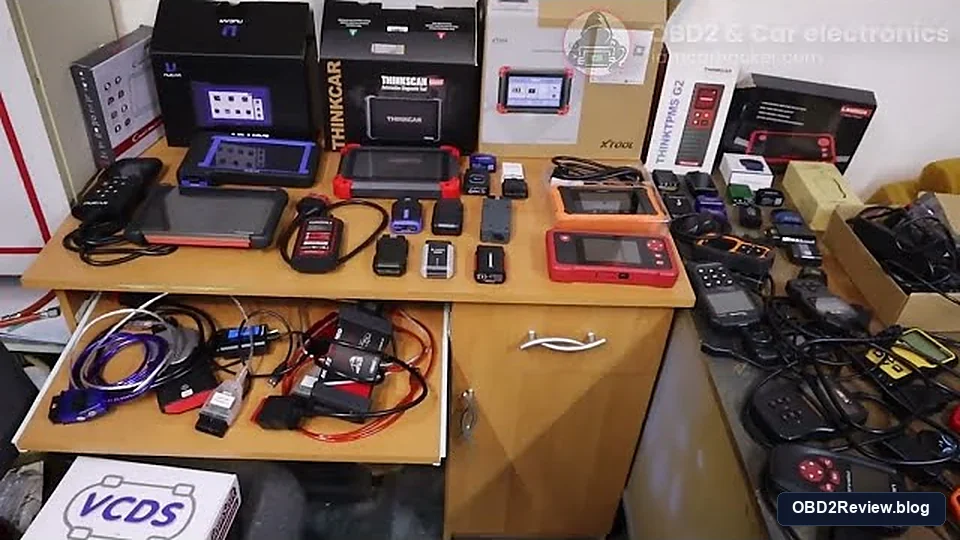
Conversely, full diagnostic scanners integrate multi-core processors and substantial RAM arrays. This internal architecture allows them to run heavy operating systems capable of multitasking complex vehicle networks.
Engineers build basic readers for rapid boot times and immediate connection feedback. Technicians rely on these streamlined units when time is critical and deep module scanning is unnecessary.
- Simple microcontrollers prioritize rapid DTC retrieval speeds.
- Tablets utilize robust multi-core processors for heavy workloads.
- Power management differs significantly between passive and active tools.
Internal Processing Power and Memory
Code readers typically allocate minimal flash memory strictly for basic DTC storage. Per our Zurich ZR13 OBD2 code reader review, advanced scanners feature expansive internal storage for saving extensive frame data logs.
Processor speed directly dictates how fast live parameter IDs refresh on screen. Slow processors bottleneck data flow, whereas modern scanners render real-time graphs instantly.
- Flash memory sizes dictate how many diagnostic logs you can save locally.
- Processor refresh rates determine live data streaming lag and graph smoothness.
Signal Processing and Protocol Handling
Modern vehicle networks rely on diverse communication protocols. As detailed in our Zurich ZR11 OBD2 code reader with ABS review, budget devices frequently support only basic OBD2 communication layers.
Full diagnostic scanners incorporate universal multiplexers capable of switching pins automatically. This hardware versatility ensures seamless communication across domestic, Asian, and European vehicle architectures.
Protocol compatibility dictates whether a tool can access secondary modules like ABS or SRS. Basic readers generally ignore these non-powertrain systems to maintain lower hardware costs.
- Basic units cover generic powertrain protocols without advanced multiplexing.
- Scanners support multi-protocol switching for comprehensive all-system access.
- Pin switching hardware automates communication across diverse vehicle brands.
Managing High-Speed CAN and FlexRay Networks
Advanced vehicle topologies utilize high-speed data buses to transmit critical safety telemetry. Diagnostic scanners easily parse these rapid data packets without dropping frames or freezing.
Lower-end code readers often struggle when faced with flooded CAN networks on luxury platforms. Technicians must select hardware matching the specific electronic complexity of target vehicles.
- High-speed data buses demand robust protocol handling hardware.
- Lower-end tools risk freezing when parsing crowded luxury networks.
Display Interfaces and Ergonomic Design
Ergonomics play a massive role in daily shop efficiency and fatigue reduction. Many options highlighted in our best OBD2 code reader for home use guide feature small monochromatic screens with basic physical keypads.
Diagnostic scanners utilize high-resolution color touchscreens that greatly enhance data visualization. Technicians can pinch to zoom on live parameter graphs during road tests.
Ruggedized outer casings protect both tool types against accidental drops onto concrete shop floors. Rubberized bumpers absorb kinetic impact, safeguarding delicate internal circuit boards.
- Monochromatic screens offer high visibility under glaring direct sunlight.
- Color touchscreens improve data navigation and live graph inspection.
- Rubberized bumpers protect delicate internal electronics from drop impacts.
Screen Legibility Under Direct Sunlight
Outdoor testing requires high nits of brightness to prevent screen washout during daylight hours. Premium scanners incorporate anti-glare coatings alongside adjustable backlight intensity controls.
Basic code readers often rely on simple reflective LCD panels that consume minimal electrical current. These simpler displays excel in dark under-dash environments where external lighting helps.
- Anti-glare coatings prevent display washout during bright outdoor diagnostics.
- Reflective LCD panels prioritize low power draw over vibrant illumination.
Data Logging and Live Stream Capabilities
Capturing intermittent faults requires reliable live data recording and playback features. As noted in our Zurich ZR8S OBD2 code reader review, basic tools rarely offer more than a static snapshot of freeze frame data.
Scanners allow technicians to record hours of live sensor telemetry onto internal memory. You can review this recorded data frame by frame to catch elusive intermittent glitches.
Advanced graphing tools let mechanics overlay multiple sensor parameters simultaneously. Correlating fuel trim data with oxygen sensor voltage quickly reveals hidden combustion anomalies.
- Static freeze frame data provides only a single moment of failure.
- Extended live recording helps isolate frustrating intermittent electrical faults.
- Parameter overlay features correlate multiple sensor readings for deep analysis.
Analyzing Parameter IDs During Road Tests
Dynamic road testing demands tools capable of tracking dozens of sensor inputs concurrently. Scanners excel here by letting passengers monitor live sensor behavior safely while driving.
Using a basic reader during road tests is dangerous due to restricted screen sizes. Technicians should always rely on larger tabular displays for mobile data tracking.
- Passenger-assisted road tests require clear, multi-parameter display setups.
- Restricted screen sizes make basic readers poor choices for mobile monitoring.
Bidirectional Control and Actuator Testing
Bidirectional communication represents the ultimate dividing line between simple readers and advanced scanners. Scanners can send commands back to vehicle modules to actuate physical components.
Testing components like fuel injectors or cooling fans directly confirms circuit integrity. Basic code readers are strictly listening devices incapable of commanding active output states.
Without bidirectional controls, technicians must rely entirely on manual multimeter testing. Active commands save hours of labor by isolating faulty actuators within minutes.
- Active command features allow technicians to test physical actuators remotely.
- Code readers act as passive listeners without output actuation capabilities.
- Bidirectional testing drastically reduces diagnostic troubleshooting times in shops.
Performing Automated System Calibrations
Modern steering angle sensors and throttle bodies require electronic recalibration after replacement. Diagnostic scanners include dedicated service reset functions to complete these critical procedures.
Basic code readers lack the software algorithms needed to perform module adaptation routines. Attempting repairs without proper calibration tools often leaves dashboard warning lights illuminated.
- Steering angle resets require specialized software routines built into scanners.
- Basic hardware leaves warning lights active after physical part replacements.
Software Update Ecosystems and Firmware Maintenance
Vehicle architectures evolve yearly, demanding ongoing software updates for diagnostic tools. Basic code readers generally ship with permanent firmware requiring zero user maintenance.
Scanners rely on frequent cloud-based updates to maintain compatibility with newly released models. Managing these software subscriptions represents an ongoing operational cost for professional shops.
Firmware stability ensures that diagnostic tools will not brick during flashing procedures. Manufacturers rigorously test update packages to prevent corruption of internal memory sectors.
- Permanent firmware models eliminate the need for ongoing software subscriptions.
- Cloud-based updates keep diagnostic databases current for brand-new vehicle releases.
- Rigorous testing prevents firmware corruption during critical update procedures.
Managing Update Subscriptions and Wi-Fi Connectivity
Wi-Fi integration allows modern scanners to download manufacturer patches directly in the bay. Technicians no longer need physical USB cables to keep their diagnostic platforms updated.
Subscription lapses on advanced scanners can occasionally restrict access to newly added vehicle years. Shops must budget for these recurring software expenses to remain competitive.
- Wi-Fi integration simplifies direct downloading of manufacturer patch files.
- Subscription management is essential for maintaining full vehicle coverage databases.
Field Durability and Environmental Protection
Automotive repair environments expose diagnostic equipment to harsh greases, oils, and physical impacts. Quality tools feature chemical-resistant plastics designed to withstand shop fluid exposure.
IP ratings indicate how well diagnostic hardware resists dust and moisture infiltration. Scanners used in heavy truck bays require robust ingress protection for reliable longevity.
Strain reliefs on diagnostic cables prevent internal wire breakage from constant bending. Durable construction standards ensure tools survive years of daily professional abuse.
- Chemical-resistant plastics protect chassis housings from harsh shop fluid spills.
- Ingress protection ratings measure resistance against dust and moisture damage.
- Cable strain reliefs prevent internal copper wire fatigue during storage.
Cable Replacement and Connector Longevity
The 16-pin OBD2 connector undergoes severe mechanical wear over thousands of plug cycles. Removable main cables allow technicians to replace worn connectors without buying new tools.
Molded strain reliefs distribute bending stress evenly across the connector housing. This engineering detail prevents premature copper fatigue near the heavy diagnostic plug.
- Removable main cables simplify replacement after thousands of plug cycles.
- Molded strain reliefs distribute bending stress to prevent wire breakage.
Frequently Asked Questions
Can a basic code reader clear ABS or airbag warning lights?
Basic code readers only access powertrain control modules. You need a full diagnostic scanner to read and reset chassis or safety codes.
Why do advanced scanners require regular software update subscriptions?
Manufacturers constantly update vehicle communication protocols and security gateways. Software subscriptions ensure your diagnostic scanner maintains complete coverage for newer models.
Do I need an external power source to operate a code reader?
Most code readers draw sufficient operating current directly from the vehicle port. Heavy diagnostic scanners often require internal batteries for independent boot-ups.
What is the primary advantage of bidirectional control features?
Bidirectional testing lets you command physical actuators remotely. This capability allows technicians to verify component operation without tearing apart wiring harnesses.
Are expensive tablet scanners too complex for DIY weekend mechanics?
While feature-rich, most modern scanners offer simplified home-user modes. However, a basic code reader remains better suited for simple driveway checks.