Obd2 Scanner vs. Scan Tool: Which Fits Your Setup Better?
Choosing the right diagnostic interface requires evaluating hardware processing depth against daily mobility. Understanding these engineering boundaries ensures optimal troubleshooting efficiency in professional service environments.

Mobile technicians needing rapid emissions readiness checks should choose handheld pocket scanners. High-volume shops tackling deep module coding require robust dedicated scan tools.
Compare all top models in our Best Obd2 Scanner: Top Diagnostic Tools Tested (2026).
Side-by-Side Breakdown
| Criteria | Obd2 Scanner | Scan Tool | Edge |
|---|---|---|---|
| Peak Performance & Output | Basic code reading and PID retrieval | Full bidirectional control and programming | Scan Tool |
| Duty Cycle & Consistency | Optimized for intermittent quick triage | Built for continuous heavy shop utilization | Scan Tool |
| Operating Noise & Vibration | Silent solid-state passive operation | Active thermal cooling fans under load | Obd2 Scanner |
| Portability & Footprint | Ultra-compact pocket form factor | Heavier ruggedized tablet enclosure | Obd2 Scanner |
| Maintenance & Service Life | Minimal maintenance with standard firmware updates | Complex OS patches and battery calibration | Obd2 Scanner |
| Power Requirements | Low draw powered directly by DLC port | Internal lithium-ion packs and external AC charging | Obd2 Scanner |
| Best Ideal Use-Case | Roadside diagnostics and basic code clearing | Advanced drivetrain module re-flashing and calibration | Scan Tool |
Diagnostic Architecture and Hardware Foundations
Modern vehicle electronics demand distinct processing power levels depending on your typical diagnostic scope. Compact pocket units rely on streamlined microcontrollers designed for rapid parameter identification.
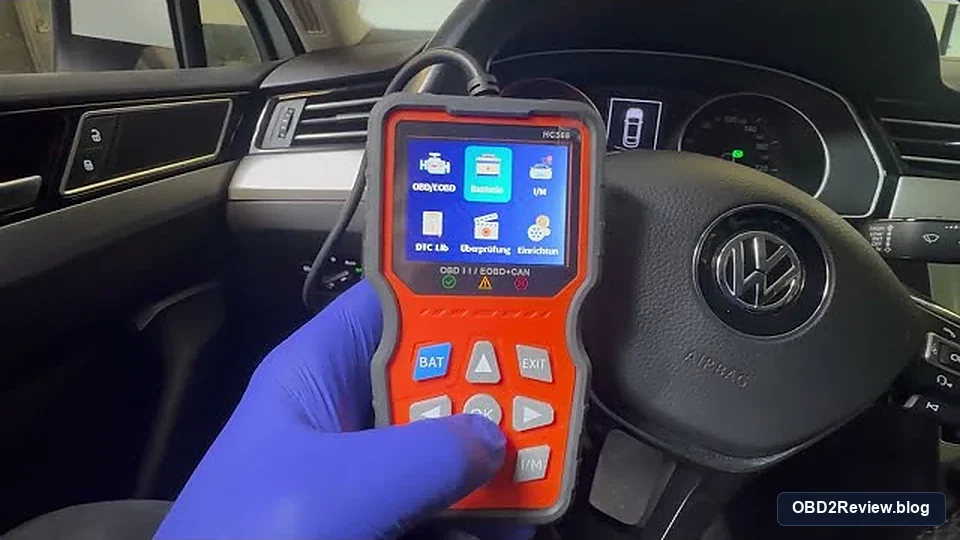
Conversely, comprehensive diagnostic consoles incorporate heavy-duty processors capable of managing complex vehicle communication protocols simultaneously across multiple networks.
Evaluating internal architecture prevents hardware bottlenecks when reading deep manufacturer-specific trouble codes under tight shop deadlines.
Many entry-level models listed in our best budget obd2 scan tool guide rely on microcontrollers with limited flash memory, executing basic polling routines over ISO 15765-4 CAN protocols without dedicated co-processors.
Full scan tools integrate dual-core ARM processors and FPGA hardware accelerators to manage simultaneous multi-module communication across CAN FD, DoIP, and older J1850 buses without dropping frames or timing out.
Hardware isolation barriers protect sensitive diagnostic interfaces from voltage spikes exceeding 48V transients common in heavy-duty truck electrical systems, preventing permanent circuit board failure during back-pinning procedures.
- Streamlined microcontrollers prioritize fast boot times over heavy processing.
- Multi-core processors handle heavy network traffic without freezing interfaces.
- Dedicated memory chips store extensive diagnostic trouble code libraries locally.
Microcontroller Limitations in Complex Networks
Smaller diagnostic readers often struggle when querying multiple vehicle modules simultaneously due to restricted RAM capacity and single-channel communication chips.
Advanced multi-layered consoles utilize robust multiplexers to switch pins automatically without dropping live data packets during extended diagnostic sessions.
- Single-channel chips slow down multi-module health reports.
- Automated multiplexing maintains stable connections during heavy data logging.
Performance & Real-World Output Metrics
Real-world output metrics determine how quickly a technician can transition from initial fault identification to targeted component repair. Speed directly impacts daily shop profitability and overall workflow velocity.
Compact interface units excel at delivering instant readiness monitor status checks and clearing generic powertrain codes during fast-paced safety inspections.
Comprehensive diagnostic platforms output intricate graphical data streams, showing live sensor voltage fluctuations across multiple time scales simultaneously for accurate diagnosis.
Scan tools update live sensor PIDs at sampling frequencies surpassing 50 Hz, rendering smooth oscilloscope-style graphs on high-resolution touchscreens for precise mechanical diagnostics during dynamic road testing.
Basic code readers bottleneck at 2 Hz refresh rates, forcing technicians to guess parameter correlations because the low bandwidth cannot capture transient misfires or fleeting fuel trim anomalies.
Evaluating choices via our best budget obd2 scanner guide shows how latency measurements between request commands and ECU responses dictate whether a device can successfully execute active tests.
- Instant readiness monitor checks streamline mandatory emissions testing procedures.
- Detailed graphical data streams pinpoint intermittent sensor voltage drops effectively.
- Rapid fault identification reduces overall vehicle diagnostic time significantly.
Data Stream Refresh Rates Under Load
High-end diagnostic consoles maintain superior refresh rates even when graphing twenty distinct live parameters concurrently without noticeable input lag.
Basic pocket readers may experience noticeable frame drops when requesting extensive parameter identification lists from older powertrain control modules.
- Superior refresh rates catch fast transient fuel trim anomalies.
- Extensive parameter requests can overwhelm simpler single-processor readers.
Build Quality, Maintenance & Durability Standards
Automotive repair environments subject testing equipment to severe mechanical stress, oil contamination, and accidental drops onto concrete workshop floors. Ruggedized enclosures protect sensitive internal components from premature failure.
Compact pocket readers utilize molded plastic housings with rubberized grips designed to withstand occasional impacts while remaining lightweight in a technician pocket.
Heavy-duty workshop tablets feature reinforced corner bumpers, Gorilla Glass screens, and sealed ports to prevent moisture and shop fluids from ruining internal electronics.
Workshop environments demand drop-resistant housings engineered with IP54 ingress ratings to withstand accidental impacts against concrete floors and exposure to harsh automotive fluids like brake fluid and oil.
Heavy-duty diagnostic platforms utilize overmolded thermoplastic elastomers and bonded gorilla glass screens to prevent costly screen fractures during high-paced technician handling across multiple service bays.
Maintenance protocols require periodic firmware calibration checks and cleaning of the DLC connector pins to prevent intermittent data drops caused by oxidation and accumulated shop grime buildup.
- Molded plastic housings offer adequate protection for mobile roadside toolkits.
- Reinforced tablet bumpers withstand harsh commercial truck repair environments.
- Sealed ports prevent fluid ingress during messy under-hood testing sessions.
Thermal Management and Enclosure Integrity
Extended diagnostic sessions generate substantial internal heat that must be safely dissipated to prevent system throttling or unexpected hardware shutdowns.
Advanced workshop tablets integrate passive heat sinks or active micro-fans to maintain optimal operating temperatures during lengthy module programming tasks.
- Internal heat dissipation prevents thermal throttling during module flashes.
- Passive heat sinks eliminate the need for dust-prone cooling fans.
Noise, Efficiency & Footprint Engineering
Workshop efficiency relies heavily on tool ergonomics, battery endurance, and maintaining an uncluttered workspace around the vehicle steering column during complex testing procedures.
Handheld diagnostic units draw minimal electrical power directly from the vehicle data link connector, eliminating the need for internal batteries or AC wall chargers.
Comprehensive diagnostic systems often require internal lithium-ion power packs to maintain operation during deep module re-flashing where vehicle ignition states cycle frequently.
Advanced scan tools implement passive thermal management using internal copper heatsinks to dissipate heat generated by intensive ECU flash programming sessions without requiring noisy cooling fans.
Power efficiency remains critical when powering units directly from the vehicle 16-pin port, ensuring parasitic draw stays below safe thresholds to protect weak vehicle batteries during extended diagnostic sessions.
Physical footprint optimization allows modern handheld units to fit comfortably into tight dashboard footwells while maintaining clear readability angles during awkward under-dash vehicle inspection procedures.
- Direct DLC power eliminates charging downtime during busy work shifts.
- Internal batteries support uninterrupted operation during complex module re-flashing.
- Compact footprints prevent interference with driver pedal box movements.
Power Draw and Vehicle Battery Preservation
Low-draw pocket units safely remain plugged into the diagnostic port for hours without risking a significant drop in vehicle battery voltage.
Power-hungry diagnostic tablets often require external battery maintainers connected to the vehicle battery during lengthy diagnostic and coding procedures.
- Low current draw protects weak vehicle batteries during triage.
- External maintainers prevent voltage drops during prolonged diagnostic sessions.
Advanced Data Stream Processing Capacities
Modern vehicle networks demand sophisticated data processing to decode manufacturer-specific parameter identifiers and complex diagnostic trouble code descriptions accurately.
Basic code readers provide raw hexadecimal data streams that require manual translation by the technician using external reference manuals or online databases.
Top-tier devices highlighted in our best professional obd2 scanner selection translate raw hexadecimal messages into clear text formats and provide automated guided troubleshooting procedures for complex faults.
Professional diagnostic platforms employ proprietary decoding algorithms to translate raw hexadecimal data streams into human-readable manufacturer specific codes without relying solely on generic powertrain fault databases.
Multi-parameter graphing capabilities let technicians overlay fuel trim data against oxygen sensor voltage outputs to quickly isolate complex vacuum leaks and intermittent air-fuel ratio imbalances.
Data logging software records hours of live parameters onto removable microSD cards, enabling deep off-vehicle analysis and customer report generation via companion desktop software suites.
- Raw hexadecimal streams demand extensive manual translation by technicians.
- Automated text translation speeds up component fault verification drastically.
- Guided troubleshooting steps suggest targeted component testing sequences.
Bidirectional Controls and Active Testing
True bidirectional testing allows technicians to command vehicle actuators directly from the interface, verifying component functionality without manual jumper wires.
Basic diagnostic readers remain strictly passive listening devices incapable of commanding fuel injectors, cooling fans, or ABS bleed sequences.
- Actuator testing verifies component integrity without manual jumper wires.
- Passive readers cannot command active functional tests or output controls.
Ergonomics and Workshop Usability Factors
Tool usability dictates how easily technicians can navigate complex diagnostic menus while wearing greasy shop gloves inside cramped vehicle footwells.
Physical button layouts on handheld units provide tactile feedback, allowing blind operation when the technician is focused on under-dash wiring harnesses.
Touchscreen tablet interfaces offer expansive viewing angles and rapid menu navigation, though they require clean fingers or specialized styluses for reliable input.
Ergonomic workshop tablet designs feature textured rubber handgrips that significantly reduce operator fatigue during extended multi-hour diagnostic troubleshooting sessions across busy commercial vehicle fleets.
Integrated physical kickstands and hanging hooks provide flexible hands-free operation options, allowing mechanics to view live diagnostic data while simultaneously turning wrenches beneath the vehicle hood.
User interface software layouts prioritize high-contrast display modes for direct sunlight visibility, ensuring technicians can read trouble codes clearly when working outdoors in bright daylight.
- Tactile physical buttons allow operation without looking away from wiring.
- Expansive touchscreens simplify deep menu navigation and data graphing.
- Ergonomic weight distribution reduces wrist fatigue during long diagnostic shifts.
Cable Length and Wireless Connectivity
Integrated tethered cables provide reliable latency-free communication but restrict movement when the technician needs to observe engine components under load.
Wireless Bluetooth dongles pair with external display tablets, giving technicians complete freedom of movement around the vehicle service bay.
- Tethered cables guarantee zero-latency communication during critical tests.
- Wireless Bluetooth adapters enable untethered mobility around service bays.
Which Option Fits Your Specific Diagnostic Workload
Selecting the correct diagnostic hardware ultimately depends on your daily repair volume, vehicle brand specialization, and required depth of service capability.
Independent mobile mechanics focusing on rapid diagnostics, pre-purchase inspections, and basic code clearing benefit most from durable, pocket-sized units.
Full-service automotive repair facilities tackling advanced drivability diagnostics, module coding, and key programming require robust diagnostic tablets with comprehensive coverage.
Choosing the right option from our best obd2 scanner lineup depends on your repair volume, requiring DIYers to weigh basic read functions against advanced bidirectional control needs.
Full-time professional technicians handling complex electrical faults must invest in comprehensive diagnostic platforms featuring regular manufacturer software updates to fully support newly released vehicle model architectures.
Matching tool capability to everyday repair workloads prevents unnecessary capital expenditure while ensuring you never encounter diagnostic dead ends during critical customer vehicle troubleshooting tasks.
- Mobile inspectors maximize efficiency with lightweight, pocket-sized diagnostic units.
- Full-service shops require comprehensive tablets for advanced module programming.
- Matching tool capability to workload prevents unnecessary equipment capital expenditure.
Return on Investment for Professional Shops
Investing in comprehensive diagnostic platforms accelerates repair turnaround times, allowing high-volume shops to process more vehicles and increase daily billing hours.
Deploying simple code readers across fleet maintenance departments provides cost-effective triage capabilities without overspending on unused programming software.
- Faster diagnostic turnaround times directly boost daily shop billing capacity.
- Fleet departments save capital by deploying simple triage readers.
Frequently Asked Questions
What is the primary operational difference between an OBD2 scanner and a comprehensive scan tool?
Basic scanners primarily retrieve and clear generic diagnostic trouble codes, whereas advanced scan tools provide bidirectional control and module programming capabilities for professional repair facilities.
Can a pocket-sized OBD2 scanner perform active actuator tests on vehicle components?
No, compact handheld scanners operate as passive monitoring devices that cannot command system actuators, requiring dedicated diagnostic tablets for active functional testing procedures.
Why do professional scan tools require periodic software subscription updates?
Subscriptions ensure the tool database includes newly released vehicle protocols, manufacturer security gateway unlocks, and updated diagnostic trouble code definitions for modern cars.
Do basic OBD2 scanners require external charging batteries or wall power sources?
Basic code readers draw all necessary operating current directly from the vehicle data link connector, ensuring uninterrupted power during roadside diagnostic checks.
Which diagnostic device type is best suited for DIY vehicle owners and hobbyists?
Compact handheld OBD2 scanners offer the ideal balance of affordability and essential diagnostic features, making them perfect for home garages and basic troubleshooting tasks.