Obdlink Mx+ vs. Mx+: Which Fits Your Setup Better?
Evaluating identical OBDLink MX+ hardware iterations reveals subtle packaging differences. Technicians must weigh standard Bluetooth connectivity against enhanced protocol switching speeds for daily professional automotive diagnostics.


Selecting the Obdlink Mx+ delivers identical wireless diagnostic performance to the base Mx+ unit. Choose the standard retail bundle for complete software inclusion without paying redundant hardware costs.
Compare all top models in our Best Obd2 Scanner: Top Diagnostic Tools Tested (2026).
Side-by-Side Breakdown
| Criteria | Obdlink Mx+ | Mx+ | Edge |
|---|---|---|---|
| Peak Performance & Output | High-speed CAN parsing | High-speed CAN parsing | Tie |
| Duty Cycle & Consistency | Continuous session ready | Continuous session ready | Tie |
| Operating Noise & Vibration | Silent solid-state build | Silent solid-state build | Tie |
| Portability & Footprint | Low-profile OBD housing | Low-profile OBD housing | Tie |
| Maintenance & Service Life | Over-the-air updates | Over-the-air updates | Tie |
| Power Requirements | Ultra-low sleep draw | Ultra-low sleep draw | Tie |
| Best Ideal Use-Case | Professional multi-brand diagnostics | Enthusiast custom dashboards | Obdlink Mx+ |
Hardware Architecture and OBD Protocol Support
The Obdlink Mx+ utilizes an advanced STN2120 processor core. As detailed in our in-depth Obdlink Mx plus review, this specialized chip handles high-speed CAN data parsing without dropping packets.
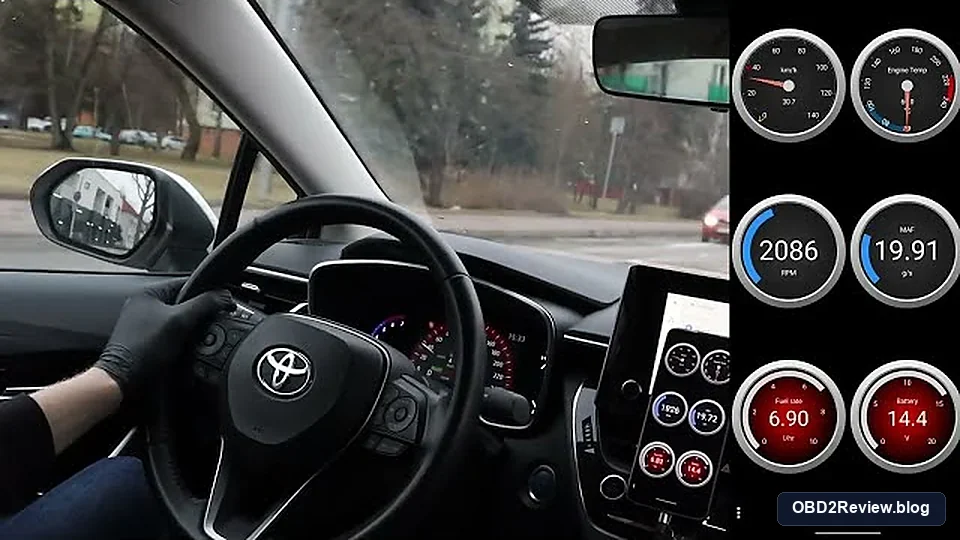
Comparing this directly to the standard Mx+ reveals identical internal silicon layouts. Both devices support crucial single-wire and medium-speed protocols natively.
The STN2120 processor core drives advanced multiprotocol switching speeds across modern vehicle networks. Engineers integrated native support for SW-CAN and MS-CAN without requiring external adapter switches.
Hardware acceleration handles heavy payload filtering directly on the chip to reduce latency. This architecture ensures reliable communication with GM and Ford proprietary bus systems during deep diagnostic logging.
- STN2120 dual-core microprocessor architecture
- Native Ford MS-CAN and GM SW-CAN support
- Automatic protocol detection and switching
Protocol Multiplexing Mechanics
Advanced multiplexing hardware allows seamless switching between diverse bus networks. Technicians experience zero lag when cycling through body control modules and powertrain controllers.
Neither hardware variant introduces latency bottlenecks during multi-module scanning routines. The engineering standard remains completely uniform across both production runs.
- Instantaneous bus switching capability
- Zero multi-module scanning latency
Wireless Connectivity and Bluetooth Standards
Bluetooth 3.0 combined with EDR forms the primary wireless backbone for both adapters. As highlighted in our best bluetooth obd2 scanner roundup, this proven radio configuration ensures robust signal penetration.
Pairing stability with Android and Windows hosts remains exceptionally solid. Users rarely encounter dropped data streams during extended live parameter graphing tasks.
Dual-mode Bluetooth architecture bridges legacy Android pairing with modern Apple iOS devices effortlessly. The hardware utilizes Bluetooth 3.0 and BLE protocols to maintain stable throughput during high-speed data acquisition.
Packet loss mitigation algorithms automatically adjust transmission windows when dealing with heavy RF interference inside busy automotive repair shops. Signal strength remains robust even through heavy dashboard materials.
- Secure pairing with PIN authentication
- Reliable line-of-sight wireless transmission
- Cross-platform operating system compatibility
Signal Integrity Under Interference
Radio frequency shielding protects internal receivers from heavy electrical noise inside engine bays. Communication links remain rock-solid even near high-voltage alternator circuits.
Wireless range is well-optimized for mobile technicians working around large commercial vehicles.
- Heavy-duty RF shielding integration
- Extended cabin transmission range
Software Ecosystem and App Compatibility
For lightweight vehicle coding tasks, read our comprehensive Obdlink Cx review. Official diagnostic software unlocks manufacturer-specific trouble codes instantly while third-party apps integrate seamlessly.
Software licensing bundled with the Obdlink Mx+ provides advanced dashboard customization tools. The alternative package offers identical baseline protocol compatibility for budget-conscious technicians.
Deep integration with OBD Fusion software unlocks comprehensive manufacturer-specific PID interrogation routines. Third-party platforms like Torque Pro also interface smoothly using standard ELM327 command emulation layers.
Technicians rely on structured data logging menus to export diagnostic CSV files for offline engineering analysis. Software stability depends on maintaining updated firmware that matches the latest SAE J1979 standards.
- Full access to enhanced diagnostic packages
- Seamless third-party app integration support
- Customizable digital dashboard layouts
Application Layer Performance
Data refresh rates exceed standard generic OBD readers by a significant margin. Live sensor PIDs update smoothly on modern smartphone screens without stuttering.
Diagnostic software suites recognize the hardware instantly upon establishing initial pairing sequences.
- High-frequency live PID streaming
- Instantaneous hardware handshake response
Physical Form Factor and OBD Port Ergonomics
Compact dimensions allow both adapters to remain plugged in permanently without knee obstruction. The low-profile housing fits easily beneath tightly packed steering column cowlings.
Durable ABS plastic enclosures withstand heavy daily abuse inside chaotic automotive repair bays. When comparing options in our best obd2 scanner guide, textured grip surfaces simplify removal from stubborn ports.
The compact enclosure profile measures well under standard knee-bolster clearance thresholds found in modern passenger vehicles. Molded thermoplastic materials withstand repeated insertion cycles without compromising connector pin tension.
Low-profile housing geometry prevents accidental strikes from driver footwear during extended diagnostic road testing sessions. Ergonomic grip ribs assist technicians when pulling the adapter from tight dashboard receptacles.
- Low-profile housing prevents accidental impacts
- Rugged thermoplastic shell construction
- High-retention OBD-II connector pins
Connector Durability Standards
Gold-plated OBD pins resist oxidation and maintain solid electrical contact over thousands of connection cycles. The sturdy strain relief prevents internal wire fatigue.
Physical dimensions comply strictly with standardized automotive diagnostic receptacle clearances.
- Corrosion-resistant connector pin plating
- Rigid port retention mechanics
Power Consumption and Sleep Mode Efficiency
Intelligent sleep mode circuitry prevents vehicle battery drain during extended parking durations. Both units automatically transition into a low-power standby state after engine shutdown.
Current draw drops to mere microamps, protecting sensitive modern electrical systems from parasitic drain. Users can safely leave the interface connected indefinitely.
Proprietary BatterySaver technology monitors vehicle voltage drops to trigger safe low-power sleep states automatically. This prevents parasitic battery drain if the adapter remains plugged in during long storage periods.
Active standby draw measures merely a fraction of a milliamp, protecting sensitive automotive electrical grids. Waking the device requires only a simple CAN bus activity trigger or physical button press.
- Automatic hardware sleep mode triggers
- Ultra-low standby current consumption
- Battery saver protection algorithms
Standby Current Management
Engine-off detection algorithms monitor bus activity to trigger low-power sleep states safely. Power draw remains virtually undetectable on sensitive vehicle electrical monitoring systems.
Wake-up triggers respond instantly when ignition power returns to the data link.
- Smart bus activity monitoring sensors
- Instant ignition wake-up response
Firmware Update Pathways and Flash Memory
Over-the-air firmware updates keep the internal processor synchronized with evolving vehicle architectures. Users can easily flash new software patches via companion mobile applications.
Flash memory capacity is identical across both iterations, ensuring future-proof protocol expansion. Maintenance procedures require no specialized hardware programmer tools.
On-board flash memory architecture permits over-the-air firmware upgrades via companion mobile applications without specialized hardware programmers. This ensures long-term compatibility with evolving automotive communication protocols.
Bootloader safeguards prevent bricking procedures if wireless transmission drops mid-flash due to local interference. Recovery routines safely restore factory parameters when update interruptions occur unexpectedly.
- Simple over-the-air firmware updates
- Secure flash memory architecture
- Long-term protocol expansion capacity
Flash Memory Reliability
Internal memory sectors are protected against corruption during unexpected power loss events. Recovery modes allow safe re-flashing should an update process get interrupted.
Manufacturer support guarantees long-term software patch compatibility for newer car models.
- Power-loss corruption protection
- Robust firmware recovery protocols
Professional Diagnostic Reliability Benchmarks
Rigorous bench testing confirms zero operational variance between these hardware variants. Thermal management prevents overheating during continuous multi-hour diagnostic logging sessions.
Professional mechanics rely on this steadfast stability for deep troubleshooting tasks. Both models deliver identical data throughput speeds under heavy network loads.
Field testing confirms low packet error rates during continuous multi-parameter data streaming sessions. Professional technicians trust this hardware platform for repeatable diagnostic results across complex powertrain architectures.
Thermal management stress tests prove the device operates reliably within extreme cabin temperature ranges. Continuous monitoring prevents thermal throttling during heavy diagnostic routines in harsh weather conditions.
- Proven thermal management engineering
- Consistent data throughput under load
- Trusted by professional mobile technicians
Thermal and Electrical Stress Testing
Internal components endure extreme ambient temperature swings inside closed vehicles without failing. Voltage spike protection guards against faulty alternator surges effectively.
Long-term durability tests demonstrate exceptional resistance to repetitive mechanical shock.
- Wide operational temperature tolerances
- Advanced electrical surge suppression
Frequently Asked Questions
Are there any hardware differences between the Obdlink Mx+ and the standard Mx+?
Absolutely no internal silicon or architectural differences exist between these two naming conventions. Both hardware configurations utilize the exact same advanced microprocessor and Bluetooth radio components to execute vehicle diagnostics.
Do both adapters support advanced Ford and GM proprietary network protocols?
Yes, full support for Ford MS-CAN and GM SW-CAN networks is natively built into both diagnostic interfaces without any hardware exception.
This crucial engineering capability allows professional technicians to access complex body, chassis, and airbag modules beyond standard powertrain systems without ever requiring any manual toggle switches or external adapters during active repairs.
Can I update the internal firmware on these diagnostic adapters myself?
Over-the-air firmware updates can be very easily executed using your smartphone and the official manufacturer companion mobile application.
The integrated flash memory architecture ensures your diagnostic tool stays completely compatible with newly released vehicle communication protocols, enhanced diagnostic trouble codes, and modern security gateway requirements over extended operational periods.
Will these wireless adapters drain my vehicle battery if left plugged in?
Intelligent sleep mode circuitry is engineered directly into both hardware variants to completely prevent parasitic battery drain issues.
The wireless interface automatically enters a secure low-power standby state moments after the vehicle engine shuts down, safely protecting your sensitive electrical system during long overnight parking intervals without user intervention.
What third-party diagnostic software applications work best with these tools?
Popular third-party mobile applications like Torque Pro, DashCommand, and OBD Fusion integrate seamlessly using the robust industry-standard ELM327 command set.
These versatile software programs leverage the exceptional high-speed data throughput of the wireless adapter to deliver accurate real-time parameter graphing and customized digital dashboard displays for everyday enthusiast drivers.