Obdlink Mx+ vs. Veepeak: Which Fits Your Setup Better?
Comparing advanced multi-protocol Bluetooth adapters helps technicians and DIYers choose wisely. We evaluate connection speed, protocol coverage, and software compatibility to reveal the ultimate diagnostic tool.


Choose the OBDLink MX+ for advanced manufacturer-specific diagnostics and high-speed data logging. Select the Veepeak series for budget-friendly basic code reading and casual monitoring.
Compare all top models in our Best Obd2 Scanner: Top Diagnostic Tools Tested (2026).
Side-by-Side Breakdown
| Criteria | Obdlink Mx+ | Veepeak | Edge |
|---|---|---|---|
| Peak Performance & Output | High-speed STN2120 processor | Standard ELM327 architecture | Obdlink Mx+ |
| Duty Cycle & Consistency | Continuous professional polling | Reliable light duty scanning | Obdlink Mx+ |
| Operating Noise & Vibration | Silent solid-state operation | Silent solid-state operation | Tie |
| Portability & Footprint | Standard compact housing | Ultra low-profile design | Veepeak |
| Maintenance & Service Life | Over-the-air firmware updates | Fixed firmware architecture | Obdlink Mx+ |
| Power Requirements | Smart automatic sleep mode | Standard manual disconnect | Obdlink Mx+ |
| Best Ideal Use-Case | Advanced multi-system diagnostics | Casual DIY code clearing | Obdlink Mx+ |
Protocol Architecture and Bus Speed
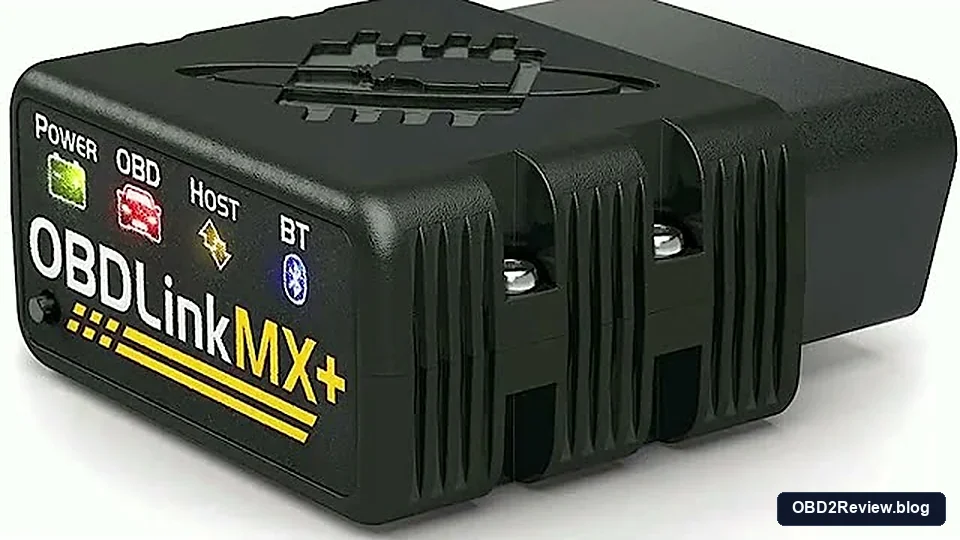
Modern vehicle networks demand rapid data processing across multiple communication standards. The OBDLink MX+ features advanced STN2120 circuitry, delivering significantly higher throughput than standard ELM327 chips used elsewhere.
Veepeak adapters utilize simplified chipsets that handle basic OBD-II protocols efficiently. While they manage standard emissions data well, high-speed multi-ECU polling often reveals minor bandwidth bottlenecks during complex diagnostics.
The OBDLink MX+ features advanced STN2120 circuitry, delivering rapid multi-protocol switching across SW-CAN and MS-CAN networks without packet loss.
Conversely, standard Veepeak adapters rely on simpler ELM327 clones, which occasionally struggle with high-speed data streams, leading to latency on complex CAN buses.
- Advanced STN2120 processor ensures rapid multi-protocol switching.
- Standard ELM327 architecture handles basic generic powertrain parameters.
- High-speed bus polling reduces diagnostic scan time significantly.
Low-Level Bus Access
Deep vehicle diagnostics require flawless handling of SW-CAN and MS-CAN networks. Without proper hardware switching, professional software packages cannot communicate with body control modules or anti-lock brake systems.
Entry-level adapters sometimes omit native support for specialized manufacturer buses. Users must verify exact hardware revisions to ensure complete compatibility with domestic and Asian vehicle network topologies.
- Native SW-CAN and MS-CAN support for complete module access.
- Hardware switching eliminates the need for manual toggle adapters.
App Ecosystem and Software Compatibility
Software integration defines the overall usability of any wireless diagnostic adapter. The MX+ comes bundled with a dedicated application offering enhanced diagnostics for major automotive brands out of the box.
Veepeak hardware relies heavily on third-party mobile applications available through app stores. Although compatible with popular diagnostic platforms, users must configure individual software settings manually for optimal performance.
Native support for OBDLINK and FORScan apps makes the MX+ ideal for deep module diagnostics, unlocking manufacturer-specific parameters across various modern vehicles seamlessly.
Veepeak models integrate well with Torque Pro and Car Scanner ELM software, providing reliable generic OBD2 data streams for casual daily monitoring and code clearing.
- Proprietary companion apps provide immediate manufacturer-level diagnostics.
- Universal third-party software support ensures flexible everyday usability.
- Seamless pairing protocols minimize initial setup friction.
Third-Party Dashboard Integration
Custom gauge displays and real-time data logging depend on robust API bridges. Premium adapters maintain stable data streams without dropping packets during aggressive acceleration runs or dyno testing.
Budget alternatives handle basic parameter identification smoothly on standard mobile apps. However, heavy logging sessions can occasionally trigger buffer overflows on less powerful internal microcontrollers.
- Robust API bridges support custom gauge display apps.
- High-speed data streams prevent dropped logging packets.
Physical Build Quality and Portability
Under-dash environments expose diagnostic tools to physical impacts and dust accumulation. The MX+ utilizes robust polymer housing engineered to withstand rough workshop conditions and frequent plug insertions.
Veepeak devices offer compact, low-profile designs that easily clear lower dashboard trim panels. This minimalist footprint prevents accidental knee strikes while driving with the adapter plugged in permanently.
Constructed from reinforced engineering plastics, the MX+ housing resists impact damage while maintaining a slim profile that avoids interfering with driver leg movements.
Veepeak units utilize compact low-profile form factors that sit flush inside the dashboard port, minimizing accidental snagging during regular vehicle entry and exit routines.
- Durable outer shell withstands harsh automotive repair environments.
- Low-profile form factor prevents accidental snagging under steering columns.
- Secure connector pins ensure reliable port retention over time.
Ergonomics and Port Retention
A snug port connection prevents intermittent power drops during vehicle operation. Quality metal leaf springs inside the OBD-II connector maintain firm contact despite continuous vehicle vibrations.
Lighter plastic connectors may lose spring tension after repeated insertion cycles. Users should inspect connector pins periodically to guarantee uninterrupted power delivery during crucial diagnostic sessions.
- Metal leaf springs maintain consistent diagnostic port contact.
- Resilient connector design prevents intermittent power drops.
Power Management and Battery Drain
Leaving diagnostic tools plugged in overnight can severely deplete vehicle batteries. Advanced sleep modes allow the MX+ to draw minimal current while monitoring ignition states for automatic wake-up events.
Many budget adapters lack sophisticated low-power sleep states required for permanent installation. Owners must physically unplug the device after every use to prevent unexpected morning no-start conditions.
Intelligent sleep mode technology allows the MX+ to draw minimal current while parked, preventing vehicle battery depletion over extended periods of non-use.
Budget Veepeak adapters require manual removal if left parked for weeks, because continuous parasitic current draw can slowly drain older or weaker automotive batteries.
- Automatic sleep functionality prevents overnight vehicle battery depletion.
- Low quiescent current protects sensitive electronic modules safely.
- Manual disconnect protocols remain necessary for certain budget hardware.
Ignition Sensing Technology
Modern power management circuits detect engine cranking and bus activity instantly. This intelligent switching eliminates manual power switches while maintaining high safety margins for vehicle electrical systems.
Simpler circuitry lacks advanced ignition sensing capabilities found in premium diagnostic tools. Consequently, continuous power draw persists until the user manually extracts the unit from the diagnostic port.
- Instant bus activity detection triggers automatic power states.
- Eliminates the need for manual power switches.
Diagnostic Depth and Manufacturer Coverage
Generic powertrain codes only scratch the surface of modern automotive troubleshooting. The MX+ unlocks enhanced diagnostics for ABS, SRS, and transmission modules across diverse automotive manufacturer lineups seamlessly.
Veepeak units excel at reading and clearing standard emission-related diagnostic trouble codes. Advanced manufacturer-specific subsystems often require supplementary software packages or alternative hardware interfaces to function correctly.
Advanced engineering enables the MX+ to access ABS and SRS modules, bypassing limitations found in basic generic code readers that only scan engine computers.
Veepeak devices primarily focus on generic powertrain diagnostics, restricting advanced module access unless paired with specific third-party software extensions and licenses.
- Comprehensive module access spans powertrain, body, and chassis systems.
- Emissions readiness monitors verify strict compliance standards easily.
- Manufacturer-specific expansions require dedicated software authorization keys.
Enhanced Module Scanning
Professional technicians demand complete visibility across all onboard computing modules simultaneously. Advanced adapters query multiple networks rapidly to construct a comprehensive health report of the vehicle.
Casual DIYers primarily need straightforward engine light diagnosis and reset functions. Basic protocol support satisfies routine maintenance requirements without overwhelming users with excessive technical data streams.
- Simultaneous multi-module health report generation.
- Streamlined scanning for rapid routine code resets.
Wireless Latency and Connection Stability
Bluetooth pairing reliability dictates overall user satisfaction during live data monitoring sessions. The MX+ utilizes advanced wireless modules to maintain robust connections through heavy metal dashboard shields.
Budget wireless interfaces occasionally suffer from pairing drops in high-interference environments. Reestablishing dropped connections requires manual intervention, disrupting real-time diagnostics and performance parameter tracking.
Utilizing Bluetooth 3.0 and 4.2 dual-mode, the MX+ establishes a resilient connection with iOS and Android devices, minimizing packet drops during logging.
Veepeak versions often rely on standard Bluetooth or Wi-Fi protocols, which can experience occasional interference or handshake drops in heavy signal environments.
- High-gain wireless transmitters maintain solid signal integrity everywhere.
- Fast pairing protocols minimize frustrating initial connection delays.
- Stable data streams prevent dropped frames during logging.
Multi-Platform Connectivity
Cross-platform compatibility ensures seamless operation across Android, iOS, and Windows devices. Dual-mode Bluetooth architecture enables effortless switching between Apple mobile products and standard tablet computers.
Specific hardware variants restrict connectivity options to single mobile operating systems. Buyers must verify operating system compatibility carefully before purchasing wireless adapters for mixed device households.
- Dual-mode Bluetooth supports Android and iOS seamlessly.
- Cross-platform flexibility suits multi-device households.
Maintenance Standards and Long-Term Reliability
Long-term operational reliability depends heavily on internal firmware update capabilities. The MX+ supports over-the-air firmware flashes, ensuring the device adapts smoothly to upcoming automotive communication protocol revisions.
Economical diagnostic tools rarely support internal firmware updates after factory production. When automotive communication standards evolve, older budget hardware eventually becomes obsolete and requires complete replacement.
Regular firmware update capabilities ensure the MX+ adapts to emerging vehicle communication standards, extending operational lifespan in professional and DIY toolboxes.
Veepeak units emphasize plug-and-play simplicity, offering solid long-term durability for basic monitoring tasks without requiring complex software updates or manual driver patches.
- Over-the-air firmware updates future-proof your hardware investment securely.
- Robust thermal management prevents internal component degradation over time.
- Strict quality control standards ensure consistent daily operational performance.
Firmware Evolution and Longevity
Continuous software engineering updates enhance protocol security and execution speeds. Investing in upgradable hardware protects your diagnostic capabilities against rapid advancements in modern vehicle network architectures.
Fixed-firmware devices offer a reliable service life for basic diagnostic tasks. However, they cannot adapt to novel automotive communication buses introduced in upcoming vehicle model years.
- Upgradable architecture defends against protocol obsolescence.
- Regular patches improve wireless security and speed.
Frequently Asked Questions
Can both adapters clear check engine lights on any vehicle?
Yes, both devices successfully read and reset generic powertrain codes on all standard OBD-II compliant passenger vehicles manufactured after nineteen ninety-six. However, advanced ABS and SRS diagnostics require the superior multi-protocol architecture found in premium diagnostic tools.
Do these wireless scanners drain the car battery if left plugged in?
The premium model features an automatic sleep mode that prevents significant power draw during extended parking periods. Conversely, budget adapters often require manual disconnection to avoid unexpected vehicle battery depletion.
Are companion mobile applications included with the hardware purchase?
Premium units frequently bundle dedicated manufacturer-specific software packages for immediate troubleshooting right out of the box. Meanwhile, budget interfaces rely entirely on third-party mobile apps downloaded separately from app stores.
Can I use these diagnostic tools on both iOS and Android smartphones?
Wireless compatibility varies significantly depending on the exact hardware version and Bluetooth protocol utilized. Always verify operating system support before purchasing adapters for Apple or Android devices.
How do firmware updates affect long-term scanner performance over time?
Upgradable internal chips allow devices to receive critical software patches and new protocol adaptations wirelessly. This capability ensures your hardware investment remains relevant as automotive network standards evolve.