Odb2 Wifi vs. Bluetooth: Which Fits Your Setup Better?
Choosing between wireless diagnostic adapters requires balancing raw bandwidth against connection stability. Wireless protocols dictate how efficiently your scan tool streams live vehicle parameters.

For high-speed logging and multi-ECU data streams, WiFi adapters dominate. Routine code reading and smartphone integration favor Bluetooth units for seamless convenience.
Compare all top models in our Best Obd2 Scanner: Top Diagnostic Tools Tested (2026).
Side-by-Side Breakdown
| Criteria | Odb2 Wifi | Bluetooth | Edge |
|---|---|---|---|
| Peak Performance & Output | High bandwidth data streams | Moderate bandwidth capacity | Odb2 Wifi |
| Duty Cycle & Consistency | Prone to router handshakes | Stable point-to-point link | Bluetooth |
| Operating Noise & Vibration | Solid-state wireless frequency | Solid-state wireless frequency | Tie |
| Portability & Footprint | Standard dongle enclosure | Compact micro-dongle profile | Bluetooth |
| Maintenance & Service Life | Firmware-dependent stability | Standard profile updates | Bluetooth |
| Power Requirements | Higher draw on vehicle port | Low energy consumption | Bluetooth |
| Best Ideal Use-Case | Advanced logging and coding | Everyday diagnostics | Bluetooth |
Fundamental Protocol Architecture and Network Topologies
Wireless diagnostic adapters rely on distinct radio frequency standards to bridge vehicle ECUs and host devices. Network architecture defines how packets travel from the diagnostic link connector.
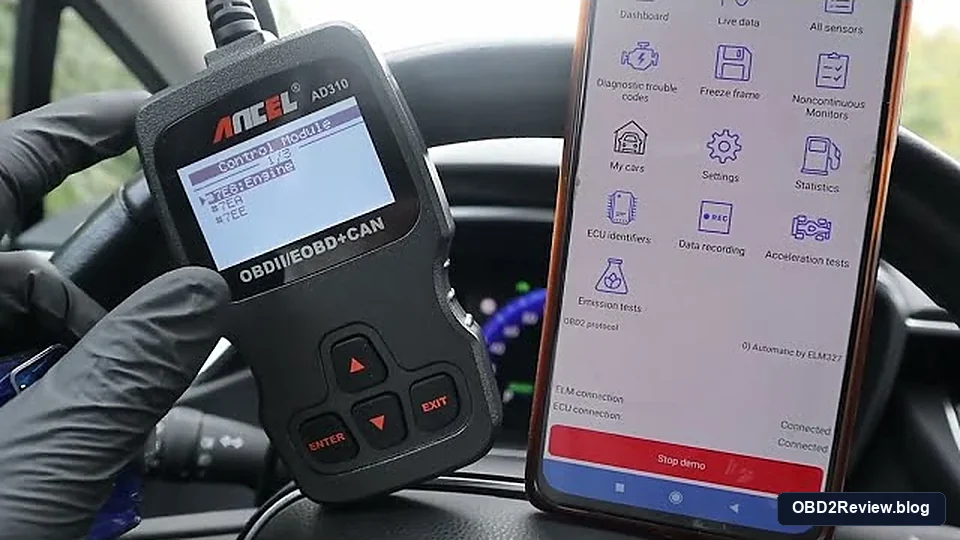
WiFi dongles typically act as localized access points or join existing wireless networks. This setup creates a dedicated IP subnet for high-throughput data routing across multiple modules.
Choosing the best bluetooth odb2 scanner ensures reliable short-range radio frequencies. Direct pairing protocols bypass complex router handshakes for instant tethering to mobile devices.
WiFi OBD2 adapters function as mini access points or client stations using TCP/IP stacks over IEEE 802.11 b/g/n frequencies, establishing direct sockets with host mobile devices through dedicated IP subnets.
Bluetooth adapters instead utilize a serialized RFCOMM protocol layer emulating standard serial cable connections over the 2.4 GHz ISM band, simplifying handshakes for continuous stream diagnostics without complex subnet configurations.
Network topology differences dictate multi-device behavior since WiFi allows simultaneous dashboard integration, whereas classical Bluetooth restricts active connections to a single master-slave pairing per physical diagnostic interface module.
- Direct radio frequency standards
- Localized access point creation
- Personal area network pairing
Network Configuration Mechanics
Establishing a connection over WiFi requires manually selecting the adapter SSID within settings. IP address assignment handles the session routing before diagnostic software can initialize communication.
Bluetooth streamlines this initial handshake by automatically scanning for compatible hardware profiles. Seamless device pairing reduces friction during rapid diagnostic workflows in busy shop environments.
- Manual SSID selection
- Automated hardware profiling
Data Transfer Speeds and Multiplexing Capabilities
Diagnostic bandwidth dictates how many live sensor parameters a scan tool can refresh simultaneously. Data transfer rates directly impact graphing smoothness and diagnostic response times.
WiFi architectures easily handle massive data payloads generated by modern CAN bus multiplexing. High-speed packet delivery prevents lag during intensive ECU flashing and deep diagnostic logging sessions.
Selecting an option from our best bluetooth odb2 roundup reveals lower transfer speeds suited for basic monitoring. Bandwidth limitations can occasionally bottleneck deep diagnostic sessions requiring real-time graphing arrays.
Raw throughput varies drastically because high-speed WiFi connections effortlessly handle 54 Mbps theoretical limits, easily managing massive live data logging sessions across multiple high-frequency engine control unit sensors simultaneously.
Classic Bluetooth speeds cap out around 3 Mbps, while Bluetooth Low Energy variants restrict payload sizes further, which can occasionally bottleneck extensive parameter identification requests during deep diagnostic troubleshooting routines.
Multiplexing heavy CAN-FD or DoIP protocols requires robust bandwidth capabilities to prevent packet drops, making WiFi structurally superior for capturing rapid transient faults in modern high-speed vehicle networks.
- Simultaneous sensor refreshing
- Massive CAN bus payloads
- Real-time graphing arrays
Throughput Benchmarks Under Load
Pushing hundreds of parameter IDs concurrently stresses wireless transceiver capabilities during lab testing. Throughput capacity separates professional logging tools from basic consumer code readers.
WiFi maintains stable frame rates even when querying multiple modules on heavy-duty trucks. Multiplexing efficiency ensures zero dropped frames across complex multi-controller network architectures.
- Parameter ID concurrency
- Multi-module querying stability
Pairing Protocols, Range, and Physical Interference
Signal propagation inside a metallic vehicle cabin creates unique challenges for wireless adapters. Electromagnetic interference from ignition coils can disrupt weak radio frequency transmissions instantly.
WiFi signals offer superior range outside the vehicle but suffer from local channel congestion. Frequency band saturation in urban shops can cause intermittent packet loss during diagnostics.
Reviewing our best obd ii bluetooth scanner selections highlights models maintaining a tight perimeter around the driver seat. Point-to-point security ensures stable connections without interference from shop routers.
Bluetooth pairing requires initial PIN verification or Secure Simple Pairing methods, creating a persistent bonded state that automatically reconnects whenever the host device enters the effective 10-meter range.
WiFi adapters demand manual SSID selection and password entry on mobile OS settings before launching diagnostic software, introducing friction but maintaining stability against structural obstructions inside dense service bays.
Environmental interference heavily impacts both formats since crowded 2.4 GHz radio frequencies degrade Bluetooth signal integrity, whereas overlapping shop router channels can disrupt dedicated SSID connections on wireless hardware.
- Metallic cabin signal propagation
- Local channel congestion
- Tighter perimeter containment
Environmental Obstacle Mitigation
Mechanics often work inside concrete service bays filled with reflective metallic surfaces and tools. Signal reflection management determines whether a wireless diagnostic session remains securely connected.
Adapters utilizing adaptive frequency hopping mitigate physical blockages much better than static channels. Robust channel hopping keeps diagnostic data flowing despite physical obstructions in the bay.
- Concrete service bay reflection
- Adaptive frequency hopping
Power Consumption and Vehicle Battery Impact
Many devices featured in our best obd2 bluetooth scanners guide draw operational current directly from diagnostic port pins. Parasitic current draw remains critical during extended troubleshooting sessions.
WiFi transceivers demand significantly higher electrical wattage to maintain continuous access point broadcasting. Power consumption metrics show noticeably higher thermal output from WiFi-enabled diagnostic dongles.
Bluetooth Low Energy protocols minimize electrical overhead during extended vehicle health monitoring tasks. Energy-efficient operation prevents accidental battery depletion when adapters remain plugged in overnight.
Parasitic draw is a critical diagnostic concern, as WiFi transceiver chips continuously broadcast access points, drawing significantly higher quiescent electrical current from the vehicle OBD2 port when left plugged in overnight.
Bluetooth units leverage aggressive low-power sleep states, especially modern Bluetooth Low Energy chips that minimize battery drain, preserving alternator and battery health during extended parked diagnostic monitoring phases.
Technicians must manually disconnect WiFi adapters after shift completion to prevent dead batteries, whereas advanced Bluetooth interfaces often feature automatic motion wake-up circuits and low-voltage shutdown safeguards.
- Direct OBD2 port current draw
- Higher electrical wattage demands
- Energy-efficient BLE operation
Thermal Management and Hardware Longevity
Continuous high-current transmission generates internal heat within compact adapter plastic enclosures. Thermal dissipation design prevents premature hardware failure during extended diagnostic routines.
Lower power requirements allow Bluetooth chips to operate at cooler internal operating temperatures. Extended component lifespan results directly from reduced electrical stress and minimal thermal cycling.
- Internal heat generation
- Cooler operating temperatures
Software Ecosystem and Mobile App Compatibility
Choosing a wireless adapter depends heavily on your preferred diagnostic software and operating system. App ecosystem support varies widely between Apple iOS and Android hardware platforms.
Apple iOS devices historically restrict custom Bluetooth socket profiles for third-party diagnostic hardware. WiFi adapter bypass solutions allow iOS users to communicate with complex vehicle network controllers.
Android platforms embrace open Bluetooth pairing for seamless integration with popular diagnostic applications. Direct operating system integration provides a smoother user experience for everyday garage mechanics.
Application layer integration differs because most generic diagnostic apps communicate seamlessly with Bluetooth serial ports, whereas WiFi versions require explicit TCP port configuration and IP address handshakes within software settings.
iOS platforms historically favored WiFi hardware due to strict Apple MFi Bluetooth security restrictions, though modern frameworks now support standard Bluetooth LE protocols across a much wider range of third-party diagnostic utilities.
Proprietary factory software packages often mandate specific communication drivers, meaning technicians must verify whether their chosen manufacturer app natively supports wireless socket connections or requires dedicated serial bridging cables.
- Preferred diagnostic software
- Apple iOS socket restrictions
- Android open Bluetooth pairing
Cross-Platform Integration Challenges
Developers must write distinct communication layers to support diverse wireless transceiver hardware protocols. Software compatibility layers ensure reliable command translation between mobile apps and vehicle computers.
Users switching between tablets and phones often encounter frustrating reconfiguration steps with WiFi tools. Protocol standardization remains an ongoing challenge for universal aftermarket diagnostic tool manufacturers.
- Communication layer development
- Universal tool standardization
Diagnostic Reliability in Professional Shop Environments
Professional technicians demand absolute reliability when diagnosing complex electronic faults under tight deadlines. Shop environment durability separates occasional hobbyist tools from daily commercial equipment assets.
Bluetooth units offer grab-and-go simplicity that speeds up quick code clearing and inspections. Workflow efficiency improves when technicians do not need to manually configure network settings.
Advanced tuning shops rely on WiFi for uncompromised data transfer during heavy ECU flashing. Professional diagnostic throughput justifies the slightly higher power draw and setup complexity involved.
Professional automotive bays present harsh electromagnetic conditions where high-frequency inductive noise from welding equipment or heavy machinery can severely compromise wireless diagnostic session stability during critical module programming routines.
Hardened shop environments frequently favor hardwired interfaces for safety, but when wireless mobility is mandatory, Bluetooth offers more predictable point-to-point reliability without conflicting with bustling corporate shop network infrastructure.
Technicians conducting long-term road tests benefit from WiFi range capabilities, but workshop foremen must weigh connection dropouts against network security vulnerabilities inherent in open unsecured diagnostic access points.
- Tight shop deadlines
- Grab-and-go simplicity
- Uncompromised data transfer
Long-Term Maintenance and Firmware Updates
Wireless diagnostic hardware requires periodic firmware updates to maintain compatibility with new protocols. Over-the-air update support ensures adapters adapt smoothly to evolving automotive network standards.
Manufacturers prioritizing robust security encryption protect diagnostic sessions from unauthorized wireless interception attempts. Firmware security protocols safeguard sensitive vehicle programming operations against malicious external cyber threats.
- Periodic firmware updates
- Security encryption prioritization
Frequently Asked Questions
Which wireless protocol offers faster data transfer speeds for live sensor graphing?
WiFi adapters consistently provide superior bandwidth capacity capable of handling massive multiplexed data streams without experiencing frustrating latency or dropped frames during intensive testing procedures.
This exceptional high throughput makes WiFi the definitive choice for professional ECU tuning operations and advanced multi-parameter vehicle diagnostic logging tasks across multiple controllers.
Can I use an iOS device with a traditional Bluetooth OBD2 scanner?
Apple mobile operating systems frequently restrict standard Bluetooth serial port profile connections, requiring specialized Bluetooth Low Energy certification or a dedicated wireless network adapter setup.
Selecting an iOS-compatible WiFi dongle ensures completely seamless diagnostic connectivity without ever encountering frustrating mobile platform limitations or unexpected pairing communication errors.
Does leaving a wireless OBD2 scanner plugged in drain the car battery?
WiFi adapters consume significantly more electrical current and can easily deplete vehicle batteries if left connected over extended periods of inactivity in your garage.
Utilizing a Bluetooth Low Energy unit minimizes parasitic electrical draw to safely prevent accidental vehicle battery drainage issues during long-term diagnostic monitoring tasks.
How does electromagnetic interference affect wireless OBD2 performance in shop environments?
Heavy shop equipment and vehicle ignition coils generate electrical noise that can severely disrupt weak radio frequency transmissions during testing. Adapters featuring robust frequency hopping protocols successfully maintain stable diagnostic connections despite harsh electromagnetic interference inside busy commercial service bays.
Which option is better for everyday code reading and quick diagnostic checks?
Bluetooth scanners offer effortless automatic pairing and instant connectivity without ever requiring tedious manual network configuration steps on your device. This plug-and-play operational convenience makes Bluetooth adapters ideal for fast diagnostic trouble code checks and everyday automotive maintenance tasks.