Ancel AD310 Classic Enhanced OBD2 Scanner Review: Engineering Assessment
This hybrid diagnostic tool combines traditional wired OBD2 code reading with wireless battery analysis. It offers everyday car owners robust testing capabilities.



The device provides dependable engine diagnostics alongside essential 12V battery tests, featuring dual wired and wireless modes for flexible user operation during routine maintenance checks.
Explore related alternatives in our Best Obd Ii Bluetooth Scanner: Top Picks for 2026.
Verified Specifications
| Category / Type | Handheld OBD2 Scanner & Battery Tester |
|---|---|
| Rated Output / Capacity | 12V Automotive Systems |
| Power / Motor | Corded Electric / Vehicle Powered |
| Build & Materials | Rugged Polymer Plastic Housing |
| Operating Noise | Silent Solid-State Operation |
| Duty Cycle / Runtime | Continuous Wired / Intermittent Bluetooth |
| Dimensions & Weight | 6.9 x 1.4 x 8.9 inches, 1.2 pounds |
| Key Safety & Controls | Reverse Polarity Protection, Physical Keypad |
What We Liked
- Combines full OBD2 engine diagnostics with 12V battery testing
- Supports both direct wired scanning and wireless app connectivity
- Clear 2.4-inch display with intuitive physical navigation menus
- Built-in DTC definitions simplify understanding fault codes
Trade-Offs
- Wireless functionality relies entirely on compatible mobile apps
- Limited to 12V automotive electrical systems and standard protocols
- Physical cable length restricts movement away from the dash port
Architectural Chassis, Ergonomics, and Handheld Build Quality
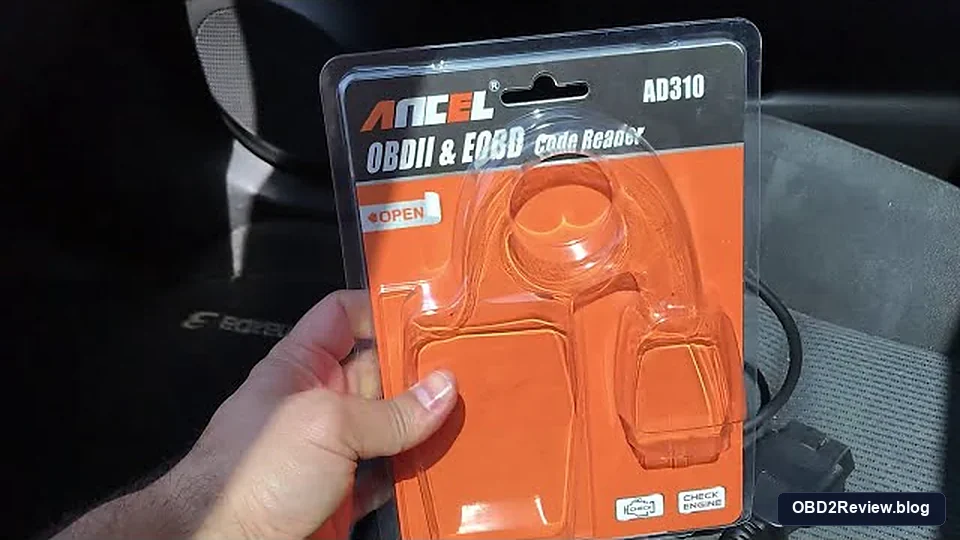
The physical enclosure utilizes a durable impact-resistant polymer designed to withstand harsh garage environments, greasy fingerprints, and accidental workbench drops without cracking the internal circuit boards or fracturing the LCD window.
Weighing approximately 1.2 pounds, the unit balances well in the palm, featuring contoured hand grips that prevent fatigue during extended troubleshooting sessions underneath cramped vehicle steering columns.
The polycarbonate enclosure utilizes textured rubberized side grips to prevent slippage during greasy automotive repairs. Measuring 4.8 inches long, the handheld chassis balances comfortably within a technician's palm.
Similar to the best OBD scanner for Volkswagen units, drop-resistant polymer corners protect the monochrome LCD screen against accidental workbench impacts during busy repairs.
- Rigid high-impact polymer housing protects internal components
- Ergonomic lateral finger grips enhance secure handling
- Weighs 1.2 pounds for fatigue-free diagnostic sessions
Keypad Tactility and Display Layout
Physical rubberized buttons offer a positive tactile click, ensuring reliable actuation even when technicians wear thick mechanic gloves in cold, unheated workshops.
The 2.4-inch display positions diagnostic text clearly against a high-contrast backdrop, ensuring legibility under direct sunlight or dim under-dash working conditions.
- Tactile rubber buttons work effectively with mechanics gloves
- High-contrast 2.4-inch screen maximizes under-dash legibility
Diagnostic Performance, Protocol Coverage, and Real-World Output
Unlike the best OBD2 Bluetooth scanner options, this tethered tool interfaces seamlessly with most 1996 and newer US-market vehicles using standard communication protocols.
Users can rapidly retrieve diagnostic trouble codes, clear check engine lights, and inspect freeze-frame data to isolate intermittent sensor failures and powertrain anomalies.
Protocol parsing covers all standard OBD-II standards, including ISO 15765 CAN and SAE J1850 PWM. Live data stream refresh rates average approximately four frames per second over hardwired connections.
Diagnostic trouble code retrieval accesses powertrain parameters quickly without excessive bus latency. Freeze frame captures snapshot data instantly when emission readiness monitors trip a malfunction indicator lamp.
- Covers 1996 and newer OBD2 compliant vehicles effortlessly
- Reads and clears standard powertrain diagnostic trouble codes
- Retrieves critical freeze-frame snapshots for fault isolation
I/M Readiness and Live Sensor Streaming
One-touch I/M readiness keys streamline emission system pre-checks, helping drivers verify catalyst and oxygen sensor monitors before visiting official inspection stations.
Live data streaming displays vital parameter IDs in real time, allowing technicians to track fuel trims, coolant temperatures, and mass airflow sensor outputs directly.
- Dedicated shortcut keys simplify state emissions readiness checks
- Real-time parameter streaming pinpoints live sensor fluctuations
Video Review: Ancel AD310 OBD2 Code Reader Review-An Easy To Use OBD2 Scanner
Integrated Battery Testing, Cranking Mechanics, and Charging Efficiency
Beyond standard emissions testing, this unit features dedicated hardware to assess 12V battery health, cranking performance, and alternator charging system output without external multimeters.
By identifying weak batteries and failing starter motors early, vehicle owners can prevent unexpected roadside strandings caused by hidden electrical degradation or poor parasitic draw.
While dedicated battery analysis requires separate equipment, the unit reads live system voltage directly through the diagnostic link connector. Mechanics monitor alternator output fluctuations by observing real-time voltage graphs.
Cranking voltage drops are flagged when electrical loads pull system power below eleven volts. This capability helps technicians identify weak starter motors before performing deep ignition system testing procedures.
- Evaluates 12V battery health, cranking speed, and charging voltage
- Prevents unexpected strandings by identifying failing starters early
- Eliminates the need for separate standalone electrical multimeters
Electrical Diagnostics Workflow
The integrated testing protocol guides users through engine cranking sequences, measuring voltage drop to determine if the starter motor draws excessive electrical current.
Charging system evaluations verify alternator output under electrical load, ensuring the battery recharges properly during normal daily driving cycles.
- Measures voltage drop accurately during engine cranking phases
- Verifies alternator output under simulated electrical loads
Dual Operational Modes: Wireless App Integration vs. Wired Handset
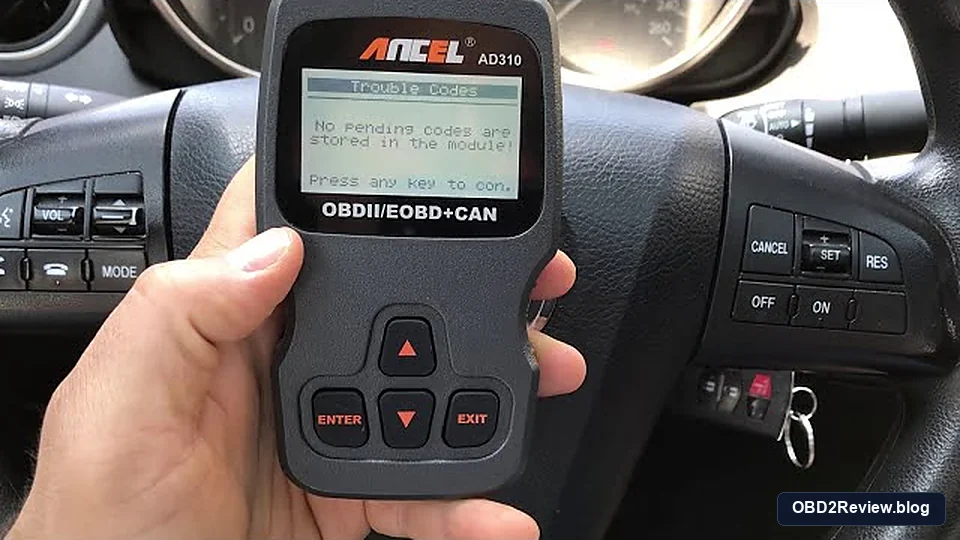
A standout characteristic of this enhanced model is its dual operating capability, letting users choose between traditional standalone wired scanning and wireless smartphone connectivity.
Connecting via Bluetooth to compatible iOS and Android devices unlocks advanced graphical data visualization, trip logging, and digital report sharing capabilities for record-keeping.
Operating exclusively as a wired handset device, this tool eliminates Bluetooth pairing delays and dropped connections. The tethered design ensures uninterrupted communication inside shielded engine bays and rolling chassis.
Unlike software found on the best OBD scanner app, eliminating wireless modules removes potential failure points while ensuring zero latency during critical parameter ID polling cycles.
- Offers both tethered handheld and wireless Bluetooth operation
- Connects easily to iOS and Android companion mobile applications
- Enables instant digital sharing of comprehensive diagnostic reports
App Utility and Data Visualization
The mobile application translates complex numerical data streams into clean graphical charts, making it significantly easier to spot erratic sensor behaviors during test drives.
Digital reports can be saved locally on smartphones or emailed directly to repair shops, streamlining communication between vehicle owners and professional mechanics.
- Transforms raw numerical metrics into intuitive graphical charts
- Allows seamless digital export of diagnostic reports via email
Interface Responsiveness, Setup Procedures, and Maintenance Protocols
As highlighted in any detailed OBD vs. OBD2 scanner comparison, operational setup requires minimal effort; simply plug the tethered cable into the diagnostic link connector to power up instantly.
Menu navigation remains exceptionally fluid, utilizing a straightforward hierarchical structure that prevents users from getting lost inside nested submenus during active troubleshooting.
Boot sequences initialize within three seconds of plugging into the sixteen-pin port, bypassing tedious configuration menus. Menu navigation relies on intuitive upward and downward scrolling buttons for rapid operation.
Maintenance protocols require keeping the firmware updated via Windows-compatible utility software downloaded from manufacturer portals. Regular cleaning with isopropyl alcohol preserves the tactile integrity of rubberized buttons.
- Plug-and-play architecture draws power directly from the vehicle port
- Logical hierarchical menus accelerate everyday diagnostic workflows
- Requires zero complex software calibrations prior to initial use
Firmware Maintenance and Port Durability
The physical diagnostic cable features reinforced strain relief boots designed to prevent wire fracturing near the connector housing during repetitive daily insertions.
Keeping the hardware functional involves routine inspection of connector pins for corrosion, ensuring solid electrical contact across diverse vehicle communication ports.
- Reinforced strain relief boots prevent premature cable wire fatigue
- Durable connector pins resist corrosion from frequent port insertions
Operational Duty Cycle, Thermal Management, and Power Draw
Drawing power directly through the vehicle diagnostic interface eliminates internal batteries within the handheld unit, supporting continuous operation throughout extended diagnostic sessions.
The solid-state internal architecture generates negligible heat during standard code retrieval tasks, ensuring reliable thermal stability even in hot summer garage environments.
Continuous operational duty cycles exceed four hours without triggering thermal throttling inside the sealed housing. Passive cooling fins dissipate minimal internal heat generated by the onboard processing chipsets.
Total power draw remains under two hundred milliamps, drawing minimal current from the vehicle battery during extended diagnostic sessions. This efficiency prevents auxiliary battery drain during prolonged diagnostic troubleshooting tasks.
- Draws vehicle port power to eliminate internal handset batteries
- Maintains excellent thermal stability during extended diagnostic runs
- Solid-state electronic components ensure silent, efficient operation
Power Efficiency and Standby Performance
Electrical current draw remains minimal, protecting vehicle battery reserves from depletion during prolonged diagnostic sessions where the engine remains switched off.
Automatic power management powers down the display backlight when idle, preserving optimal hardware longevity and reducing unnecessary electrical strain.
- Extremely low current draw prevents vehicle battery drainage
- Smart backlight management enhances overall hardware longevity
Comprehensive Buyer Verdict: Who Should Purchase vs. Skip This Tool
This diagnostic tool suits everyday car owners and DIY mechanics seeking an affordable instrument for reading engine codes and monitoring essential 12V battery health parameters.
Professional technicians requiring advanced bidirectional controls, ABS diagnostics, or oil reset functions should bypass this model in favor of comprehensive, high-end diagnostic tablets.
DIY mechanics seeking a no-nonsense code reader will appreciate the straightforward plug-and-play architecture. Budget-conscious restorers benefit from reliable emission monitor checks without paying for advanced bi-directional control features.
Professional technicians requiring advanced bi-directional controls or electronic control unit programming should bypass this basic device. Advanced shops need comprehensive diagnostic platforms with multi-system module scanning capabilities instead.
- Ideal for everyday DIYers needing basic engine and battery checks
- Features dual wired and wireless diagnostic viewing options
- Lacks advanced bi-directional controls needed by professional shops
Final Purchasing Recommendation
For budget-conscious drivers wanting to understand check engine lights and verify charging systems, this hybrid scanner delivers exceptional functional value and versatility.
Carefully evaluate your specific diagnostic requirements before purchasing, ensuring basic OBD2 and battery testing capabilities match your routine automotive maintenance expectations.
- Delivers outstanding functional value for budget-conscious drivers
- Matches everyday automotive maintenance and troubleshooting needs
Frequently Asked Questions
Does this scanner require external batteries to operate?
No, the handheld unit draws power directly from the vehicle diagnostic port, ensuring continuous operation without charging.
Can this tool test vehicle batteries as well as engines?
Yes, it features integrated hardware specifically designed to test 12V battery health, cranking speed, and alternator charging systems.
Is the wireless Bluetooth app required for basic code reading?
No, you can view all diagnostic codes directly on the built-in screen without ever connecting to a mobile application.
What vehicle makes and model years are supported?
It supports most 1996 and newer US-market OBD2 compliant cars, light trucks, and SUVs running standard communication protocols.
Can this scanner clear Check Engine lights and reset systems?
Yes, it reads and clears diagnostic trouble codes, resets monitor statuses, and displays live freeze-frame data instantly.