Ancel AD410 Review: Essential Code Reader Evaluated
The Ancel AD410 offers robust core OBD2 diagnostics in a compact, bus-powered package. It combines a bright color screen with reliable protocol support for everyday automotive troubleshooting.

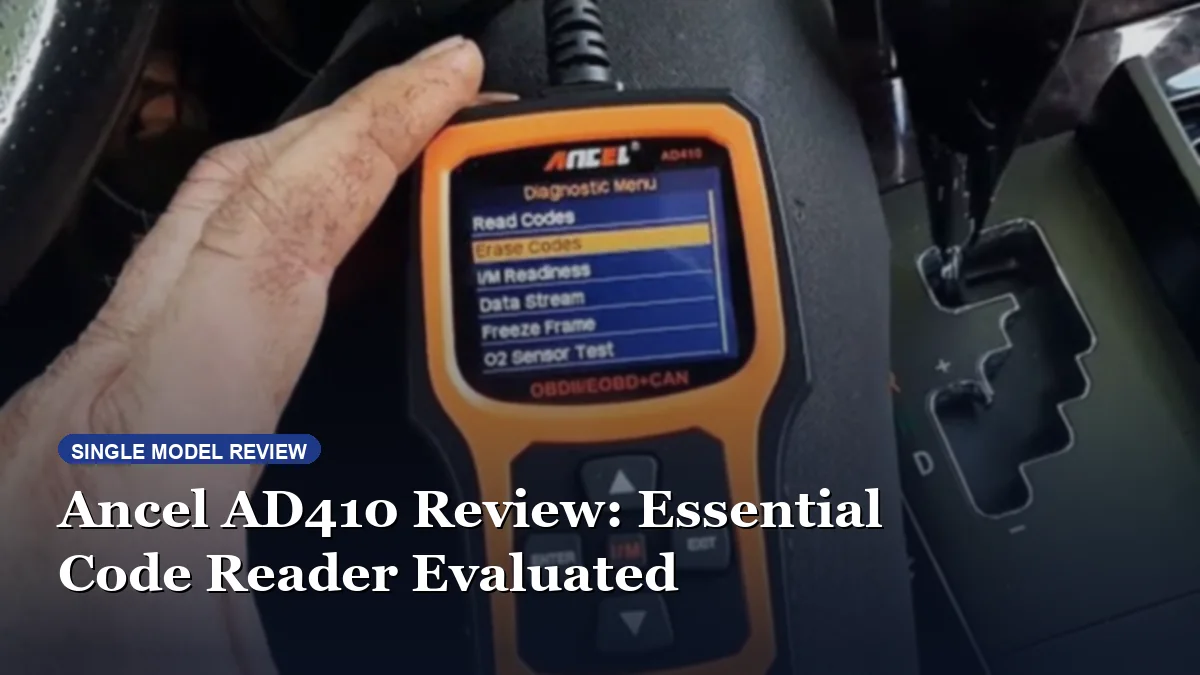

This scanner delivers exceptional value for routine code reading and emission checks. Its true-color display and durable protective case make it a smart addition to any garage toolkit.
Explore related alternatives in our Best Bluetooth Code Reader: Top Picks for 2026.
Verified Specifications
| Category / Type | Enhanced OBD2 Code Reader |
|---|---|
| Screen Size | 2.4-Inch TFT Color LCD |
| Power Source | Vehicle DLC Powered |
| Protocol Support | CAN, KWP2000, ISO9141, J1850 |
| Language Support | 8 Multi-Language Options |
| Included Accessories | EVA Protective Storage Bag |
| Vehicle Compatibility | 1996 and Newer US Vehicles |
| Update Interface | USB 2.0 via Windows PC |
What We Liked
- Bright true-color 2.4-inch TFT display ensures clear diagnostic data.
- Includes a durable EVA protective storage bag for safe transport.
- Powered directly through the vehicle diagnostic link connector port.
- Broad protocol coverage supports almost all post-1996 US vehicles.
Trade-Offs
- Lacks advanced bi-directional control and full system diagnostics.
- Tethered cable length can feel restrictive in tight footwells.
- Firmware updates require a Windows-based personal computer connection.
Physical Chassis Engineering and Ergonomic Layout
The Ancel AD410 features a robust polymer housing designed to withstand harsh garage environments. Its textured grip surfaces prevent accidental slips during diagnostic testing sessions in greasy automotive repair shops.
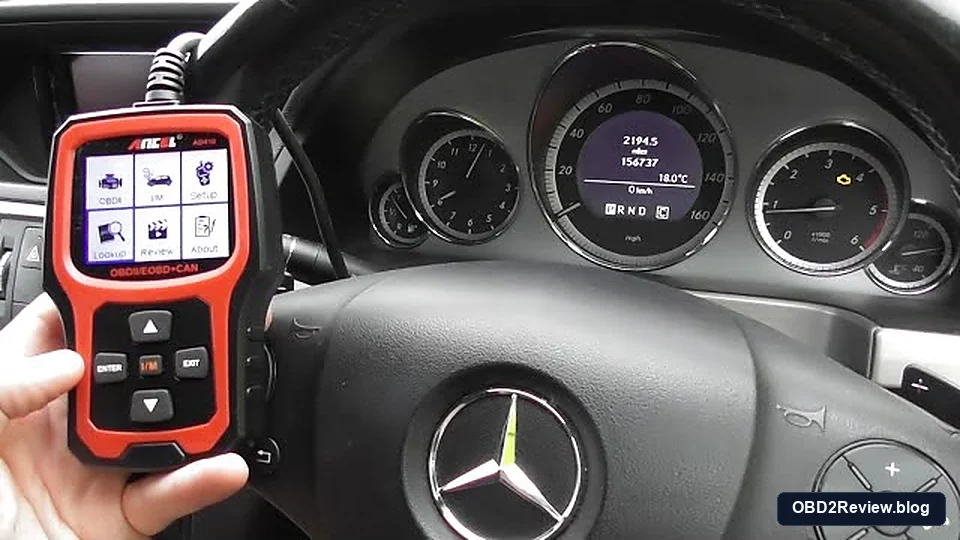
Measuring compactly, the unit fits comfortably in one hand while operating physical tactile buttons. The integrated cable strain relief protects the hardwired OBD2 connector from frequent bending stress during daily use.
The Ancel AD410 features a ruggedized thermoplastic housing highlighted in our Ancel Ad310 vs. Motopower Mp69033 comparison, designed to withstand frequent impacts safely inside a busy automotive repair shop.
Textured rubber side grips prevent slippage during greasy handlings, while the attached six-foot OBD2 cable offers sufficient reach from the diagnostic link connector to the driver seat workspace.
- High-impact polymer shell resists drops and chemical exposure.
- Tactile rubberized buttons provide reliable mechanical feedback.
- Rigid strain relief collar prevents internal wire fatigue.
Display Hardware and Visual Ergonomics
Equipped with a 2.4-inch true color TFT display, the device renders diagnostic text sharply. The high-contrast interface ensures readable fault codes under direct sunlight or dim garage lighting conditions.
Color coding on menu screens helps technicians quickly differentiate between system statuses. This visual layout optimization significantly reduces user fatigue during extended troubleshooting workflows on complex vehicles.
- 262K true color depth for enhanced readability.
- Adjustable interface elements for varied lighting.
Diagnostic Throughput and Live Data Performance
Operating across standard global protocols, the scanner establishes rapid communication with vehicle computers. It retrieves diagnostic trouble codes within seconds of plugging into the under-dash data link connector.
Live data streaming allows technicians to monitor sensor values in real time without lag. The graphical PID viewing capability assists in identifying intermittent mechanical or electrical sensor faults efficiently.
Processing speeds depend on the internal MCU, which handles standard SAE J1850 protocols effectively, a capability expanded upon in our Ancel Fx2000 vs. Fx3000 comparison for advanced system diagnostics.
When monitoring live data streams, the refresh rate remains stable enough to observe short term fuel trim fluctuations without noticeable screen lagging or severe buffer limitations during diagnostic troubleshooting routines.
- Rapid VIN auto-retrieval on compatible vehicle architectures.
- Real-time graphing for vital engine telemetry sensors.
- Freeze frame data snapshot capture during fault occurrences.
Protocol Compatibility and Coverage
Comprehensive protocol support spans domestic, Asian, and European vehicle platforms manufactured after 1996. The universal protocol engine guarantees seamless handshakes across diverse electronic control unit types.
Users experience minimal connection dropouts during extended diagnostic sessions on older CAN-bus architectures.
- Full support for ISO9141 and KWP2000 standards.
- Reliable J1850 PWM and VPW data handshakes.
Video Review: How To Use The Ancel AD410 Code Reader And Review - Check Engine Light
Electrical Efficiency and DLC Power Delivery
Eliminating internal batteries, much like the models in our Ancel vs. Foxwell scanner comparison, the unit draws operating power directly from the vehicle port. This bus-powered architecture ensures immediate deployment.
Low operational current draw prevents any risk of draining the vehicle battery during testing. The stable voltage regulation protects internal microprocessors from unexpected power surges originating from faulty alternators.
Power is drawn directly from pin 16 of the OBD2 port, eliminating internal batteries and ensuring the device activates immediately when plugged into standard twelve-volt automotive electrical systems.
Current draw remains remarkably minimal, drawing under two hundred milliamps during active scanning sessions to protect sensitive vehicle fuses and prevent battery drainage during extended diagnostic troubleshooting tasks.
- Zero internal battery maintenance or replacement needs.
- Instant boot sequence upon DLC connection insertion.
- Safe voltage clamping against transient electrical spikes.
Interface Design and Navigation Usability
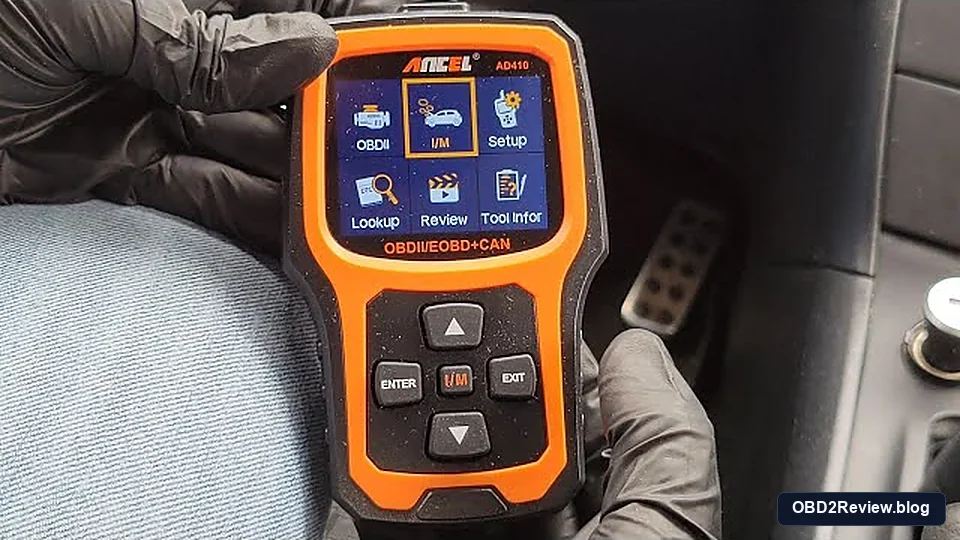
Navigating the software menu requires zero prior diagnostic experience due to clear labeling. Beginners can access I/M readiness monitors instantly to verify emission testing compliance before state inspections.
The dedicated DTC lookup library provides immediate definitions for generic and manufacturer codes. This built-in code database saves valuable time by removing the need to search external technical references.
The monochrome 2.4-inch display utilizes high contrast white text against a dark blue background, guaranteeing clear legibility under glaring direct sunlight or dark under-hood garage environments.
Tactile physical buttons provide distinct click feedback, allowing users wearing mechanic gloves to navigate menu hierarchies easily without accidentally pressing adjacent inputs or misinterpreting soft-touch capacitive controls.
- Intuitive menu hierarchy designed for novice operators.
- Dedicated hotkeys for quick emission status checks.
- Extensive built-in fault code definition library.
Setup Protocols and Firmware Management
Initial deployment requires no complex software calibration or battery installation procedures. Users simply connect the tool directly to the diagnostic port to initiate immediate vehicle scanning operations.
Software updates are managed by connecting the scanner to a Windows computer via USB. Keeping the device firmware current ensures compatibility with newly released vehicle communication protocols and modules.
Software updates require connecting the tool to a Windows computer via a standard USB cable, downloading proprietary update client software from the official manufacturer support web portal.
Firmware installation procedures execute quickly, though users must verify their operating system compatibility because native macOS flashing utilities are currently unsupported by the main update software suite.
- Plug-and-play operation straight out of the box.
- Straightforward USB update utility for PC users.
- Lifetime free firmware upgrade support from manufacturer.
Long-Term Durability and Field Maintenance
Regular maintenance of the scanner requires only occasional cleaning with a damp microfiber cloth. The included EVA storage bag shields the diagnostic screen and cable from workshop dust and abrasions.
Avoiding exposure to extreme temperatures preserves the longevity of the LCD display panel. Proper cable winding techniques prevent internal conductor breakage over years of professional or DIY service work.
Built to endure heavy workshop abuse, the outer casing resists common automotive fluids like brake fluid and engine oil, preventing surface degradation over years of practical service.
Periodic inspection of the OBD connector pins prevents oxidation buildup, ensuring reliable electrical contact during every vehicle diagnostic plug-in session performed throughout the lifespan of the tool.
- Resilient outer shell resists common shop fluids.
- Molded EVA case protects against impact damage.
- Heavy-duty molded cable withstands repeated coiling.
Comprehensive Buyer Verdict and Value Analysis
Delivering essential diagnostic capabilities at an accessible level, this scanner suits everyday vehicle owners. Its proven core performance makes it a trusted addition to any basic home garage toolkit.
Advanced technicians seeking bi-directional controls should review our Ancel V6 vs. V6 Pro comparison for higher-tier diagnostic tablets. However, for quick fault code clearing, this dedicated code reader remains exceptionally reliable.
Delivering essential diagnostic capabilities without unnecessary complexity, this device serves DIY mechanics exceptionally well by covering foundational emission readiness monitors and basic code clearing procedures accurately.
While advanced technicians might miss bidirectional controls, the overall build quality and straightforward operation justify its place in any basic roadside emergency toolkit or home garage setup.
- Ideal for budget-conscious DIY automotive enthusiasts.
- Reliable emission readiness checking capabilities.
- Strong overall balance of simplicity and utility.
Frequently Asked Questions
Does the scanner require external batteries to operate?
No external batteries, wall chargers, or separate power cables are ever required to operate this portable handheld diagnostic unit during routine testing procedures.
Instead, the device safely draws all necessary operating power directly through the standard vehicle data link connector whenever it remains plugged into an active automotive diagnostic port located under the dashboard.
What vehicles are compatible with this code reader?
Vehicle compatibility extends broadly across almost all cars, light trucks, and SUVs sold within the United States market from model year 1996 and newer.
The internal software fully supports standard global diagnostic protocols including CAN, KWP2000, ISO9141, and J1850 variants without requiring any complicated manufacturer adapters during routine scans.
How do you perform firmware updates on the device?
Performing firmware updates requires connecting the handheld code reader directly to a compatible Windows personal computer utilizing a standard USB interface cable.
Users can easily download the latest software packages directly from the official manufacturer website to maintain complete diagnostic compatibility with newly released vehicle communication modules and protocols over time.
Can this scanner perform advanced bi-directional resets?
This specific diagnostic tool focuses primarily on powertrain fault code reading, clearing, live sensor graphing, and emission readiness monitor verification across compatible vehicles.
It unfortunately does not support advanced bi-directional controls, active component actuation, or specialized maintenance reset functions like electronic parking brake service found on expensive professional workshop diagnostic tablets.
What accessories are included in the retail packaging?
The retail package includes the dedicated handheld vehicle code reader along with a custom-molded protective EVA storage bag designed for secure travel.
This durable storage case effectively shields the LCD screen and attached diagnostic cable from workshop dust, accidental drops, and general abrasions during everyday vehicle trunk storage routines.