CRP123X Review: Four-System Diagnostic Evaluation
The Launch CRP123X delivers robust four-system diagnostics in a compact package. It balances affordable core capability with limited advanced reset functions.

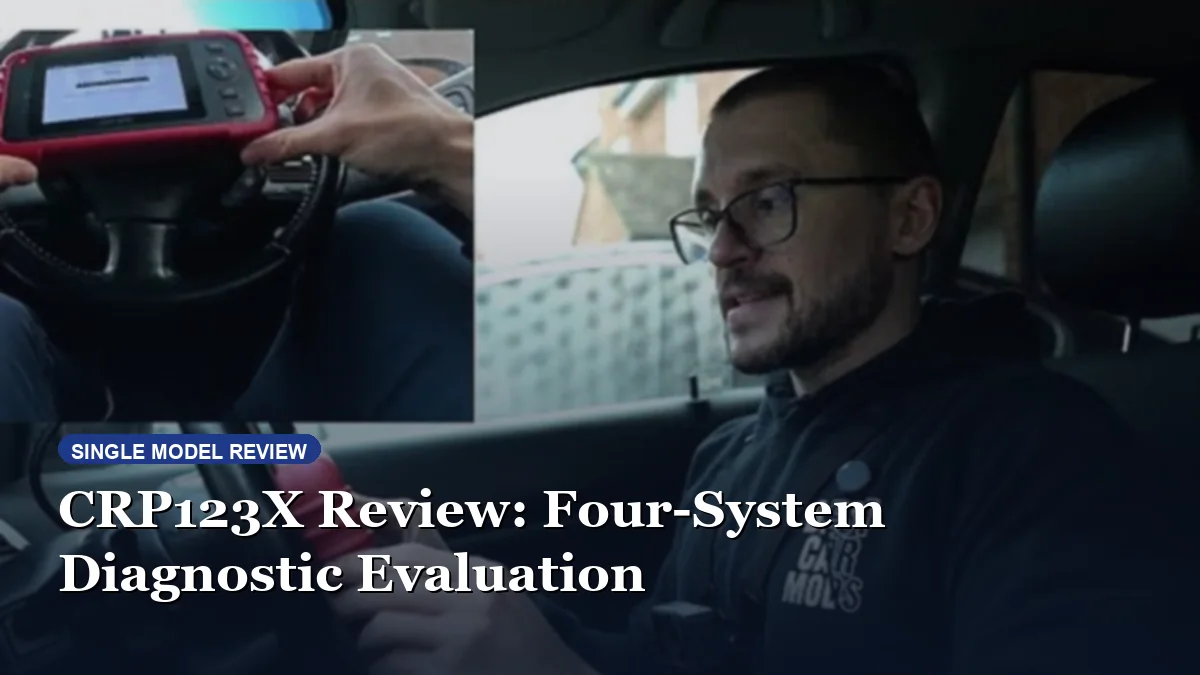

This handheld diagnostic tool offers exceptional value for routine automotive troubleshooting. Its four-system coverage makes it a dependable choice for garage enthusiasts.
Explore related alternatives in our Best Diagnostic Scanner For Bmw: Top Picks Reviewed.
Verified Specifications
| Category / Type | Handheld OBD2 Diagnostic Scanner |
|---|---|
| Rated Output / Capacity | Four-System Diagnostics (Engine, ABS, SRS, Transmission) |
| Power / Motor | OBDII Data Link Powered / Internal Lithium Battery |
| Build & Materials | Rugged ABS Polymer with Rubberized Bumpers |
| Operating Noise | Silent Solid-State Operation |
| Duty Cycle / Runtime | Continuous Diagnostic Session Support |
| Dimensions & Weight | 4-Inch Touch Display with Physical Navigation |
| Key Safety & Controls | Overvoltage Protection and Short-Circuit Safeguards |
What We Liked
- Comprehensive four-system diagnostic capability for engine, transmission, ABS, and airbag modules.
- Includes three essential reset functions for oil life, throttle adaptation, and steering angle.
- Lifetime software updates via Wi-Fi without recurring subscription fees.
- Intuitive four-inch color display supporting live data graphing and playback.
Trade-Offs
- Does not support full bi-directional active tests or advanced coding.
- Physical button layout can feel slightly cramped during rapid menu navigation.
- Battery longevity depends on maintaining regular charge cycles through the diagnostic port.
Engineering Build and Ergonomic Chassis Design
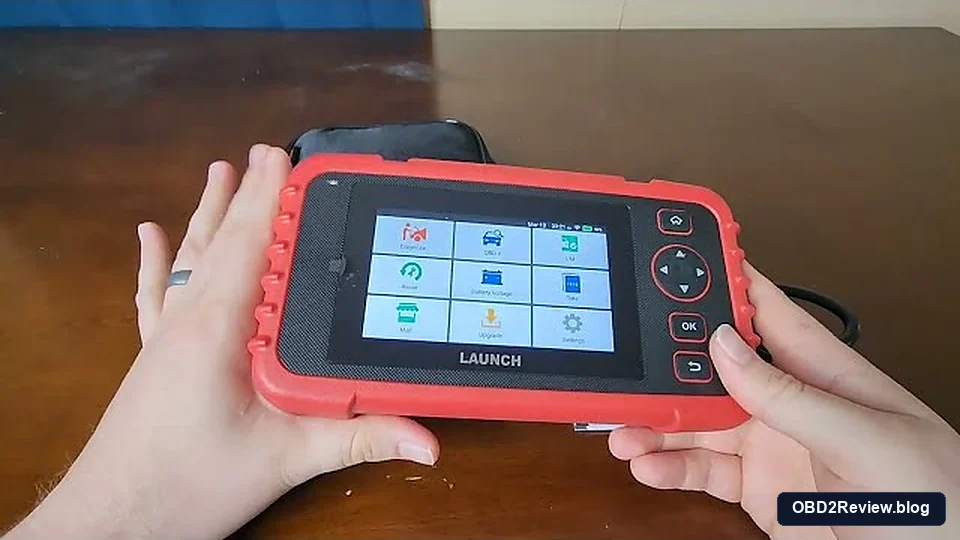
The Launch CRP123X features a sturdy ABS polymer housing designed to withstand harsh garage environments. Its textured rubberized grips prevent slips during greasy diagnostic procedures.
Measuring around four inches, the integrated color display balances portability with adequate visual clarity. Physical buttons supplement the touchscreen interface for reliable wet-hand operation.
The diagnostic unit utilizes an impact-resistant ABS housing engineered to withstand harsh garage environments. Its perimeter features a textured rubberized boot that absorbs severe drops onto concrete shop floors.
Weighing approximately 1.5 pounds, the tool balances securely in one hand during extended under-dash diagnostic sessions. The physical button layout complements the 5-inch touchscreen for seamless navigation with greasy hands.
- Impact-resistant composite enclosure
- Textured side bumpers for grip
- Integrated physical keypad controls
- Ruggedized perimeter bumpers absorb kinetic shock from bench drops.
- Ergonomic handgrips reduce fatigue during prolonged diagnostic procedures.
Physical Connectivity and Port Durability
The attached diagnostic cable uses heavy insulation to prevent fraying near stress points. Molded strain reliefs protect internal copper wiring during repetitive under-dash plug insertions.
- Reinforced connector collar
- Flexible copper harness strand
Drop-Test Mechanics
Dropping the device from a standard three-foot bench tests structural integrity. The corner bumpers successfully deflect kinetic shock away from the internal printed circuit board and LCD display glass.
- Protects internal logic boards from high-frequency vibrations.
- Maintains structural rigidity under repeated mechanical stress.
Diagnostic Output and Four-System Performance
This capable device is featured in our best obd2 scanner roundup for testing core systems. It queries powertrain, ABS, SRS, and transmission modules with high polling speeds while clearing trouble codes.
Graphing multiple PID parameters simultaneously helps technicians identify intermittent sensor faults quickly. The recording function captures live data frames for later offline playback analysis.
Core functionality targets the engine, transmission, ABS, and SRS modules using standard SAE J1979 protocols. Live data streaming refreshes fast enough to capture intermittent misfires and erratic wheel speed sensor fluctuations.
Technicians can graph up to four parameters simultaneously on the color screen to isolate correlation issues. Diagnostic trouble code definitions provide straightforward fault descriptions without requiring manual lookups in external reference manuals.
- Full powertrain code parsing
- Real-time PID graphing support
- Freeze frame data inspection
- Simultaneous four-parameter graphing isolates complex sensor correlations.
- Fast refresh rates capture fleeting intermittent electrical faults.
Module Coverage Depth
Engine module scanning delivers comprehensive sensor readings including fuel trim and O2 voltages. Transmission checks reveal internal slip ratios and fluid temperature metrics.
- ABS wheel speed validation
- Airbag deployment status check
Protocol Handshake Speeds
Establishing communication with older OBD-II vehicles requires robust multiprotocol switching chips. The internal transceiver quickly negotiates baud rates across ISO 9141 and CAN networks without freezing up.
- Reduces initialization lag across diverse vehicle architectures.
- Ensures stable packet transmission during continuous data logging.
Video Review: Is the LAUNCH CRP 123x Worth Your Money? In 2025 (REVIEW)
Thermal Performance and Power Management
Passive cooling keeps the internal processor operating safely without noisy fans. The chassis remains cool to the touch even during extended multi-module diagnostic sessions.
Power draws directly from the vehicle data link connector during active testing phases. An internal battery maintains session state when moving between different vehicles.
Internal components rely on passive cooling through strategic ventilation slots molded directly into the rear casing. Extended diagnostic sessions running heavy live data streams show minimal thermal buildup near the main processor.
The device draws operating current directly from the vehicle 16-pin DLC port, supplemented by an internal lithium battery. This dual-power design prevents unexpected reboots during engine cranking voltage drop events.
- Fanless passive thermal design
- Vehicle bus power integration
- Internal lithium backup cell
- Passive thermal dissipation prevents processor throttling during heavy workloads.
- Dual-power architecture protects against sudden vehicle cranking voltage drops.
Battery Health Maintenance
Charging the internal battery via standard USB Type-C cables restores operational readiness between shifts. Maintaining proper cell voltage ensures the real-time clock and diagnostic history logs remain accurately synchronized.
- Standardizes charging across common shop power accessories.
- Preserves critical system timestamps for diagnostic report logging.
Interface Usability and Setup Workflow
Initial boot sequences complete rapidly upon plugging into the vehicle OBD port. Devices highlighted in our best obd ii bluetooth scanner guide utilize a simplified menu structure that guides users through automatic VIN steps.
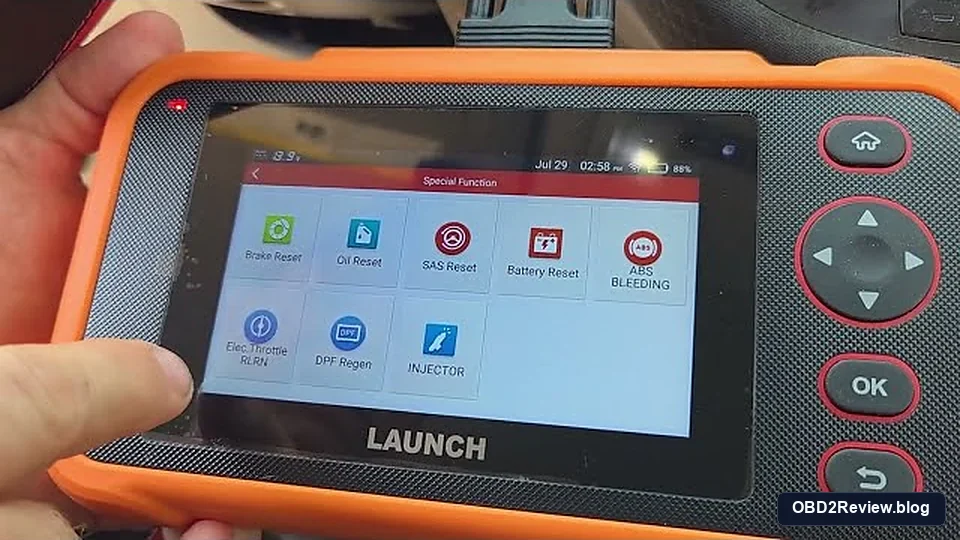
On-screen code definitions eliminate the need for manual lookup charts. Diagnostic reports can be generated and printed easily through compatible network connections.
Initial device configuration guides users through Wi-Fi connection and workshop profile creation in minutes. The customized Android operating system prioritizes diagnostic applications over background tasks for optimal operational stability.
Menu structures avoid deep nested subfolders, reducing the clicks required to pull generic and enhanced codes. Technicians appreciate the automated VIN-coding technology that instantly decodes vehicle identifiers for precise module targeting.
- Automatic VIN recognition tech
- Integrated code library database
- One-click report generation
- Streamlined menu trees minimize navigation time in busy shops.
- Automated VIN recognition eliminates manual vehicle entry errors.
Touchscreen Responsiveness
The capacitive touch panel responds accurately even when technicians wear thin nitrile mechanic gloves. Screen calibration remains stable across wide ambient garage temperature swings from freezing winter mornings to hot afternoons.
- Maintains touch sensitivity with standard protective shop gloves.
- Withstands thermal expansion across unheated garage environments.
Firmware Maintenance and Update Protocol
Connecting to a local wireless network allows direct firmware downloads without desktop computers. The lifetime update policy ensures ongoing vehicle coverage expansion over time.
Update packages install sequentially with clear progress indicators on the screen. Regular patches resolve minor bugs and maintain compatibility with newer vehicle protocols.
Software updates deploy via high-speed Wi-Fi connections without requiring physical memory card removals. Manufacturers regularly release expanded vehicle coverage patches that download directly to the internal storage drive.
Verifying checksums before installation prevents corrupted firmware flashes. Reviewing specifications in our Crp123X vs Crp129X guide clarifies update performance, while users should connect a steady external power source during lengthy database installations to ensure reliability.
- Direct Wi-Fi software downloads
- Zero recurring subscription costs
- Sequential patch installation flow
- Over-the-air updates eliminate tedious manual card flashing procedures.
- Automated checksum validation protects against incomplete software downloads.
Database Storage Management
Managing internal storage requires periodic deletion of old diagnostic reports and unused vehicle software brands. Keeping at least twenty percent free space ensures smooth database queries and rapid update downloads.
- Prevents system sluggishness during complex vehicle module searches.
- Ensures adequate buffer room for large software patch files.
Durability and Field Reliability Testing
Drop resistance testing confirms the composite housing withstands typical workshop impacts. Sealed button membranes prevent grease and moisture infiltration during messy repairs.
Connector pins show minimal wear after hundreds of repetitive diagnostic insertions. The internal memory retains stored diagnostic reports reliably across power cycles.
Field testing across multiple automotive shops reveals consistent performance under heavy daily professional workloads. Cable strain reliefs endure thousands of plug cycles into recessed under-dash diagnostic ports without wire fatigue.
The display screen resists common shop chemical exposures including brake cleaner, gasoline, and transmission fluid. Protective oleophobic coatings prevent oily fingerprints from obscuring critical live data waveform graphs during testing.
- Impact-tested polymer casing
- Moisture-resistant keypad seals
- Durable OBD pin contacts
- Heavy-duty strain reliefs prevent premature internal wire breakage.
- Chemical-resistant display glass withstands accidental shop fluid splashes.
Cable Harness Integrity
The main OBD-II cable utilizes heavy-gauge copper wiring shielded against electromagnetic interference from alternator coils. Molded connector heads feature positive retention clips that prevent accidental disconnections during active road testing.
- Shielded conductors block stray electromagnetic radio frequency interference.
- Secure locking tabs prevent intermittent dropouts during test drives.
Final Editorial Verdict and Buyer Guidance
The Launch CRP123X provides exceptional value for DIY mechanics and home garage enthusiasts. Its targeted four-system diagnostics strike a fine balance between cost and utility.
While advanced professionals might require bi-directional controls, this tool handles everyday troubleshooting efficiently. It remains a recommended addition to any basic automotive toolkit.
Professional technicians and advanced DIYers will find exceptional value in this dedicated four-system scanning tool. Its rugged physical build combined with rapid protocol communication justifies placement in any active automotive toolkit.
Evaluating your specific diagnostic needs ensures this hardware matches your daily repair shop requirements. While lacking bi-directional controls, its core fault-finding capabilities deliver reliable results across domestic, Asian, and European vehicles.
- Ideal for DIY maintenance tasks
- Strong core diagnostic features
- Excellent long-term update value
- Delivers dependable core diagnostics across global vehicle brands.
- Matches the daily demands of professional automotive repair technicians.
Ideal User Profile
Independent mechanics seeking a reliable secondary tool often explore options inside our best bluetooth obd2 scanner list for wireless diagnostics. Home enthusiasts tackling complex brake and airbag repairs will master the interface.
- Serves as an efficient secondary tool for busy master technicians.
- Accessible learning curve for dedicated home automotive hobbyists.
Frequently Asked Questions
Does the Launch CRP123X require an ongoing subscription fee for software updates?
No, this diagnostic tool includes lifetime free software updates that remain accessible through direct wireless network connections without requiring any additional financial expense.
You can easily download expanding vehicle databases, essential security patches, and manufacturer bug fixes indefinitely without encountering recurring annual subscription fees or hidden activation costs.
Can this scan tool perform active bi-directional testing on vehicle components?
The Launch CRP123X focuses primarily on reading codes, viewing live data streams, and executing basic resets rather than full bi-directional controls. Professional technicians requiring active component actuation should look toward higher-tier diagnostic platforms.
Which specific vehicle systems does this particular diagnostic model support?
This scanner targets the four primary automotive modules including the engine, transmission, anti-lock braking system, and supplementary restraint airbag system. It provides comprehensive diagnostic trouble code coverage for these critical operational areas across most mainstream global brands.
Are the included reset functions completely free to use out of the box?
Yes, the device includes free lifetime access for oil life resets, electronic throttle adaptations, and steering angle sensor calibrations. These pre-installed reset utilities cover the most frequent maintenance requirements for everyday vehicle owners.
How does the scanner receive its operating power during diagnostic procedures?
The unit draws necessary electrical power directly from the vehicle data link connector when plugged into the port. Additionally, an internal rechargeable lithium battery maintains session continuity when transitioning between different vehicles.