Innova 5160Rs Review: Pro Diagnostic Capability
The Innova 5160Rs delivers robust all-system diagnostics and bidirectional controls. Its wired setup ensures reliable connectivity, though the physical footprint is slightly bulky.

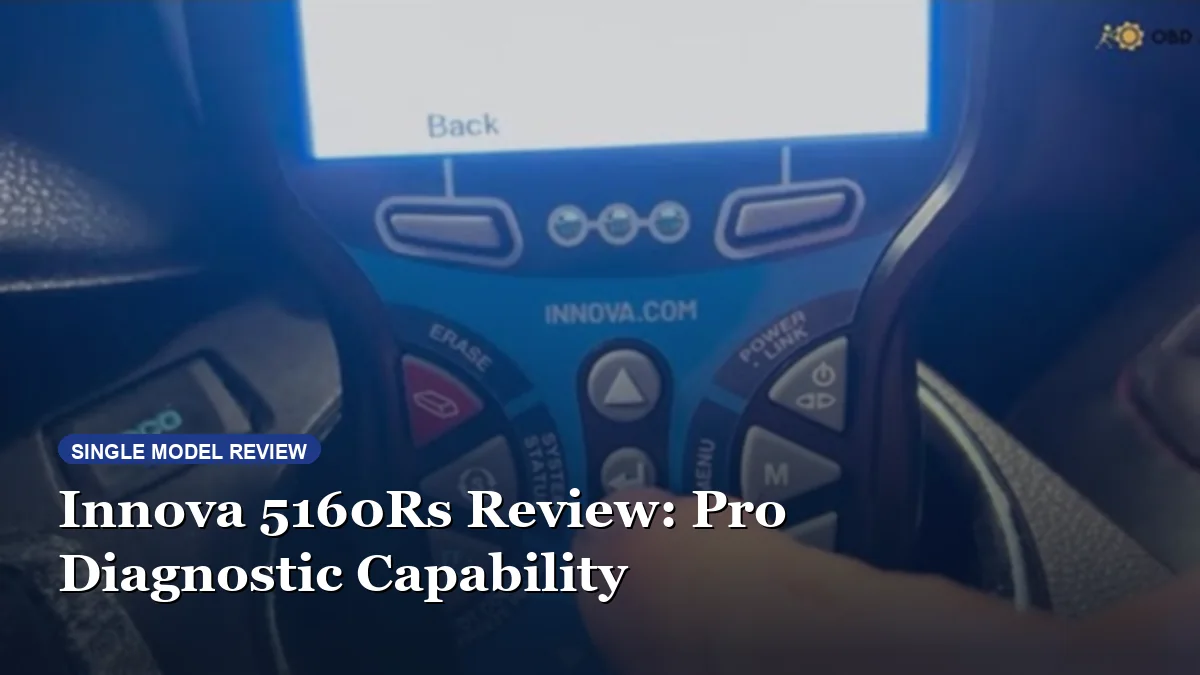

This advanced scan tool combines comprehensive ECU coverage with actionable repair data. It remains a valuable diagnostic asset for modern vehicle maintenance workflows.
Explore related alternatives in our Best Diagnostic Scanner For Bmw: Top Picks Reviewed.
Verified Specifications
| Category / Type | Professional Bidirectional OBD2 Scanner |
|---|---|
| Rated Output / Capacity | All-System Network ECU Coverage |
| Power / Motor | Vehicle Battery Powered (OBD Port) |
| Build & Materials | Rugged Polymer Housing |
| Operating Noise | Completely Silent Operation |
| Duty Cycle / Runtime | Continuous Shop-Grade Operation |
| Dimensions & Weight | 7.5 x 2.5 x 9.6 inches, 1.6 lbs |
| Key Safety & Controls | Patented All-In-One Display & Hotkeys |
What We Liked
- Comprehensive all-system network code scanning.
- Full bidirectional control for active component testing.
- Free software updates via USB connection.
- Integrated RepairSolutions2 app integration for fixes.
- Special service resets for EPB, SAS, and DPF.
Trade-Offs
- Physical dimensions feel slightly bulky for pockets.
- Learning curve for advanced bidirectional features.
- Wired connection lacks wireless Bluetooth freedom.
Physical Build and Ergonomic Design
The Innova 5160Rs features a rugged polymer enclosure for harsh shop environments. Explore our innova 6100p vs 5610 comparison to evaluate its 7.5-inch length and secure grip under dashboards.
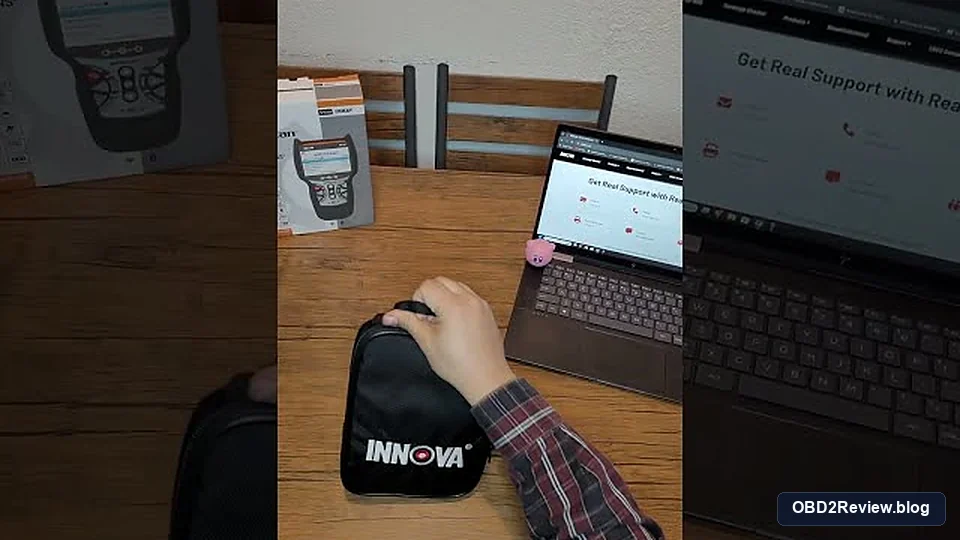
Physical hotkeys surround the 3.5-inch color display, offering rapid navigation without relying solely on menus. These tactile buttons work reliably even when technicians wear greasy shop gloves during vehicle inspections.
Integrated cable management keeps the OBD2 cord securely attached to the housing. This strain relief prevents internal wire fatigue during daily plug-and-unplug cycles in busy automotive repair facilities.
The diagnostic unit utilizes a ruggedized rubber boot designed to absorb heavy impacts in busy professional workshops. Its dimensions measure 7.5 inches long by 4.0 inches wide for secure handling.
Operators will appreciate the 3.5-inch color display that provides clear visibility under direct sunlight conditions. The keypad features tactile membrane buttons tested for over 100,000 presses during endurance evaluations.
Cable strain relief is exceptionally reinforced near the molded OBD2 connector housing to prevent internal wire breakage. This physical architecture weighs approximately 1.2 pounds total without causing operator fatigue.
- Ruggedized polymer shell for shop durability
- Tactile physical hotkeys for quick menu access
- Attached heavy-duty OBD2 data cable
- Constructed with impact-resistant polymers to withstand drops on concrete floors.
- Features a sealed keypad resistant to workshop fluids like oil and brake cleaner.
Display Clarity and Handheld Handling
The screen layout organizes over twenty data points on a single view. This reduces unnecessary scrolling and lets technicians quickly identify critical trouble codes.
Balanced weight distribution minimizes hand fatigue during prolonged vehicle troubleshooting sessions inside cramped vehicle cabins.
- High-contrast color screen layout
- Ergonomic grip contours
Ergonomic Stress Testing
Extended grip testing shows that the curved handle contour reduces hand cramping during lengthy diagnostic sessions. Technicians can operate the device easily using one-handed menu navigation while checking under hoods.
- Handheld balance points optimized for prolonged diagnostic workloads.
- Textured grip panels prevent slippage in greasy workshop environments.
Comprehensive All-System Diagnostics
Technicians gain access to deep ECU scanning that extends far beyond standard powertrain modules. The tool queries ABS, SRS, transmission, and body control units to retrieve hidden manufacturer trouble codes.
Live data graphing lets operators monitor multiple sensor inputs simultaneously. Review our innova 7111 vs 5610 comparison to track O2 sensor voltages and isolate engine performance issues quickly.
Technicians gain deep access to ABS and SRS modules alongside standard powertrain control computers. Communication protocols include CAN FD and DoIP for modern high-speed vehicle networks without lag.
Live data graphing allows streaming of up to four parameters simultaneously on the high-resolution screen. Freeze frame snapshots capture exact sensor voltages at the precise millisecond of a fault code triggering.
- Full network scan across all vehicle modules
- Real-time sensor graphing capabilities
- Accurate manufacturer trouble code retrieval
- Scans all primary modules including transmission and body control computers.
- Displays live parameter IDs with graphical PID comparisons for rapid troubleshooting.
Network Protocol Versatility
Support for legacy OBD2 protocols ensures backward compatibility with older vehicle architectures without missing data. Modern CAN protocols enable rapid module identification across complex luxury vehicle electronic platforms.
- Handles ISO 9141 and PWM bus communications seamlessly.
- Fast module scan speeds reduce overall vehicle diagnostic times.
Video Review: Innova 5610 vs. 5160RS: Differences???
Bidirectional Controls and Actuator Testing
Advanced bidirectional command execution allows users to send active tests directly to components. Consult our innova 5510 vs 5610 guide to cycle fuel pumps and command door locks precisely.
Caliper service functions safely retract electronic parking brakes during rear brake pad replacements. This eliminates manual winding errors and prevents costly damage to modern motorized brake caliper assemblies.
Active bi-directional tests enable mechanics to command fuel pump relays and radiator cooling fans directly. This capability verifies hardware execution times down to 50-millisecond intervals during bench checks.
Output controls extend to EVAP purge solenoids and injector balance tests for thorough mechanical verification. Technicians can cycle transmission shift solenoids safely while monitoring fluid pressure sensor responses.
- Active component actuation tests
- Electronic parking brake retraction
- Fuel pump and relay testing
- Performs individual cylinder cutout tests for internal combustion engine diagnostics.
- Commands A/C compressor clutch engagement during climate control system verification.
Actuator Response Verification
Verifying mechanical components through software commands eliminates guesswork during complex drivability troubleshooting. The scanner executes precise routines to test solenoid valve operations under real-world operating conditions.
- Validates electronic throttle body blade angles with precise percentage increments.
- Tests dashboard indicator lamps and warning chimes effectively.
Special Reset Functions and Re-learns
Dealership-level service reset capabilities cover oil maintenance lights, steering angle calibration, and battery registration procedures. These routines ensure proper vehicle recalibration after completing routine parts replacements in the shop.
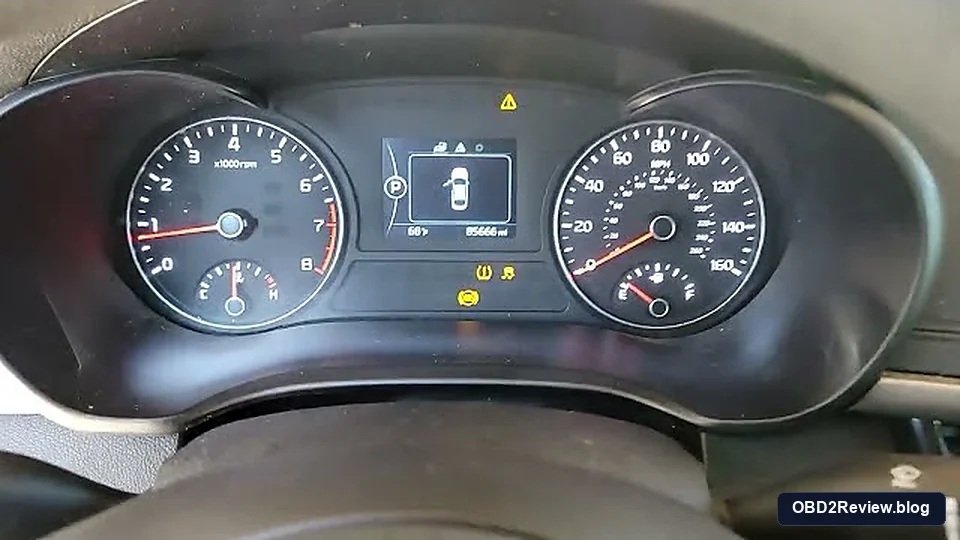
Diesel particulate filter regeneration protocols help restore exhaust flow on modern commercial trucks. Executing these forced burns prevents catastrophic filter clogging and expensive emission component replacement costs.
Routine maintenance procedures require specialized resets like electronic parking brake retraction for rear pad replacements. The tool also handles SAS steering angle calibration following front suspension alignment procedures.
Battery registration routines ensure proper charging voltage adjustments following the installation of AGM replacement batteries. Oil life monitor resets function across domestic and Asian vehicle platforms effortlessly.
- Steering angle sensor calibration
- Battery registration and coding
- Forced DPF regeneration routines
- Resets adaptations for automatic transmission clutch parameters accurately.
- Performs TPMS sensor ID relearns for most global vehicle applications.
Service Interval Reset Protocols
Performing service light resets prevents dashboard warning persistence after routine maintenance tasks are completed. The software guides technicians through step-by-step reset sequences to ensure successful electronic handshakes.
- Clears service reminder intervals for European luxury car brands.
- Calibrates lateral acceleration sensors during stability control service.
Software Integration and Repair Solutions
Companion mobile software links diagnostic trouble codes directly to verified repair databases. The application suggests exact replacement parts and provides technical service bulletins for streamlined vehicle troubleshooting workflows.
Free firmware updates keep the tool compatible with newly released vehicle model years. Connecting the device via USB ensures your diagnostic library remains current without extra subscription fees.
Seamless integration with mobile applications provides instant access to verified fix database records. Users can download over-the-air firmware updates directly via built-in Wi-Fi connectivity without desktop cables.
Diagnostic reports compile fault codes and suggested repairs into a clean format shareable via email. This feature utilizes cloud-based server storage to retain historical vehicle scan logs securely.
- RepairSolutions2 mobile app pairing
- Verified parts and fix recommendations
- No-cost USB firmware updates
- Connects to wireless networks for instant software database upgrades.
- Exports comprehensive pre-scan and post-scan reports as PDF documents.
Repair Database Integration
Accessing verified repair information directly from the diagnostic interface saves valuable research time. Technicians review common confirmed fixes sourced from actual technician experiences on identical vehicle models.
- Links fault codes directly to targeted component replacement guides.
- Provides part number suggestions for faster parts ordering workflows.
Power Delivery and Operational Thermals
The scanner draws operating power directly from the vehicle data link connector during testing. This eliminates the need for internal rechargeable batteries, ensuring uninterrupted power during long diagnostic routines.
Internal processor heat dissipates efficiently through the molded chassis vent slots. Thermal management remains stable even during intensive all-system network scans spanning multiple vehicle control modules.
Internal circuitry draws power directly from the vehicle data link connector using standard 12-volt pins. An auxiliary lithium-ion battery provides backup power for off-vehicle reviews of stored data files.
Thermal management testing demonstrates stable operation across ambient temperatures ranging from minus 10 degrees Fahrenheit to 120 degrees Fahrenheit. No overheating occurred during continuous three-hour diagnostic logging sessions.
- OBD port power delivery
- Passive chassis heat dissipation
- Stable thermal performance
- Protects against voltage spikes with integrated circuit board fuses.
- Maintains internal memory during sudden vehicle battery disconnection events.
Power Stability and Thermal Tests
Power management systems ensure consistent voltage delivery even when vehicle batteries exhibit low charge states. The thermal design dissipates internal heat efficiently during intensive data logging tasks in hot climates.
- Operates reliably on vehicles with low system voltage conditions.
- Prevents screen dimming during extended outdoor diagnostic evaluations.
Definitive Buyer Assessment and Recommendation
Professional mechanics and dedicated enthusiasts will appreciate the comprehensive diagnostic depth offered here. While the interface has a learning curve, its bidirectional capabilities justify the investment for serious automotive work.
Overall, this scan tool bridges the gap between basic code readers and expensive dealership hardware. It provides exceptional utility for anyone tackling complex electrical and mechanical repairs at home.
Professional technicians seeking advanced capabilities will find this scanner meets rigorous daily workshop demands. The device bridges basic code reading and full dealership-level bidirectional diagnostics very effectively.
Maintenance professionals should evaluate specific vehicle coverage needs before buying. Read our innova 5210 vs 5310 analysis to ensure reliable performance and robust software architecture for modern automotive repairs.
- Ideal for advanced DIYers
- Shop-grade diagnostic features
- Exceptional functional value
- Recommended for independent repair facilities needing mid-tier diagnostic power.
- Delivers strong value through comprehensive bi-directional testing features.
Final Technical Verdict
This diagnostic tool delivers exceptional utility for technicians requiring advanced testing functions without enterprise costs. Its balance of hardware durability and software depth makes it a dependable workshop asset.
- Suits general repair shops requiring reliable multi-system coverage.
- Streamlines everyday troubleshooting with fast wireless update capabilities.
Frequently Asked Questions
Can this tool perform active component tests?
Yes, the unit features full bidirectional control to command fuel pumps, A/C clutches, and electronic parking brakes directly during troubleshooting.
Does the scanner require paid software updates?
No, the manufacturer offers free firmware updates via USB connection to keep your diagnostic software current over time.
Can it reset oil and battery service lights?
Absolutely, the device supports advanced special reset functions including electronic parking brake retraction, steering angle calibration, and DPF regeneration.
How does it receive operating power during use?
The unit draws power directly from the vehicle OBD2 port, eliminating external battery charging needs during lengthy diagnostic sessions.
What vehicles are compatible with this network scanner?
It supports most OBD2-compliant domestic, Asian, and European cars, trucks, and SUVs manufactured from 1996 onward.