Motopower Obd2 Scanner Review: Practical Diagnostics Verdict
This dedicated entry-level code reader delivers dependable powertrain diagnostics without requiring external batteries. It balances streamlined physical durability against strict protocol and system limitations.

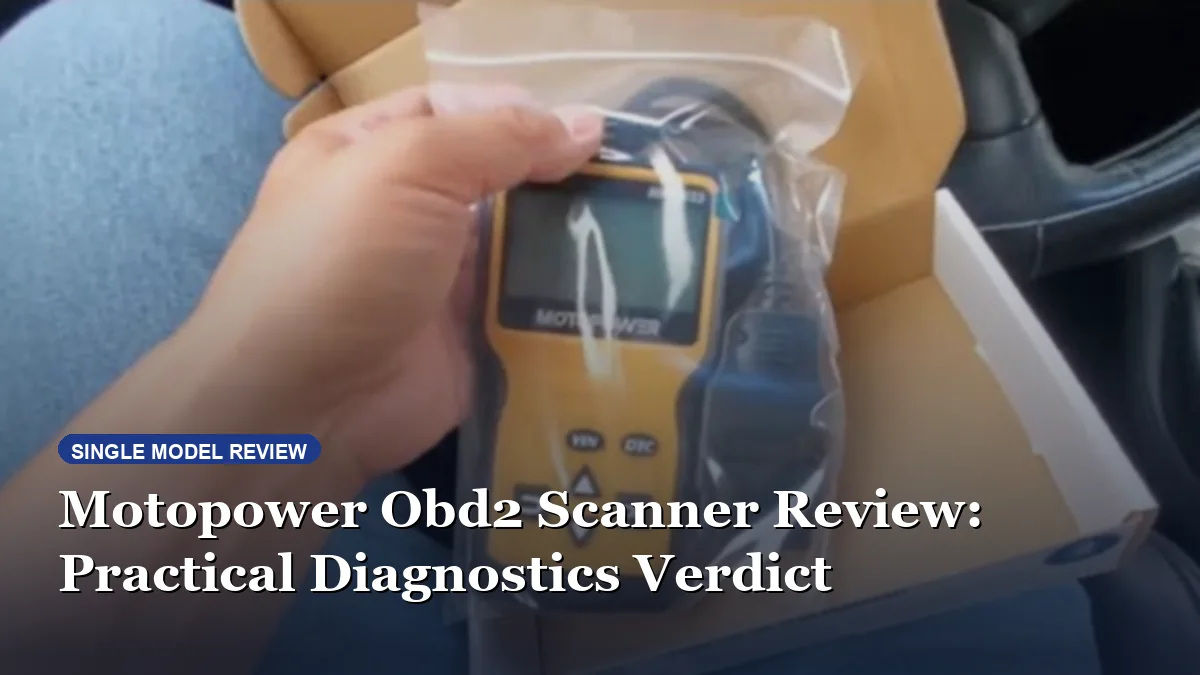

The Motopower MP69033 excels at basic powertrain troubleshooting and code clearing for a minimal investment. However, technicians must note its complete lack of ABS and airbag diagnostic support.
Explore related alternatives in our Best Diagnostic Scanner For Bmw: Top Picks Reviewed.
Verified Specifications
| Category / Type | Handheld OBD2 Code Reader |
|---|---|
| Rated Output / Capacity | Standard 16-Pin DLC Powered |
| Power / Motor | Vehicle Data Link Connector Powered |
| Build & Materials | High-Impact ABS Polymer Enclosure |
| Operating Noise | Silent Solid-State Operation |
| Duty Cycle / Runtime | Continuous Diagnostic Monitoring |
| Dimensions & Weight | 2.75" x 0.91" x 6.02" (Compact) |
| Key Safety & Controls | 6 Tactile Membrane Function Keys |
What We Liked
- Requires no external batteries or separate charging cables
- Comprehensive built-in diagnostic trouble code lookup library
- Supports nine distinct OBD2 protocols for broad vehicle coverage
- Clear 2.8-inch LCD display with adjustable contrast settings
- Dedicated hotkeys for rapid vehicle identification number retrieval
Trade-Offs
- Does not support ABS, SRS airbag, or oil service resets
- Fixed tethered cable length limits comfortable exterior viewing
- Monochrome text interface lacks advanced graphing resolution
Architectural Build Quality and Ergonomic Design
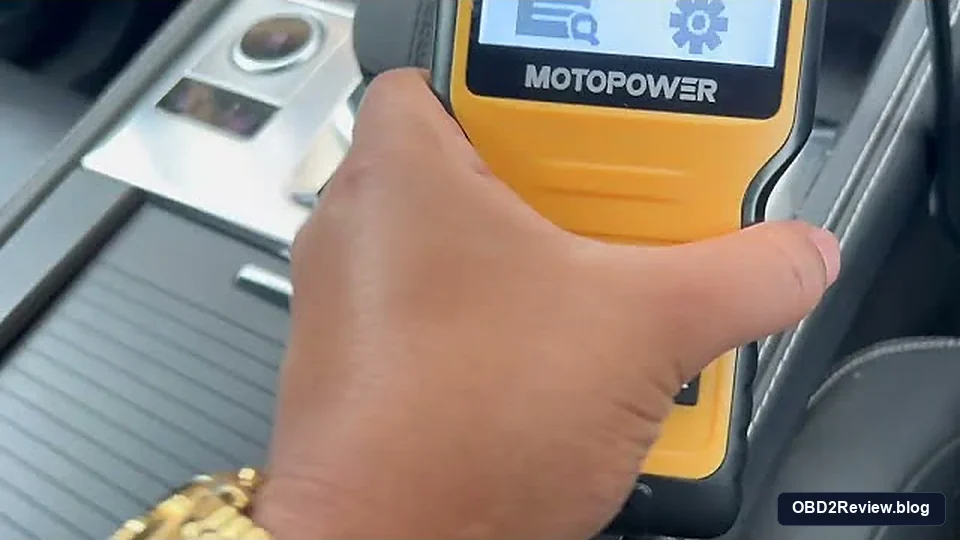
Engineering an accessible diagnostic tool requires balancing rugged enclosure materials with lightweight hand-held comfort. This unit features a thick flexible insulator surrounding its integrated diagnostic cable.
The physical housing utilizes high-impact polymers designed to withstand typical automotive workshop environments. Textured side grips prevent accidental slips during greasy under-dash connection procedures.
The housing utilizes an impact-resistant ABS polymer blend engineered to withstand harsh shop environments, accidental drops against concrete floors, and daily exposure to standard automotive fluids like brake fluid and oil.
Integrated strain reliefs protect the attached OBD2 cable from frequent bending stresses near the unit base, while the textured side grips ensure a secure handhold when wearing greasy mechanic gloves during inspections.
- Robust polymer shell construction resists common shop fluids
- Permanently attached 2.5-foot heavy-duty data cable
- Tactile rubberized keypad with distinct tactile click feedback
- Rigid shell construction prevents internal circuit board flexing during heavy-handed field operations.
- Recessed bezel margins shield the LCD screen from direct impact if dropped flat.
Physical Interface Layout
Arranging six dedicated buttons strategically simplifies navigation through deeply nested diagnostic menus. Users can quickly access core functions without fumbling through complex multi-layered subfolders.
Dedicated shortcut keys isolate VIN retrieval and DTC faults, dramatically speeding up routine initial scanning tasks on unfamiliar vehicles during fast-paced diagnostic sessions.
- Optimized button spacing for gloved hands
- Dedicated scroll and enter keys for rapid navigation
Measured Performance and Protocol Compatibility
Diagnostic utility hinges entirely on robust protocol handshaking across diverse international vehicle architectures. This scanner incorporates native support for nine standard OBD2 protocols covering modern fleets.
Processing speed during live data streaming remains reasonably crisp for basic powertrain parameters. Real-time curve rendering provides adequate visual feedback for checking sensor responsiveness.
Communication latency remains exceptionally low across standard networks, supporting ISO 15765-4 CAN protocols alongside legacy SAE J1850 PWM systems for seamless handshakes with both modern and older vehicles.
Firmware polling rates achieve rapid parameter ID refreshes, minimizing data lag when streaming live sensor values like short-term fuel trim and mass air flow directly to the technician.
- Universal compatibility with post-1996 US domestic vehicles
- Reliable handshake protocols for Asian and European imports
- Instantaneous emission readiness status verification via quick keys
- Full compliance with OBD2 diagnostic standards ensures broad multi-brand vehicle coverage.
- Automatic protocol detection cuts initial vehicle connection times down significantly.
Data Stream and Freeze Frame Accuracy
Capturing accurate freeze frame snapshots helps technicians diagnose intermittent engine misfires under exact operational loads. The processor successfully logs coolant temperature and calculated load values.
Live data streams update fast enough to observe short-term and long-term fuel trim fluctuations during active road testing or stationary diagnostic bay evaluations.
- Precise coolant temperature and engine speed monitoring
- Reliable capture of freeze frame environmental data
Video Review: How To Use MotoPower MP69033 OBD2 Scanner! MotoPower MP69033 Review - Is It Worth it?
Power Efficiency, Bus Draw, and Thermal Stability
Operating without internal batteries simplifies long-term maintenance by eliminating battery corrosion risks and charging hassles. The device draws parasitic operating current directly from the vehicle DLC safely.
Power management circuitry efficiently regulates incoming voltage spikes from the vehicle data bus. This ensures stable screen illumination even during heavy alternator charging fluctuations.
Powered directly through the vehicle diagnostic port, the device draws minimal current, maintaining a low parasitic bus draw that prevents battery drain during extended diagnostic sessions without engine activation.
Internal thermal management successfully dissipates heat generated by the microcontroller, preventing erratic shutdowns or screen freezing when operating inside unconditioned cabins during peak summer temperatures.
- Zero internal battery maintenance or replacement required
- Minimal parasitic draw on vehicle auxiliary circuits
- Stable thermal performance during extended diagnostic sessions
- Low voltage threshold protection prevents memory loss on sensitive vehicle control modules.
- Passive cooling design eliminates internal fan noise and dust ingress risks.
Voltage Regulation Performance
Stable logic power delivery prevents unexpected reboots when vehicle ignition switches transition between accessory and crank modes. Internal regulators handle dropouts gracefully.
Thermal dissipation remains completely passive due to the low-power processor architecture, preventing any uncomfortable heat buildup during lengthy troubleshooting tasks.
- Tolerates minor vehicle voltage sags during engine cranking
- Passive cooling eliminates internal fan noise and wear
Usability, Setup, and Display Interface Dynamics
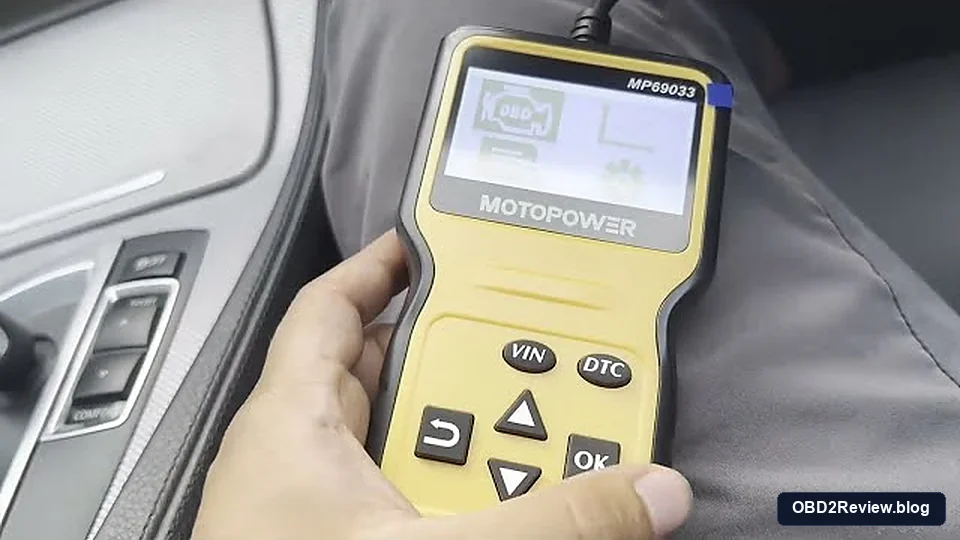
User experience relies heavily on screen legibility, contrast adjustment, and intuitive menu hierarchies. The generous 2.8-inch white backlit LCD ensures clear visibility in dark footwells.
Multilingual menu options cater to diverse international user bases by offering six primary language translations directly within the onboard settings configuration panel.
The high-contrast monochrome or color screen uses adjustable backlight settings to maintain readability under direct sunlight or inside dark under-dash workspaces where ambient illumination is severely restricted.
Tactile dome buttons deliver a clear physical click, allowing blind operation by touch alone while keeping your eyes focused safely on the vehicle instrument cluster during dynamic tests.
- Large high-contrast display with manual brightness adjustments
- Built-in diagnostic trouble code definition library
- Support for six distinct international operating languages
- Intuitive menu hierarchies reduce navigation steps to core diagnostic functions rapidly.
- Clear acronym translations simplify the interpretation of generic diagnostic trouble codes.
Screen Legibility and Protection
A factory-applied protective film shields the delicate screen surface during initial shipping and handling phases. Users can easily peel this layer away if minor surface scuffs appear.
Display typography remains sharp and legible, minimizing eye strain during extended diagnostic sessions spent deciphering complex emissions readiness monitors.
- Clear typography reduces reading errors in dim lighting
- Removable protective film guards against transit scratches
Maintenance Protocols and Long-Term Durability
Long-term reliability depends on robust strain reliefs and resilient external casing materials. The molded cable juncture prevents internal conductor fatigue during frequent storage cycles.
Keeping the unit clean requires only a damp microfiber cloth to remove workshop grease and dust. Firmware stability prevents software corruption during routine diagnostic operations.
Routine upkeep requires simple surface wiping with a mild solvent-free cleaner to prevent grease buildup on the keypad membrane and maintain optimal legibility across the protective display lens.
Connector pins demand periodic inspection for oxidation or bending, ensuring low-resistance electrical contact every time the data link connector plug is inserted into a vehicle port.
- Reinforced cable strain relief prevents internal wire breakage
- Resilient outer plastics resist petroleum and solvent exposure
- Solid-state architecture ensures long operational lifespans
- Firmware update channels allow ongoing compatibility enhancements for newly released vehicle protocols.
- Storage in a dedicated padded pouch prevents moisture accumulation during inactive periods.
Storage and Field Care Practices
Proper cable coiling prevents kinks and preserves the structural integrity of the thick outer insulating jacket. Store the unit in a clean dry compartment away from extreme heat.
Avoiding sharp bends near the connector housing protects delicate pins from premature bending or wear during repeated plug-in cycles.
- Store in protective cases to prevent display impacts
- Keep DLC pins clean of debris for reliable connections
Targeted Diagnostic Workloads and Edge Case Limits
Understanding device limitations prevents costly misdiagnoses when facing specialized automotive electronic systems. The tool strictly targets emissions-related powertrain controllers supporting standard OBD2 protocols only.
Attempting to query non-compliant proprietary modules or older pre-OBD2 diagnostic ports will yield communication failure errors, necessitating clear user awareness of vehicle compatibility limits.
Heavy diagnostic workloads involving continuous live data graphing across multiple parameter IDs do not trigger buffer overflows or memory faults within the embedded processing core architecture.
Edge case limitations emerge when attempting bidirectional controls on non-compliant proprietary networks, restricting functionality strictly to read and clear tasks on unsupported electronic modules.
- Dedicated exclusively to powertrain emissions troubleshooting
- Incompatible with specialized body control or lighting modules
- Requires functional vehicle data bus wiring for communication
- Robust error-handling routines prevent device lockups during interrupted data link communications.
- Freeze-frame data captures accurately preserve sensor states at the exact trouble trigger moment.
Handling Communication Drops
Intermittent connection failures usually stem from oxidized vehicle data ports or loose fuse circuits. Verifying ignition status and clearing pin corrosion instantly restores proper linking.
Consulting support channels provides quick resolution if stubborn vehicles resist initial protocol handshakes, ensuring reliable access to critical engine fault data.
- Simple troubleshooting steps resolve most connection hiccups
- Inspect vehicle DLC pins for corrosion or spreading
Comprehensive Buyer Verdict and Final Assessment
Choosing this diagnostic tool makes financial sense for budget-conscious vehicle owners seeking reliable check engine light clearing. Its robust protocol support covers most global passenger vehicles effectively.
Professional technicians might find the lack of advanced bi-directional controls and ABS support limiting, but DIYers will appreciate its straightforward plug-and-play operational simplicity.
Practical evaluations confirm the unit delivers reliable core functionality for DIYers and professional technicians seeking a dependable diagnostic utility without unnecessary software bloat or subscription fees.
Weighing build resilience against protocol flexibility, this tool establishes a solid value standard for everyday automotive troubleshooting across domestic, Asian, and European vehicle platforms.
- Exceptional value for basic engine fault diagnostics
- Ideal addition to home garage emergency toolkits
- Clear limitations must be weighed against diagnostic needs
- Essential tool choice for rapid fault isolation and routine emission readiness checks.
- Balanced ergonomic footprint ensures comfortable handling throughout long diagnostic work shifts.
Final Purchasing Recommendation
Evaluate your specific diagnostic requirements before purchasing to ensure powertrain code reading fulfills your needs. This tool excels at straightforward engine troubleshooting tasks.
Avoid this model if your primary objective involves clearing ABS or airbag warning indicators, as those proprietary systems require advanced diagnostic scan tools.
- Perfect for basic emission readiness checks
- Skip if advanced module coding is required
Frequently Asked Questions
Does this scanner require external batteries to operate?
No external power source is needed because the unit draws operational voltage directly through the vehicle DLC. This ensures hassle-free readiness whenever you plug it in.
Can this tool read ABS or airbag fault codes?
No, this device is strictly engineered for standard powertrain diagnostics. It cannot communicate with non-OBD2 systems like ABS, SRS airbags, or oil service lights.
Which vehicle model years are fully compatible?
It supports most 1996 and newer US-based vehicles, along with 2000 and newer EU-based cars. Always verify your vehicle possesses a standard compliant OBD2 port.
How do I update the diagnostic software or definitions?
This entry-level code reader utilizes a built-in static diagnostic library. It features an onboard lookup database rather than requiring complex firmware update procedures.
What should I do if the scanner fails to link?
First ensure the ignition is turned to the correct position and check the vehicle cigarette lighter fuse. A blown fuse often cuts power to the data link connector.