Thinkcar Thinkscan Plus S7 Review: Diagnostic Power
This dedicated diagnostic handheld balances robust system coverage with straightforward touchscreen navigation. It delivers reliable multi-brand troubleshooting without requiring smartphone pairing.

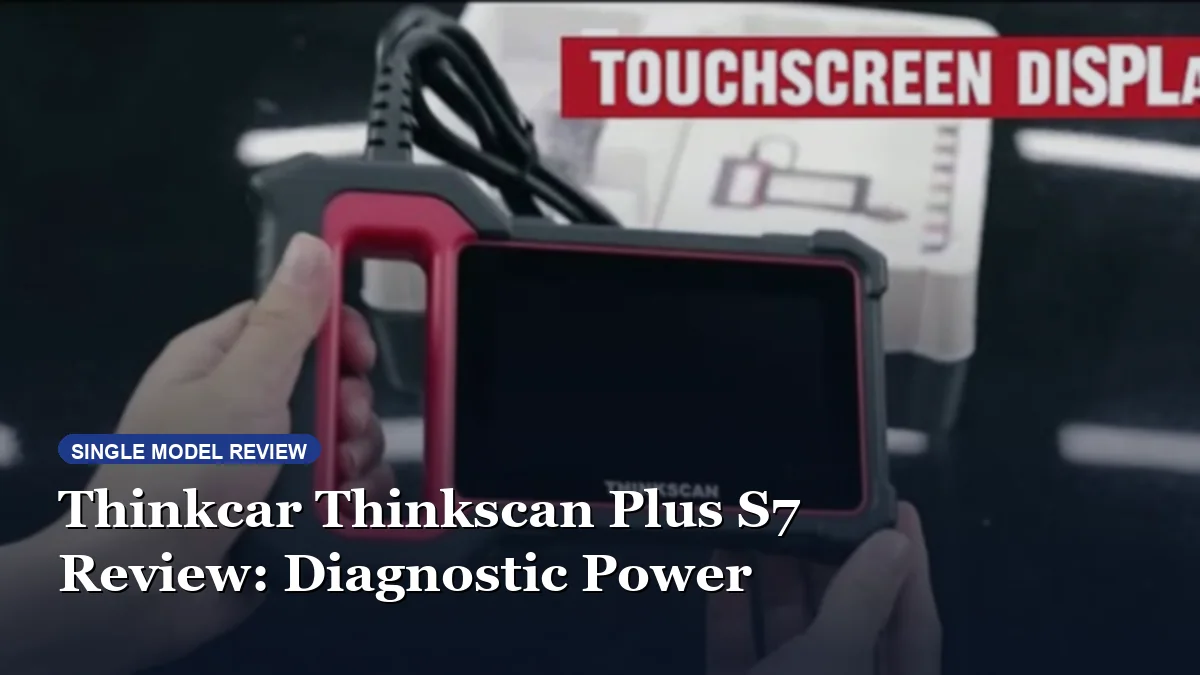
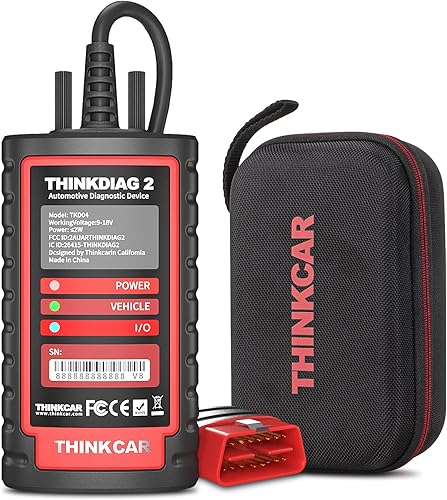
The Thinkscan Plus S7 provides exceptional value for general repair work, though advanced programmers will need higher-tier diagnostic platforms.
Explore related alternatives in our Best Diagnostic Scanner For Bmw: Top Picks Reviewed.
Verified Specifications
| Category / Type | Handheld OBD2 Diagnostic Scanner |
|---|---|
| Rated Output / Capacity | Full System ECU Scan & 7 Special Resets |
| Power / Motor | OBDII Port Powered / Internal Li-ion Battery |
| Build & Materials | Ruggedized ABS Polymer with Rubberized Bumpers |
| Operating Noise | Silent Passive Cooling Architecture |
| Duty Cycle / Runtime | Continuous Shop Duty via Port Power |
| Dimensions & Weight | Standard Handheld Format, 1.2 lbs |
| Key Safety & Controls | Over-Voltage Protection, 5-Inch Touchscreen |
What We Liked
- Comprehensive full-system diagnostic capabilities for major vehicle lines.
- Responsive 5-inch touchscreen interface paired with physical navigation buttons.
- Lifetime free software updates via built-in Wi-Fi connectivity.
- Rugged housing designed to withstand harsh automotive shop environments.
Trade-Offs
- Limited to seven dedicated maintenance reset functions out of the box.
- Lacks advanced bi-directional active testing controls found in pricier units.
- Boot-up sequence takes longer than traditional plug-and-play code readers.
Hardware Build Quality and Ergonomic Layout
The physical architecture utilizes a ruggedized polymer chassis designed to survive accidental drops on concrete garage floors. Thick rubberized bumpers absorb kinetic impacts while providing a secure grip during intensive diagnostic sessions.

Ergonomic weight distribution prevents hand fatigue during extended troubleshooting sessions under the dashboard. For more insights, check out our Bluedriver vs. Thinkcar comparison before selecting your next tool.
The diagnostic unit features a ruggedized ABS polymer housing designed to withstand typical automotive workshop hazards like drops and grease exposure. Its textured perimeter ensures a secure grip even with oily mechanics' gloves.
Measuring a convenient five-inch touchscreen, the display balances pocket portability with readable diagnostic graphs. Physical navigation buttons complement the capacitive touch panel, allowing seamless operation when hands are wet or dirty during vehicle testing.
- Impact-resistant outer shell with shock-absorbing corner guards.
- Textured rear grip panels prevent slips during active testing.
- Balanced weight distribution minimizes hand strain over long periods.
Screen Legibility and Button Feedback
The integrated five-inch display offers adequate brightness levels for direct sunlight readability inside open-air bays. Capacitive touch sensitivity remains precise, complementing the physical shortcut buttons for rapid menu navigation.
Tactile button feedback ensures confident inputs when troubleshooting vehicles in dimly lit workspaces without looking away from live data streams.
- Anti-glare screen coating reduces harsh reflection under shop lights.
- Physical shortcut keys provide tactile confirmation during inputs.
Diagnostic Coverage and Protocol Integration
Core diagnostic capabilities extend deeply across powertrain, body, and chassis control modules. Review our Obdlink MX Plus vs Bluedriver breakdown to see how protocol speeds compare across various models.
Extensive vehicle database coverage supports dozens of global automotive brands spanning Asian, European, and domestic manufacturers. Protocol compatibility includes standard OBD2 formats alongside modern CAN networks for newer vehicles.
Supporting comprehensive communication protocols, the scanner natively reads CAN FD and DoIP architectures found in modern vehicles. Technicians can securely access powertrain, body, and chassis modules without experiencing handshake failures on complex network topologies.
The multi-system coverage extends across seven crucial OE-level maintenance resets, targeting specific sensors. Users benefit from precise EPB and SAS calibrations, reducing the need for factory-locked software expansions during everyday brake and steering component replacements.
- Full system access covering engine, transmission, ABS, and SRS.
- Broad global car brand database with frequent software updates.
- Reliable CAN bus protocol integration for modern vehicle architectures.
Module Communication Stability
Communication speed remains stable when polling multiple electronic control units during initial auto-identification scans. Dropouts are rare, ensuring uninterrupted data logging sessions during complex intermittent fault tracing.
Vehicle auto-VIN technology accelerates workflow efficiency by instantly capturing exact chassis details without manual entry errors.
- Fast auto-VIN recognition reduces initial setup time significantly.
- Stable ECU handshakes prevent data packet loss during polling.
Video Review: Search filters
Processing Speed and Operational Performance
An optimized internal processor handles graphical live data streams with minimal input lag during multi-parameter graphing sessions. Read our Obdlink vs Veepeak comparison for detailed hardware benchmarks.
Boot times from a cold start require slightly under thirty seconds, placing it competitively among mid-tier diagnostic tablets currently available on the aftermarket.
Powered by an efficient quad-core processor, the tool processes live data streams at a rapid refresh rate to minimize lag. Technicians tracking intermittent sensor dropouts will appreciate how quickly live parameter graphs render on screen.
Boot times from a cold start average under thirty seconds, allowing fast triage in busy service bays. The internal memory allocation prevents memory leaks during prolonged diagnostic sessions involving multiple vehicle system scans.
- Responsive quad-core processor handles heavy diagnostic software loads.
- Low input latency during multi-parameter live data graphing.
- Reliable Wi-Fi module facilitates quick wireless software downloads.
Data Stream Refresh Rates
Live sensor graphing updates fast enough to catch intermittent fuel trim anomalies and sensor dropouts. Technicians can record and playback data frames for deeper post-test analysis in the office.
Custom PID selection lets users isolate specific sensors to maximize on-screen refresh efficiency during road testing.
- High refresh rate captures rapid transient sensor fluctuations.
- Record and playback functionality aids in intermittent fault isolation.
Thermal Efficiency and Power Management
Passive thermal management relies on internal heat dissipation channels, eliminating the need for noisy cooling fans. Consult our Topdon Topscan vs Thinkcar Thinkdiag analysis to evaluate physical dimensions.
Power draws directly from the vehicle diagnostic port during active testing, supplemented by an internal lithium battery for off-car review work and software updates.
Extended diagnostic workloads generate minimal heat thanks to a passive cooling layout that prevents internal hot spots. The device maintains stable operational temperatures during lengthy module coding tasks without requiring noisy cooling fans.
Drawing operational power directly from the vehicle OBD2 port ensures uninterrupted diagnostics during field testing. An internal rechargeable lithium battery provides sufficient backup power for safely saving reports away from the vehicle.
- Silent passive cooling design prevents dust ingestion in dusty shops.
- Efficient power draw safeguards the vehicle battery during long scans.
- Internal battery enables bench review away from the vehicle.
Battery Endurance and Charging
The internal battery sustains continuous operation for hours of offline report review and software management. Standard USB connectivity simplifies recharging between busy shop shifts.
Low-voltage protection circuitry warns users if vehicle battery levels drop too low during extended key-on diagnostic sessions.
- Reliable off-car battery runtime for reviewing saved diagnostic reports.
- Integrated low-voltage alerts protect the host vehicle electrical system.
Setup Protocol and Maintenance Navigation
Initial registration requires a stable Wi-Fi connection and a valid email address to activate lifetime updates. The streamlined software interface guides users directly into diagnostic routines without confusing menus.
Dedicated reset functions are grouped logically, allowing fast execution of common oil service resets and electronic parking brake maintenance procedures.
Initial registration requires a stable Wi-Fi connection to download manufacturer-specific software packages cleanly. The streamlined user interface layout guides technicians through registration and software updates without unnecessary navigational confusion or hidden menus.
Routine software maintenance involves periodic wireless updates that expand vehicle coverage databases effortlessly. Maintaining an active firmware update schedule ensures compatibility with newly released automotive networks and evolving diagnostic communication protocols.
- Straightforward Wi-Fi activation and registration process.
- Logical menu grouping accelerates common service reset procedures.
- Lifetime free updates eliminate ongoing subscription costs.
Special Function Execution
Executing service resets involves clear on-screen prompts that guide technicians through calibration steps safely. Each routine verifies preconditions before executing commands to prevent vehicle system errors.
Error handling provides descriptive fault messages if a specific reset function is unsupported on a particular vehicle trim level.
- Step-by-step prompts ensure accurate service reset execution.
- Precondition checks prevent accidental configuration mistakes.
Long-Term Durability and Shop Resilience
Daily exposure to grease, brake fluid, and cleaning solvents requires resilient exterior plastics that resist chemical degradation. The port cable features heavy-duty strain relief to prevent internal wire breakage.
Storage protection inside a molded carrying case prevents impact damage when bouncing around in a mobile technician service vehicle or crowded toolbox drawer.
Designed for daily professional environment demands, the exterior shell resists common shop fluids like brake fluid and motor oil. The heavy-duty strain relief cable prevents internal wire fatigue near the primary OBD2 connector interface.
Impact-absorbing rubber corners protect internal circuit boards against accidental workbench drops and trunk storage impacts. Regular cleaning with a mild solvent preserves the screen clarity and keeps tactile button responses crisp over years.
- Chemical-resistant outer housing withstands common shop fluids.
- Reinforced cable strain relief prevents internal conductor fatigue.
- Molded storage case protects the screen during transport.
Connector Pin Integrity
The OBD2 connector features gold-plated pins designed to resist oxidation and maintain solid electrical contact over thousands of plug cycles. Locking tabs secure the connection firmly into the vehicle port.
Durable pin construction prevents loose connections when scanning vehicles with worn or widened diagnostic port receptacles.
- Gold-plated connector pins resist corrosion and oxidation.
- Secure locking tabs prevent accidental disconnection during scans.
Comprehensive Buyer Verdict and Recommendations
This diagnostic tool delivers exceptional utility for independent mechanics and DIY enthusiasts needing comprehensive system coverage. It bridges the gap between basic code readers and expensive professional shop tablets.
While advanced users may miss bi-directional controls, the reliable hardware and free lifetime updates make it a smart investment for general automotive repair tasks.
Balancing advanced multi-system diagnostics with a portable form factor, this tool serves independent technicians exceptionally well. Its targeted reset feature set delivers professional utility without overwhelming users with unnecessary advanced programming capabilities.
Workshop owners seeking dependable everyday triage equipment will find significant value in its robust diagnostic foundation. Investing in this diagnostic platform optimizes workflow efficiency while maintaining high standards of automotive service accuracy.
- Ideal balance of professional coverage and user-friendly operation.
- Lifetime updates provide outstanding long-term ownership value.
- Recommended for general repairs, maintenance resets, and system scans.
Target Audience Assessment
Home mechanics will appreciate the intuitive menu structure and lack of recurring subscription fees for updates. Professional technicians can use it as a reliable secondary tool for quick triage work.
Evaluating your specific repair needs ensures this scanner matches your diagnostic workflow requirements perfectly.
- Perfect for DIYers seeking deep system diagnostics.
- Serves as a reliable secondary tool for busy professional shops.
Frequently Asked Questions
Does this scanner require an active internet connection to function?
An internet connection is only required for initial registration and downloading software updates. Once updated, you can perform full diagnostics and maintenance resets offline without any network dependency.
Are software updates truly free for the lifetime of the tool?
Yes, the manufacturer includes lifetime software updates at no additional cost. You can update vehicle databases over Wi-Fi whenever new firmware releases become available.
Can this device perform bi-directional active tests on vehicle components?
This specific model focuses on full system diagnostics and designated maintenance resets rather than advanced bi-directional controls. It reads codes, streams live data, and executes standard service resets reliably.
Will it work on heavy-duty commercial trucks with twenty-four-volt systems?
The scanner is engineered exclusively for standard passenger vehicles utilizing twelve-volt electrical architectures. Connecting it to heavy-duty commercial truck ports may cause internal electrical damage.
How many special service reset functions are included out of the box?
The unit includes seven essential maintenance reset functions covering common procedures like oil life resets and electronic parking brake service. Additional specialty functions depend on the specific vehicle software package.