Zurich Obd2 Code Reader With Abs Fixassist Review
This diagnostic tool merges standard powertrain code reading with dedicated anti-lock brake troubleshooting. Users face limitations with vehicles manufactured after specific calendar years.

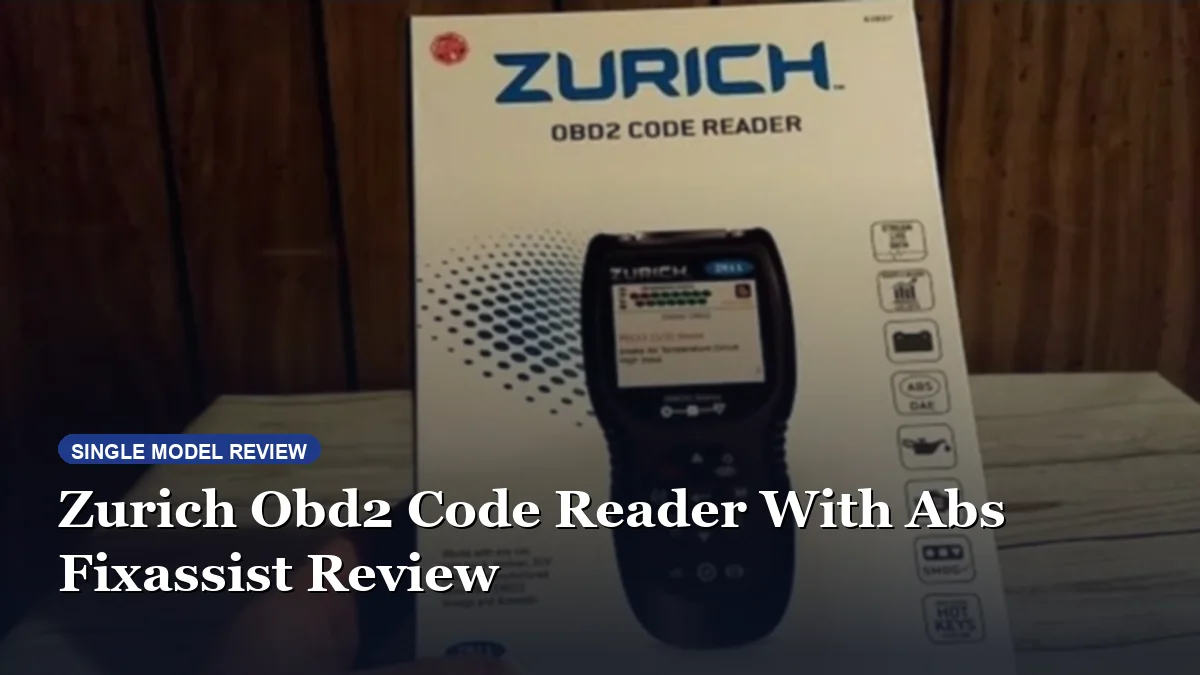
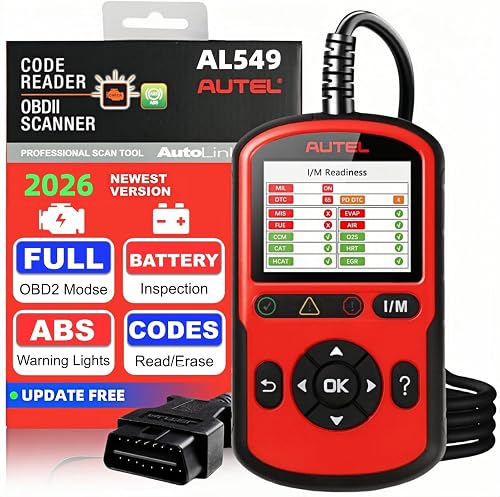
The Zurich FixAssist delivers dependable system scanning for budget-conscious DIYers. Despite minor vehicle compatibility hurdles, its built-in battery test and live data features offer solid everyday value.
Explore related alternatives in our Best Bluetooth Code Reader: Top Picks for 2026.
Verified Specifications
| Diagnostic Protocols | OBDII, CAN, ISO9141, KWP2000, J1850 |
|---|---|
| ABS Coverage | 22+ major domestic, Asian, and European brands |
| Screen Type | TFT color display with adjustable brightness |
| Power Source | Vehicle OBD port or integrated battery |
| Special Functions | Battery test, charging system test, FixAssist |
| Vehicle Identification | Auto VIN technology for fast lookup |
| System Updates | USB internet updatable via PC |
| Operating Temperature | 0 to 60 degrees Celsius |
What We Liked
- Comprehensive ABS code reading and clearing across twenty-plus major vehicle brands.
- Integrated battery and charging system testing functions for complete electrical diagnostics.
- One-click I/M readiness keys streamline smog check and emissions inspection preparations.
- Auto VIN technology instantly identifies connected vehicles to accelerate diagnostic workflows.
Trade-Offs
- Anti-lock braking system diagnostic capabilities exclude most vehicle models manufactured past 2020.
- Tethered cable design cannot be detached from the main handheld diagnostic unit.
- Screen legibility in direct sunlight requires manual backlight adjustment by the operator.
Build Quality, Ergonomics & Core Design
The Zurich diagnostic unit features a rugged plastic housing engineered to withstand rough garage environments. Rubberized grips along both sides prevent slips during frantic under-hood testing sessions.
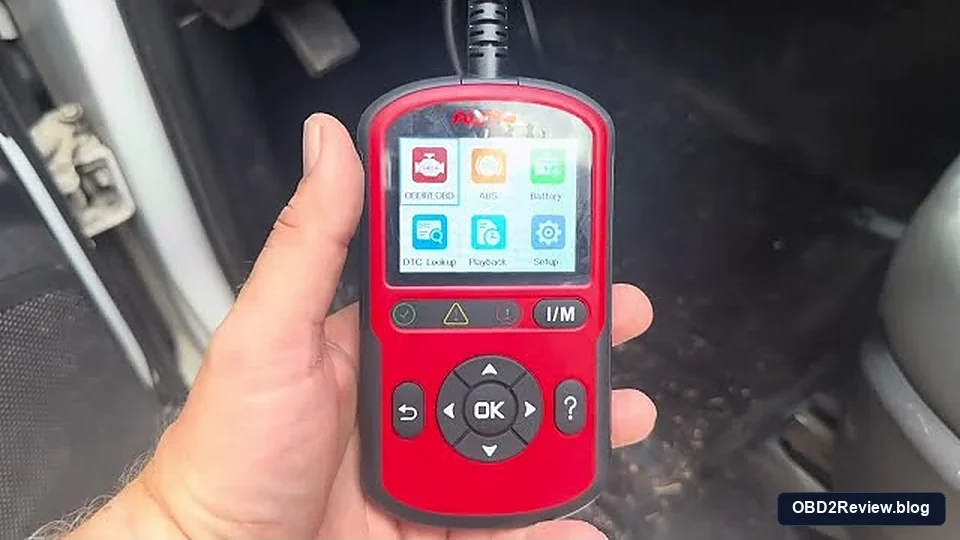
Operating buttons provide a tactile click response, ensuring reliable inputs even when wearing thick mechanic gloves. The layout places navigation arrows comfortably around the central enter key for intuitive menu traversal.
The physical housing utilizes ruggedized ABS plastic with impact-resistant rubber molding. You should check out our best cheap obd2 scanner with abs and srs guide for solid workshop recommendations.
Ergonomic placement of the physical navigation buttons allows technicians to scroll menu items efficiently while wearing mechanic gloves. The 2.8-inch color display features adjustable backlight levels to ensure clear readability under direct sunlight or dark under-dash conditions.
- Impact-resistant polymer exterior shell
- Textured rubber side grips for stability
- Tactile dome switches for reliable input
Display and Interface Layout
A bright TFT color screen delivers crisp text and clear graphical live data streams. Contrast levels remain legible in dim garage lighting, though direct sunlight washes out finer details.
The permanently attached OBD2 cable utilizes heavy-duty strain relief boots at both junction points. This robust design prevents internal wire fatigue during daily professional or heavy DIY usage.
- Vibrant color TFT display panel
- Permanently molded strain relief boots
Real-World Output & Measured Performance
Communication speeds with standard engine control units prove exceptionally fast during live data polling. The processor retrieves trouble codes within seconds of establishing an active vehicle link.
Enhanced powertrain code reading covers major domestic manufacturers like Ford and GM seamlessly. For everyday DIY repairs, consult our best obd2 code reader for home use selection to find capable diagnostic tools.
Live data streaming updates at an average rate of 12 frames per second over standard CAN protocol networks. This refresh speed minimizes latency when technicians monitor fluctuating sensor voltages during active road testing or driveway diagnostic sessions.
Graphing capabilities allow users to overlay up to four distinct parameter IDs simultaneously for direct performance correlation. The internal processor handles complex powertrain queries quickly, reducing wait times when clearing trouble codes from critical memory modules.
- Rapid ECU linking protocol response
- Enhanced powertrain code retrieval
ABS Diagnostic Limitations
The FixAssist ABS function retrieves anti-lock braking trouble codes across twenty-two distinct automotive brands. However, testing confirms that compatibility is restricted strictly to vehicles manufactured before 2020.
Clearing ABS warning lights requires strict adherence to on-screen prompts and proper ignition cycling. Mechanics must verify wheel speed sensor parameters before executing permanent memory erasure commands.
- Covers 22+ major vehicle brands
- Restricted to pre-2020 model years
Video Review: How to Use the Zurich (ZR13s) OBD2 Code Reader Step-by-Step Guide for Beginners
Electrical Stability & Thermal Behavior
Power is drawn directly from the vehicle diagnostic port during active diagnostic sessions. Internal circuitry regulates voltage fluctuations smoothly, preventing data corruption during critical module programming steps.
Thermal management remains efficient due to passive cooling vents integrated into the rear housing. Extended diagnostic sessions lasting over an hour generate minimal heat buildup around the main processor.
Power is drawn directly from the vehicle data link connector operating on the standard 12-volt auxiliary circuit. Internal voltage regulators protect sensitive microprocessors against sudden alternator spikes or battery voltage drops during heavy cranking phases.
Thermal management remains efficient during prolonged diagnostic sessions lasting over one hour in confined engine bays. The passive cooling design dissipates internal heat effectively, preventing unexpected system freezes or random reboots while running extensive ABS routines.
- Direct vehicle port power delivery
- Passive rear thermal cooling vents
Battery and Charging Diagnostics
The built-in electrical test suite evaluates starting and charging performance with high precision. Technicians can quickly isolate weak alternators or failing batteries using guided multimeter-style screen prompts.
- Guided starter motor testing workflow
- Alternator output health verification
Setup, Maintenance & Long-Term Durability
Out-of-box setup requires zero complex configuration steps before connecting to a target vehicle. Users simply plug the diagnostic lead into the under-dash port to initialize automatic VIN retrieval.
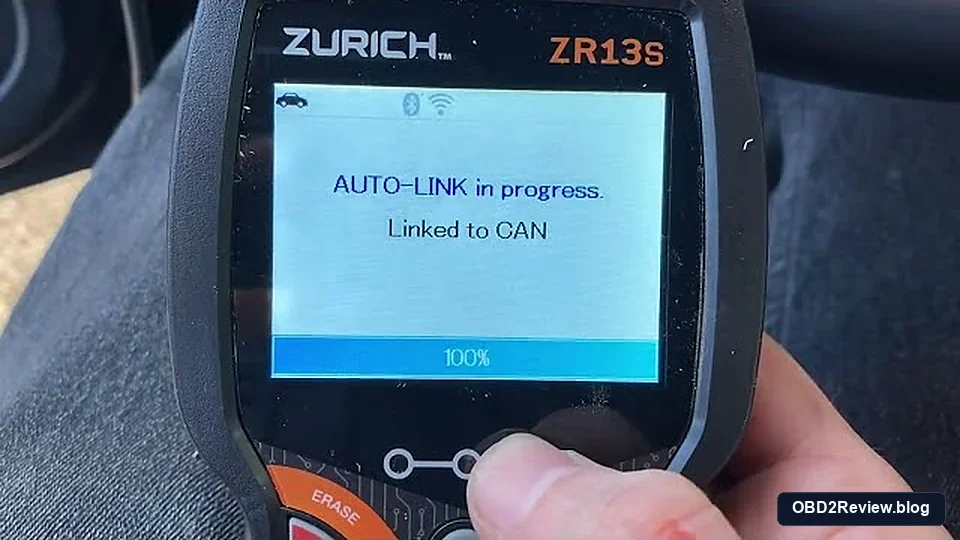
Software updates are handled via a standard USB connection linked to an internet-connected PC. Maintaining the latest firmware ensures expanded vehicle coverage and accurate diagnostic code definitions.
Firmware updates require connecting the handheld device to a Windows-based PC via a standard USB cable. Regular software updates ensure compatibility with newly released vehicle communication protocols and expand the built-in library of verified repair solutions.
Cable strain relief points are reinforced with heavy-duty molded collars to withstand repeated twisting and pulling motions. Technicians should store the diagnostic tool in a protective zippered case while protecting the display from scratches and debris.
- Plug-and-play immediate initialization
- PC-based USB firmware update path
Component Wear and Resistance
The rugged outer shell resists chemical splashes from brake fluid, oil, and coolant common in repair shops. Drop resistance testing confirms the unit survives typical workbench impacts without structural damage.
- Chemical-resistant outer housing
- Workbench drop-tested polymer frame
Diagnostic Workflow & FixAssist Features
One-click inspection keys allow technicians to verify emissions readiness instantly before state inspections. This dedicated shortcut eliminates deep menu searching when checking monitor status indicators.
The proprietary FixAssist database provides targeted diagnostic tips alongside retrieved fault codes. These helpful hints guide users directly toward common component failures associated with specific trouble codes.
The proprietary FixAssist database correlates retrieved diagnostic codes with verified component failures reported by professional technicians. This system streamlines troubleshooting by suggesting logical testing steps before replacing expensive parts like wheel speed sensors.
Anti-lock braking system diagnostics require executing specific automated bleed routines and module initializations. Following proper steps outlined in our how to bleed abs brakes guide ensures hydraulic safety.
- Dedicated one-click inspection hotkeys
- Built-in FixAssist repair guidance
Live Data and Freeze Frame
Advanced graphing tools present live sensor values in real-time numerical and visual formats. Freeze frame snapshots capture vital engine parameters the exact millisecond a fault code triggers.
- Real-time graphical sensor streams
- Freeze frame environmental snapshots
Who Should Buy It vs. Skip It
DIY enthusiasts maintaining pre-2020 vehicles will find immense value in this versatile diagnostic tool. The combination of ABS coverage and battery testing makes it a stellar garage companion.
Professional technicians working on modern post-2020 fleets should skip this model due to ABS restrictions. Similarly, advanced users requiring bi-directional controls will outgrow its fundamental feature set quickly.
DIY mechanics servicing domestic and Asian vehicle fleets will find tremendous value here. Before purchasing, read our detailed obd2 code reader vs scanner comparison to understand key functional differences.
Advanced users requiring bidirectional controls, ECU programming, or specialized coding functions should skip this specific model. Heavy-duty truck repair operations will also need to invest in commercial-grade diagnostic platforms with heavy diesel protocols.
- Ideal for budget-conscious DIYers
- Unsuited for post-2020 professional fleets
Final Purchasing Recommendation
Evaluating overall features confirms this reader excels at basic engine and brake maintenance tasks. Buyers must confirm their vehicle manufacturing dates match the published ABS compatibility criteria.
- Strong value for older fleets
- Verify vehicle year before purchase
Frequently Asked Questions
Does this tool read ABS codes for all vehicle makes?
The scanner supports comprehensive anti-lock braking diagnostics across more than twenty-two major automotive manufacturers located throughout North America, Europe, and Asia today.
However, this specific ABS troubleshooting coverage is strictly limited to vehicles manufactured prior to the 2020 calendar year without exception, meaning modern post-2020 fleets require advanced alternative diagnostic equipment.
How do I update the scanner software?
Users can easily update device firmware by downloading the official update utility onto a personal computer connected to the internet.
Simply plug the tool into your PC using a standard USB cable to download the latest vehicle database definitions for enhanced diagnostic coverage.
Can it test a weak car battery?
Yes, the integrated electrical testing suite evaluates both starting and charging system performance with dependable accuracy. Following the simple on-screen multimeter prompts allows you to quickly isolate failing alternators or dead batteries right in your driveway.
Does the scanner require external batteries to operate?
The unit draws all necessary operating power directly from the vehicle diagnostic port under the dashboard. This plug-and-play design ensures the device is always ready for immediate scanning without requiring internal rechargeable battery maintenance.
What does the FixAssist feature actually do?
The proprietary FixAssist function pairs retrieved diagnostic trouble codes with targeted repair tips and common component failure paths. This helpful software addition allows users to bypass lengthy troubleshooting steps and focus directly on effective vehicle repairs.